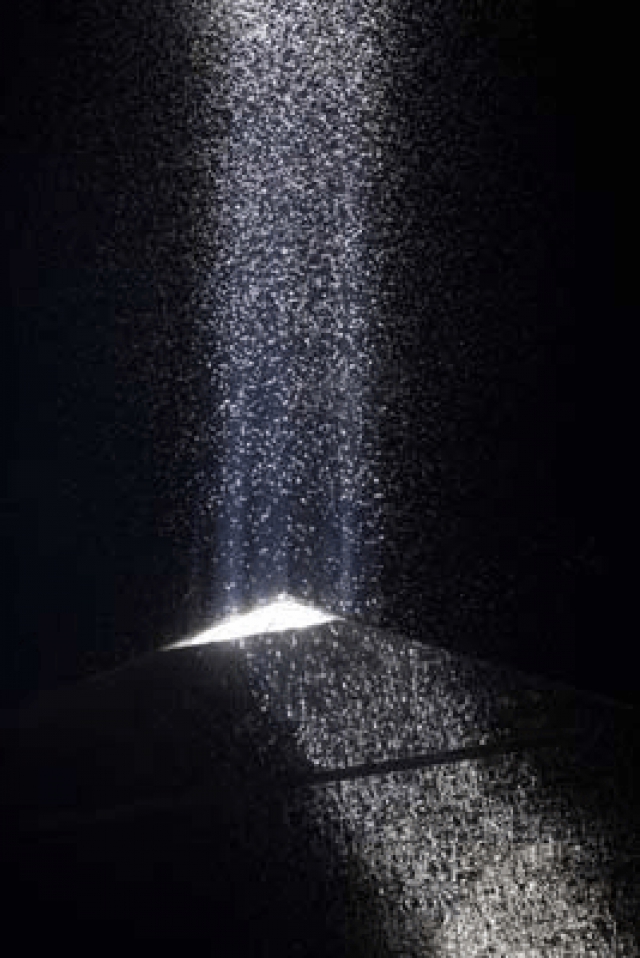
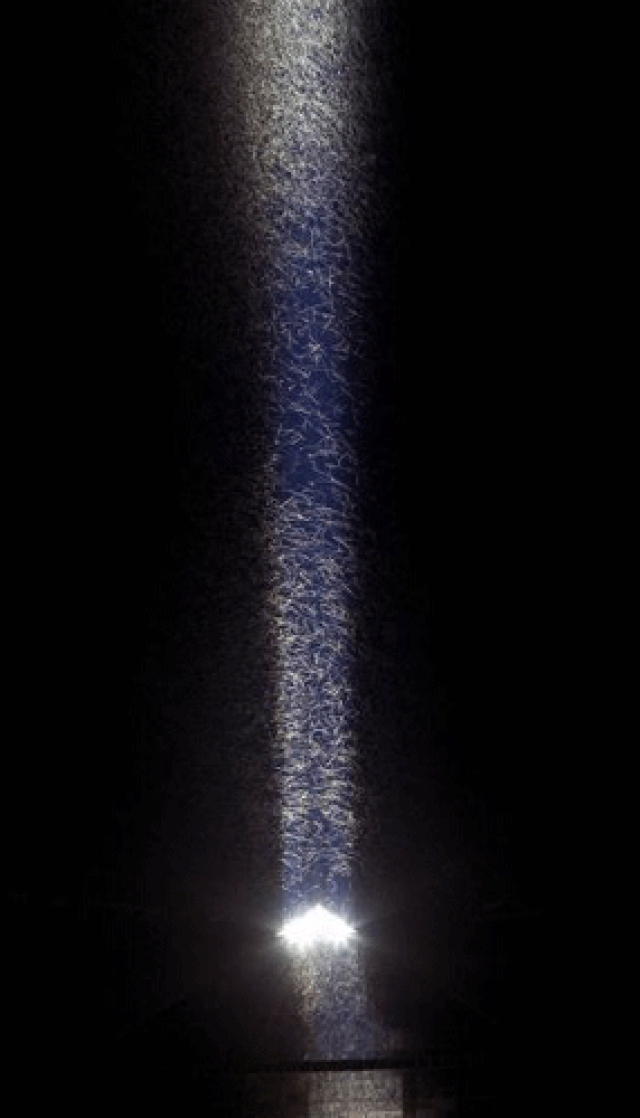
We hadn't heard of a moth problem or experienced it as residents, but your email did remind us about a story from a couple of years back regarding a plague of moths in the Luxor light beam.
In April 2005, a story hit the local papers about a swarm of millions of moths inside the light beam. It had been an unseasonally wet spring, leading to a proliferation of bugs and insects of all shapes and forms. We understand that moths, like many insects, navigate by the sun and are confused by light sources at night, which throw off their internal navigation system. With its 42.3-billion candle power, the Luxor's beam is one hulluva light source -- the strongest in the world, in fact -- and so many moths were drawn to it that apparently they could be seen all the way from Summerlin on the far west side of town.
Even stranger than the moths' arrival was their unexpected departure -- one day they simply weren't there anymore. The best explanation that we heard for the sudden exit was that the swarm of insects had attracted a commensurate swarm of hungry bats, who gorged on the airborne buffet until the moths were no more.
That was an exceptional year and this spring it's actually been hotter and drier than normal, so less moths are around. Still, some Googling and a word with the odd concierge or two on the Strip confirmed that the notice you saw is not uncommon (Excalibur and the Tropicana have similar ones, for example, we've been told).
Turns out Nevada is home to more than a few species of moth, including the sphinx moth (how appropriate!), tiger moth (probably prefers to hang out at the Mirage), and the wild silk moth. So if you don't want any flying visitors in your room, we'd advise you to keep windows and vents closed at night from late March through early May, especially if you've got the lights on.
Photographs appear courtesy of Craig L. Moran at the Las Vegas Review-Journal and Ethan Miller at the Las Vegas Sun. Click to see enlarged versions.