Today's QoD was to have been a departure from this week's "Best Of" series, but now we're back to Plan A. Check out the "Trump Terminates A.C" item in yesterday's Today's News column (on the home page at www.lasvegasadvisor.com) for the full story.
Now, back to the matter in hand.
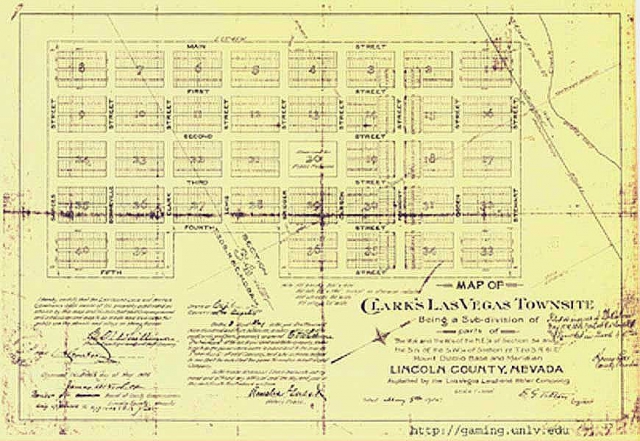
In April 1905, with the start of regular train service through Las Vegas Valley, the San Pedro, Los Angeles & Salt Lake Railroad organized the subsidiary Las Vegas Land & Water Co. The company plotted its own town site, bulldozed all the desert scrub from a 40-block area, and scheduled the auctioning of lots for May 15.
Each block, a regulation 300 by 400 feet, consisted of 32 lots, each 25 by 140 feet, fronted by an 80-foot-wide street and bisected by a 20-foot-wide alley. Block 20, between Second and Third streets and Bridger and Carson streets (behind today's Four Queens) was reserved as a public square, while the sale of liquor was restricted to blocks 17 and 16. Block 16 was at the north edge of the town site, between First and Second and Ogden and Stewart. Today, Block 16 is mostly a parking garage for Binion's, directly behind the casino.
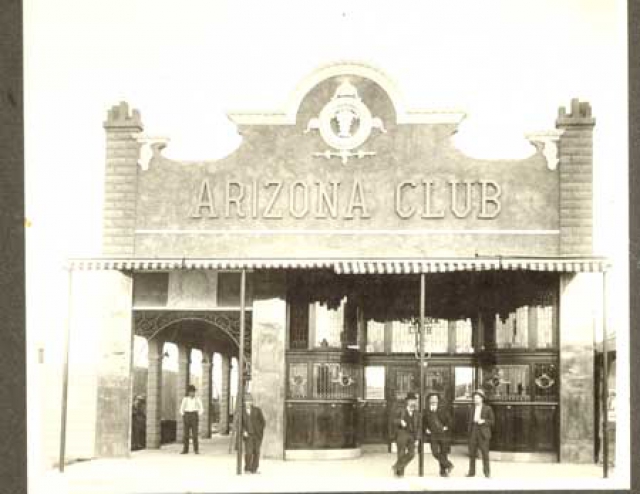
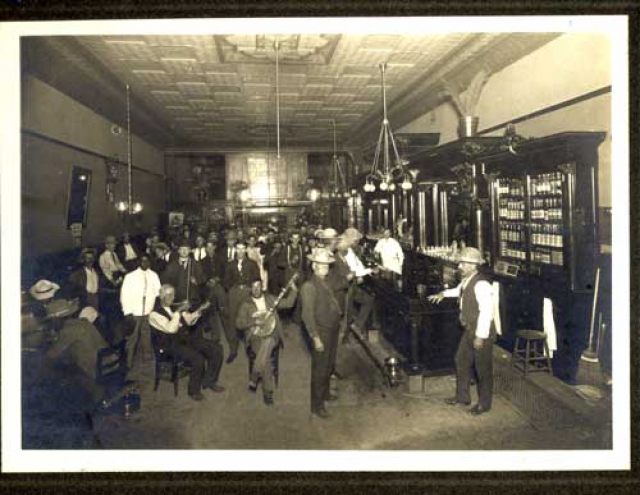
Block 16 was the most notorious of the 40 blocks of early Las Vegas and the only one that's remembered today. The result of typical urban planning of the day, which sought to contain the licensed establishments in a discrete and easily controlled area, it was the site of Las Vegas' original sex market. A mere block from the staid and proper First State Bank at Fremont and Second (where Binion's now stands) and only two blocks from the railroad depot, Block 16 hosted Las Vegas' saloons and brothels, surrounded by the starched-collar company town. The Double O, Red Onion, Arcade, and Arizona Club served 10-cent shots, hosted poker, faro, and roulette, and sported cribs out back for bar customers with the urge. The Arizona Club was the class act, with a glass front, a $20,000 mahogany bar and, later, a second story for the convenience of the ladies of the night and their gentlemen.
In a twilight zone not quite illegal, Block 16 wasn't quite legal either. During the early years, saloons operating brothels were required to buy $500 licenses. Later, regular raids and shakedowns helped finance local government. The 40 or so darlings of the desert were also required to undergo weekly medical exams; at $2 apiece, this was a plum cash job for the city physician. Law and order was maintained by the steely eyes and quick fists of six-foot-three 250-pound Sam Gay, the one enduring character from the Block, who went from bouncer to five-term Clark County Sheriff (he's the tall chap with the moustache in the center of the Arizona Club saloon photo below -- click on the links to enlarge).
Sleepy and deserted during the daytime, "the Line" woke up at night, when its well-known vices temporarily banished the dried-up small-town desolation. And when the train pulled in, savvy travelers used the 45-minute stop to refuel themselves. As the locomotives were serviced with coal and water, the men huffed the few blocks to the Block for a couple of drinks, a little tiger bucking (faro), and maybe even a quickie.
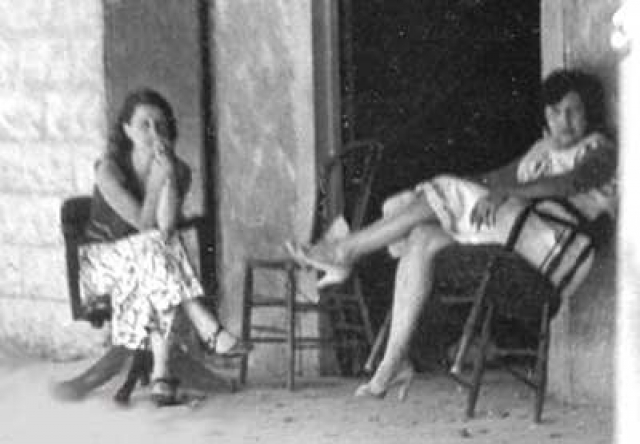
Despite the occasional spirited civic campaign to eliminate them, Block 16's activities were barely interrupted by the state's 1910 ban on gambling. The local sex industry also managed to survive the tidal wave of Progressive-era brothel shutdowns during the 19-teens. The wave did touch Las Vegas during the '20s, however, when a grand jury instructed city commissioners that "occupants of houses of ill fame not be allowed on the streets, unless properly clothed." On hot summer nights, you see, it wasn't uncommon to get a glimpse of scantily clad women sitting in second-floor windows along the Line, while young boys on bikes rode by for a peek. The Block also fared well during the tricky years of Prohibition, with booze provided by bootleggers from the boonies of North Las Vegas. And even during the federal years of Boulder Dam and the New Deal, amorality thrived: At the time, Block 16 housed more than 300 working girls without undue interference from the authorities.
Ironically, the legalization of wide-open gambling in 1931 foreshadowed an end to the Line and kindled the enduring opposition of casino operators to blatant prostitution, which they considered competition. The clubs, casinos, and hotels along Fremont Street a block away were bright, boisterous, and mostly benign, but the Second Street approach to Block 16 was subdued, sequestered, slightly sinister. Respectable citizens now ventured into the Block only while acting as guides to visiting friends. One practical joker, the story goes, arranged for a shady lady to emerge and greet, familiarly, a visiting friend who had his wife at his side.
Yet to the dismay of locals, the prosaically named Block 16 began to gain a measure of notoriety as word spread about this last holdout of the Wild West in the late ‘30s and early ‘40s. Tourists to the dam site and Lake Mead began visiting Las Vegas to rubberneck the saloons and casinos and bordellos. It was no accident that the downtown sawdust joints and the first two hotels on the incipient Strip adopted frontier motifs.
What finally killed Block 16 was World War Two. The War Department had many reasons to want the open prostitution in downtown Las Vegas closed. With soldiers at the Las Vegas Aerial and Gunnery Range nearby coming up for off-duty passes in rotations of hundreds a night, the Block could only cause trouble. Also, the voices of the wives of men assigned to Las Vegas (and Reno, where a similar deal was going on) were heard loud and clear in Washington: By allowing sex for sale in the vicinity, they claimed, the government was helping men who’d been called to arms to spread an epidemic of infidelity (not to mention syphilis, which took weeks to check, and gonorrhea, which could cripple a company). When the commander of the gunnery range threatened to declare the whole town off-limits to servicemen, local officials immediately revoked the liquor licenses and slot machine permits of the casinos on Block 16. These saloon fronts financed the prostitution, which by itself could not finance the fronts, and Block 16’s illustrious alternating current finally ran out of juice.
Of course, another 30 years passed before prostitution became unquestionably illegal in Las Vegas, but that’s another story.