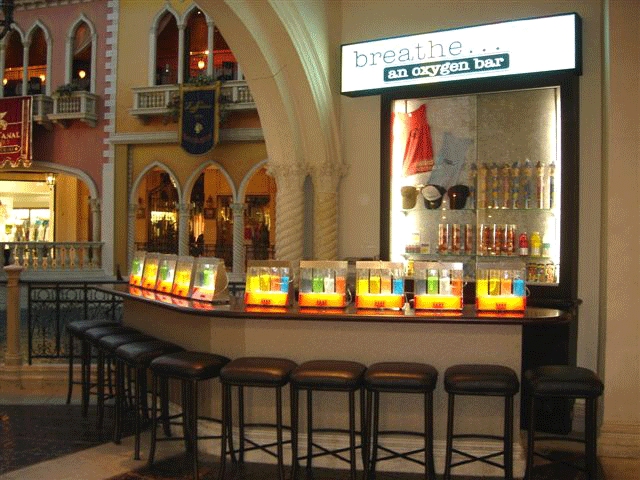
Apparently, oxygen bars originated in Japan, where people were sick of inhaling polluted air all day. It proved so popular there that canned oxygen for home use is sold at 7-Elevens and is even given away as a prize on game shows.
In the late '90s, oxygen bars migrated over to the U.S. where they caught on as a new fad and started popping up everywhere from strip malls to strip clubs. And, of course, the Strip itself. Yup, Vegas was a natural venue for something fun and funky that's alleged to help with hangovers, and soon there were oxygen bars all over the place.
However, as with many fads, the initial novelty appeal was somewhat short-lived. At an average price of a dollar a minute, it's not cheap, and the reputed health benefits have been disputed by many. While the air we normally breathe consists of a mixture of gases made up of only about 21% oxygen, the stuff pumped out at bars is generally 85%-90% pure and is actually classified as a prescription drug. Bar users are unlikely to actually be inhaling that level of purity, since the oxygen is dispensed nasally through a plastic hose, via a cannula (nose-piece), and will be mixed with the surrounding air. They're still likely to be breathing at least double the normal dose of oxygen, however, if not considerably more.
Although many jurisdictions turn a blind eye toward bars that dispense oxygen recreationally, it's a violation of FDA regulations. Most of these bars are careful not to make any claims about medical benefits, although some claim that the practice enhances health and well-being. No formal study has yet backed these claims and opponents stress that for anyone suffering from any kind of respiratory or heart disease, it can actually be dangerous and should be avoided.
The biggest health concern seems to revolve around the scented "flavors" often added to the oxygen. This flavor is produced by bubbling the oxygen through bottles containing aromatic solutions and while some bars use oil-free food-grade particles that are deemed safe, others may use aroma oils that risk inflaming the lungs.
Have we put you off yet?
Bottom line, if you're in good health and are just indulging recreationally on your vacation, you're probably perfectly safe. We didn't come across any documented cases of anyone coming to any harm through using an oxygen bar, so while they're unlikely to do you much good, they probably won't do you too much harm, either (and less than the booze you consumed the night before that's causing the hangover you're trying to cure!). The American Lung Association has commented that "there is no evidence that oxygen at the low flow levels used in bars can be dangerous to a normal person's health."
As we alluded to, when the fad first spread to the west coast of America, it took off like wildfire in California and Las Vegas, but it seems that many outlets have since closed down. We're not aware of any in spas (let us know if you know otherwise) and previous venues at the Hard Rock (in the now defunct Baby's nightclub), MGM Grand, Spearmint Rhino, C2K (the former nightclub at the Venetian) have all closed, as have a number of the ones dotted around town in various strip malls.
Still, all is not lost if O2's your tipple of choice, as you can still find oxygen bars at McCarran Airport (gates A, B, and C), New York-New York, the Stratosphere, Circus Circus, Forum Shops at Caesars, Grand Canal Shoppes at the Venetian, plus there's an Oxygen Bar located at 2000 Las Vegas Blvd. S.
We've never actually tried it, although we must admit we've been curious. If you have, let us know what you thought of the experience.