Las Vegas is approximately 135 miles from "Area 51," recently re-designated "Homey Airport" (see Today’s News 01/23/08) by the U.S. Air Force (which only recently even acknowledged its existence). Located on the southern shore of a dry lake bed in a remote tract of land in Lincoln County, southern Nevada, Area 51 is one of the most secretive places in the world and no, no tours are available. In fact, the area surrounding the lake is permanently off-limits both to civilians and normal military air traffic and the area’s protected by radar stations, buried motion sensors, HH-60 Pave Hawk helicopters, and uniformed guards armed with M16s who are authorized to use deadly force if trespassers fail to heed warnings to halt. So we strongly discourage you from attempting to take an "unofficial" tour, or even any photographs.
Exactly what happens at Area 51 is about as top secret as it gets (see QoD 10/19/07). But it's known that its primary purpose is to support the development and testing of new military aircraft and to analyze foreign aircraft and weapons systems.
Area 51 shares a border with the Nevada Test Site (click here for an excellent map), the massive outdoor laboratory that, from 1951 to 1992, was used to conduct nuclear weapons testing (see QoD 5/20/2006). While it’s also located on restricted access government property about 65 miles northwest of Las Vegas along US 95, free general-interest tours of the Test Site are available, conducted by the U.S. Department of Energy through the National Nuclear Security Administration Nevada Site Office.
The tours take place once a month; the next one is scheduled for Feb. 26 and the final one of the year is slated for Dec. 16. (Complete schedule and registration forms are available at www.nv.doe.gov/nts/tours.htm. Groups, civic or technical organizations, and private clubs may request private group tours with a minimum of 10 people.) The minimum age for tour guests is 14 years old and pregnant women are discouraged from participating, as the bus ride out there is long and covers uneven terrain. All visitors must apply for security clearance at least six weeks in advance of taking the tour by providing the DOE with name, date and place of birth, home and business address, employer name, home and business phone number, and citizenship. Foreign nationals need to supply additional information and should allow considerably longer for their application to be processed.
So, what does the tour consist of? Well, we haven’t actually taken it ourselves yet, so all we can give you is second-hand information. The chartered bus departs from the Atomic Testing Museum (755 E. Flamingo Road) at 7:30 a.m. and returns at 4 p.m. You’re encouraged to bring your own food and drinks as there’s no stop for lunch. No alcoholic beverages are permitted. Casual dress is recommended, but shorts and sandals are not allowed.
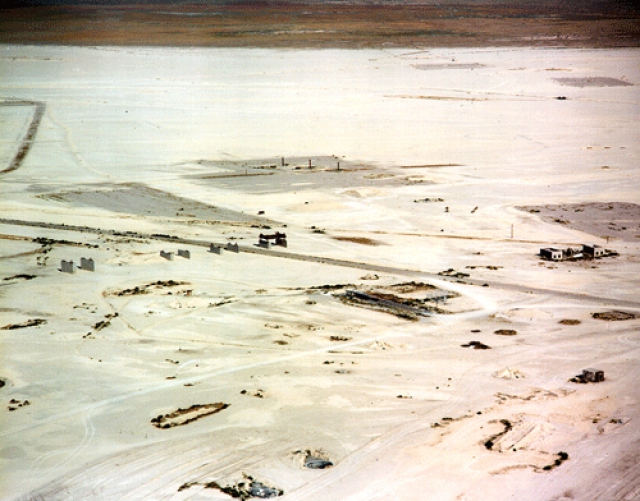
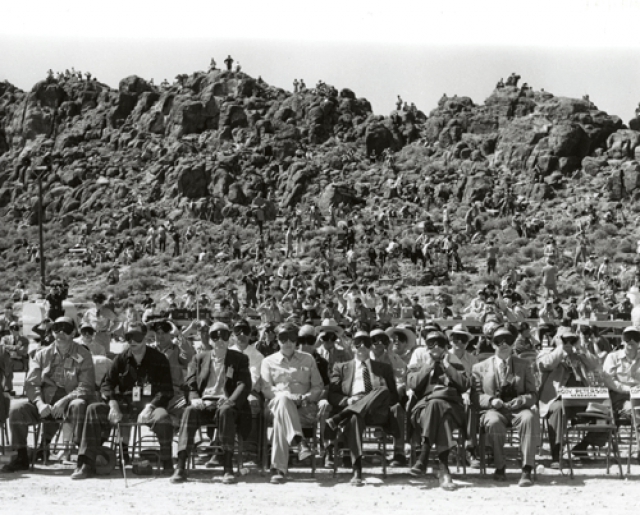
Once you’re out there, points of interest on the tour include Mercury (the main base camp), Frenchman Flat (site of the first atmospheric nuclear test on January 27, 1951, and 13 subsequent tests ), Nonproliferation Test and Evalutation Complex, Low-Level Radioactive Waste Management Site, Control Point-1 (nuclear testing command post), News Nob (the vantage point from which journalists and visiting dignitaries would witness the tests), and Sedan (a cratering experiment that was part of the Plowshare program, investigating peaceful uses of nuclear explosions).
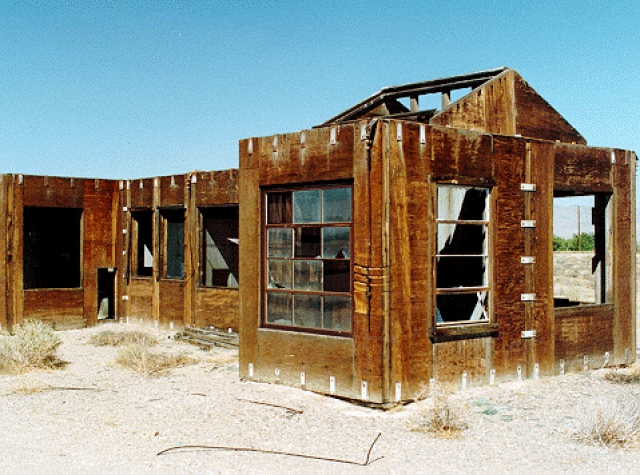
*The "Glass House" is located to the south of the Hazardous Materials Spill Center Control Room and was built to determine the blast effects on glazing and window construction and to assess the problem of flying glass, from the Feb. 1, 1951. Photographs appear courtesy of National Nuclear Security Administration/Nevada Site Office.