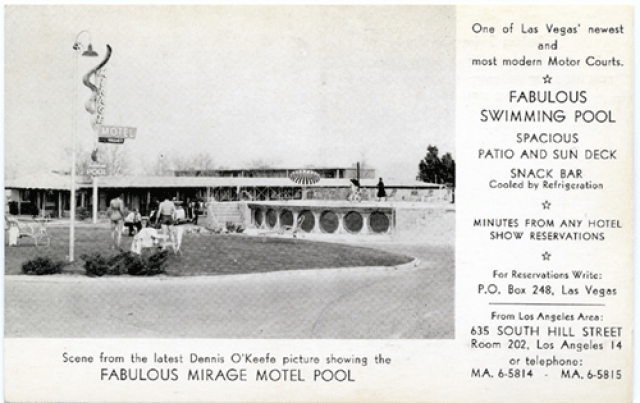
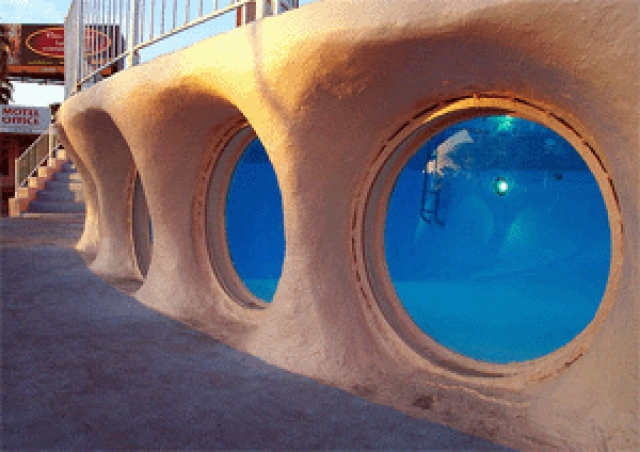
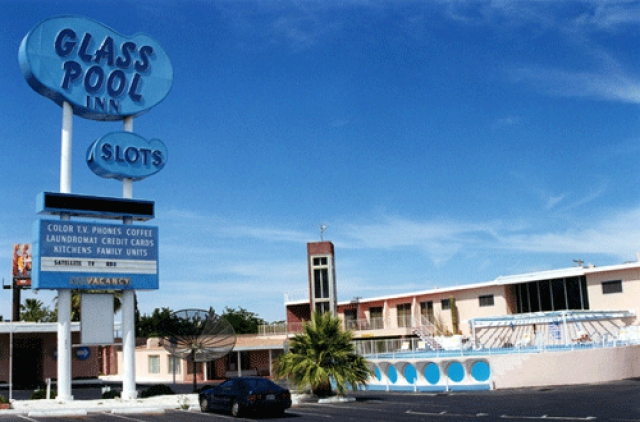
Right you are. It was called the Glass Pool Inn and its eponymous "glass pool" was aboveground, 26 feet wide by 55 feet long and nine feet deep, with eight steps on both sides of the pool to climb up to the deck. It was kidney-shaped, held 55,000 gallons of water (about twice the size of a large backyard pool, and featured seven four-foot-wide porthole-like windows that faced the Strip.
When this 22-room motel was opened in 1952 at the far south end of Las Vegas Boulevard, it was called the Mirage. Bob and Betty Rosoff bought the motel in 1953 and built the distinctive pool in 1955. The eye-catching portholes looking into deep blue water was not only the first landmark seen by sweaty visitors driving in from southern California (it predated the Welcome To Las Vegas sign by four years), it was also Las Vegas’ original water attraction. The pool was meant to beckon, like a mirage, to travelers wrung out by the heat of the Nevada desert. When they got to the landmark glass pool, the Las Vegas fun could begin.
It was only a matter of months before the first film crews started arriving to take advantage of the location. The 1955 crime drama, Las Vegas Shakedown starring Dennis O'Keefe was the first, kicking off nearly five decades during which the glass pool was one of the most iconic images of Las Vegas. It appeared in the movies Casino, Indecent Proposal, and Leaving Las Vegas, TV series such as "Vega$," "Crime Story" and "CSI," and music videos from Bon Jovi, ZZ Top (who had the pool emptied, performed a song in it, then digitized the water around them), and even "Big Log" from Robert Plant’s second solo album. Still photographers as well loved the glass pool as a backdrop; famous celebrity photographer Annie Leibowitz shot Brad Pitt there for a spread in Vanity Fair.
Over the years, the motel expanded to 48 units, with a restaurant and lounge, but the pool remained a constant reminder of a bygone era as Las Vegas grew and evolved around it. By the 1980s, it had become one of the enduring retro symbols of Vegas’ past, a prime example of Googie architecture, born of post World War II car culture, meant to capture the attention of drivers whizzing by.
In 1988, Steve Wynn bought the rights to the name Mirage for $350,000 from Allen and Susie Rosoff, the son and daughter-in-law of Bob and Betty, who still owned and operated the place. It was then that the Rosoffs renamed the motel the Glass Pool and put up a new sign, sculpted in the classic kidney shape, with internally lit lettering and a blue sheet-metal backing, sitting atop a double-poled pylon.
By the turn of the millennium, the motel and pool had deteriorated and become a little rough around the edges. The diving board and slide had been removed, a few plastic chaise longues sat empty on the deck, and the restaurant morphed into a sign shop. In addition, the 2.5-acre property (also a reminder of times past, with expansive grounds, big old trees with swings hanging off the limbs, and a shady picnic area in back of the rooms) became more valuable than the motel would ever be, and the Rosoffs sold it in 1999 for $5.5 million to developers who bought up 77 contiguous acres across from Mandalay Bay for a project called New World.
The Glass Pool closed in fall 2002 and has since been demolished. The sign remains, however.