The "odds" remain exactly the same on Triple Play, Five Play, Ten Play, Fifty Play, and Hundred Play video poker machines as on a single-line machine. They also remain the same on Spin Poker and Super Times Pay, but change for most other multi-line games, such as Multi Strike, Quick Quads, and Wheel Poker.
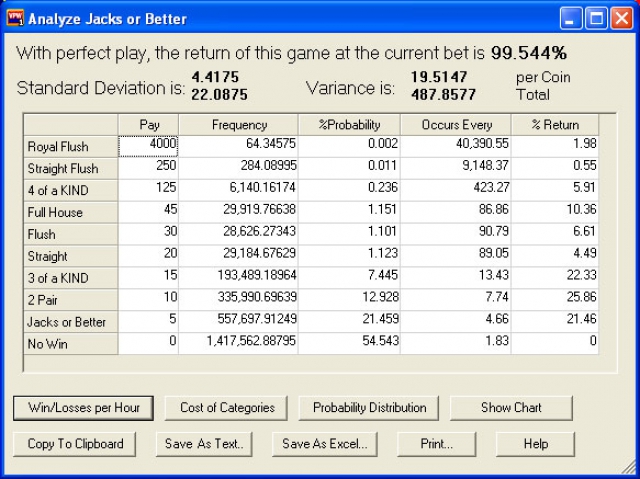
On a single-line machine, your hand (and draw) is dealt from a single continuously shuffled 52-card deck of virtual playing cards. Computer programs calculate the return percentage (e.g., 99.54% for 9/6 Jacks or Better and 100.17% for 10/7 Double Bonus), assuming you play each of the 2.6 million different hands perfectly. These percentages represent the optimum, and decrease with imperfect play. Your actual return is the theoretical return multiplied by your accuracy level.
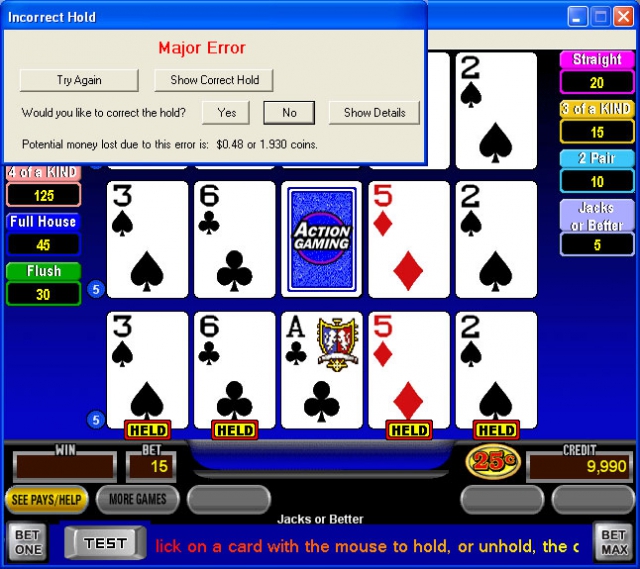
On a multi-line game, each line of cards has its own dedicated pack, but it comes into play only after the original hand is dealt. So once the bottom line determines your starting hand, those cards are removed from the remaining packs and each additional line plays out randomly from that point, just like a single-line machine. Essentially, in the case of Hundred Play, for example, you get a look at probability in action as the same draw (or five-card hold) plays out 100 times in a row.
Since both the selection of the starting hand and the draw are random, the odds for each of the multi-play hands remain the same, making multi-line retain the same payback percentage as single-line. What doesn't remain the same is the variance, which means there are attending bankroll considerations, such as needing less in reserve to play the same amount per play on a multi-line than on a single-line machine. But that's a subject for another day.
Thanks to Bob Dancer for his input on this answer. Bob's Video Poker for Winners! software can help you increase your skill level on the games mentioned above. Try it free for three days -- just click here to watch Bob's video poker video and get information on the free trial.