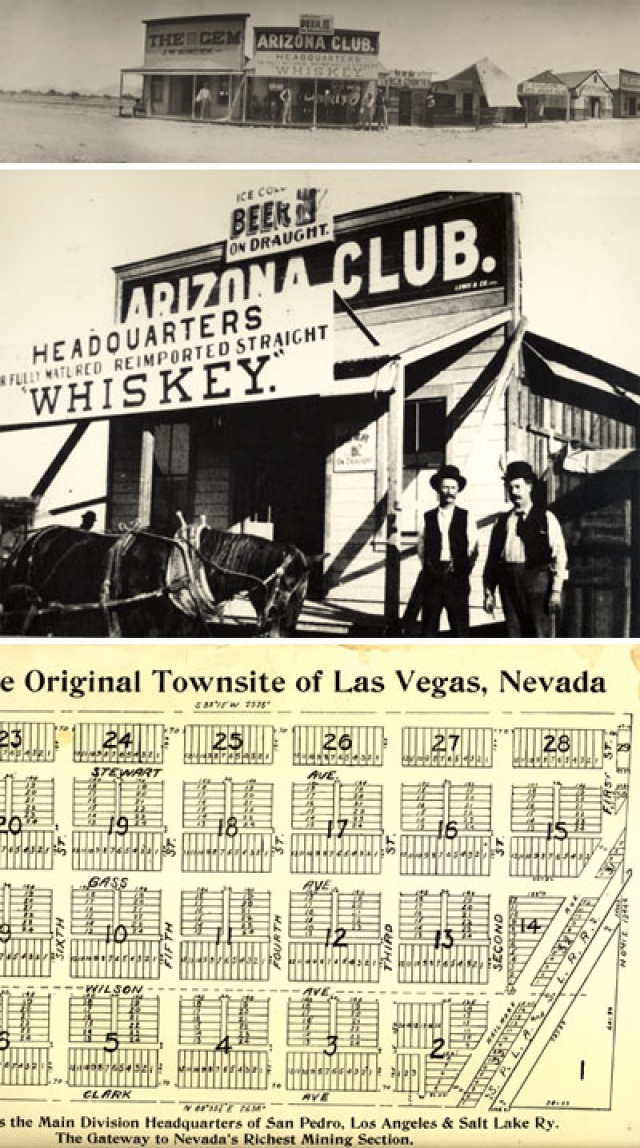
During the 13 years of Prohibition from 1920 to 1933, the saloons along Las Vegas' Block 16 continued to operate and sell illegal liquor in secret. In spite of laws banning them, both prostitution and gambling also thrived into the 1940s, until city commissioners voted, on January 6, 1942, to cancel the liquor and slot machine licenses for all of the block’s saloons. Without these sources of steady cash, the saloons and brothels quickly became rundown and four years later the city declared the old structures hazardous and ordered them demolished. The land was eventually used for the parking lots that remain to this day behind Binion’s and east of the California Hotel.
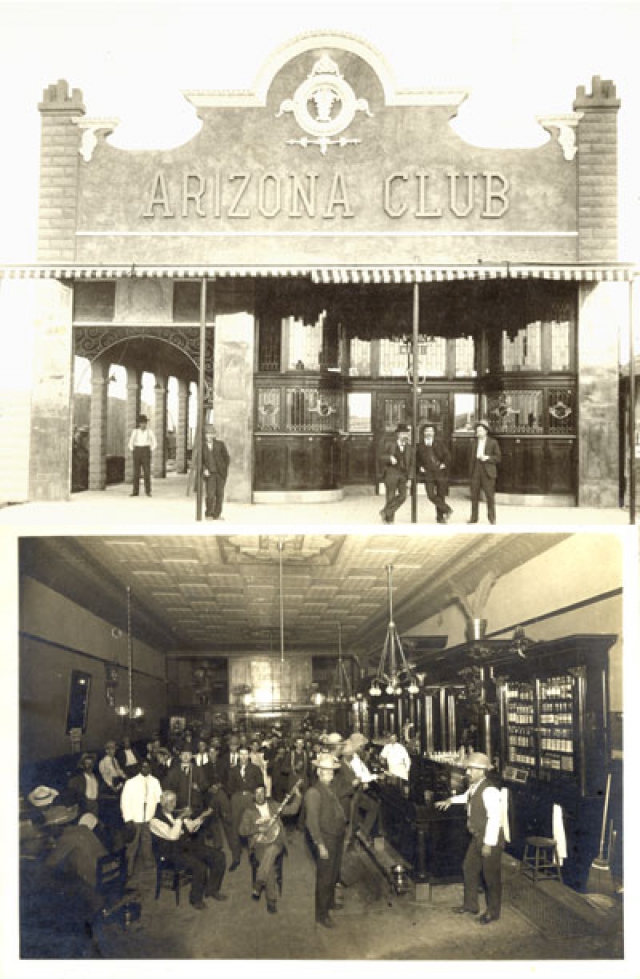
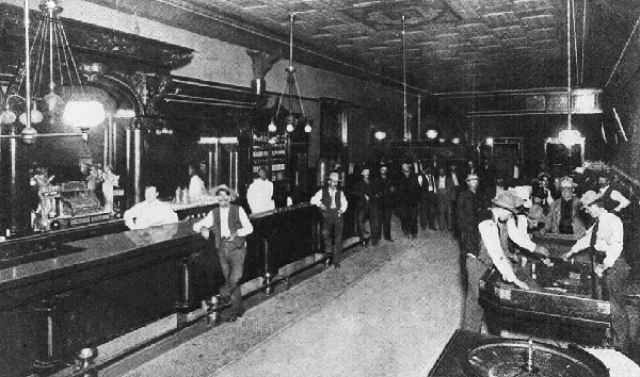
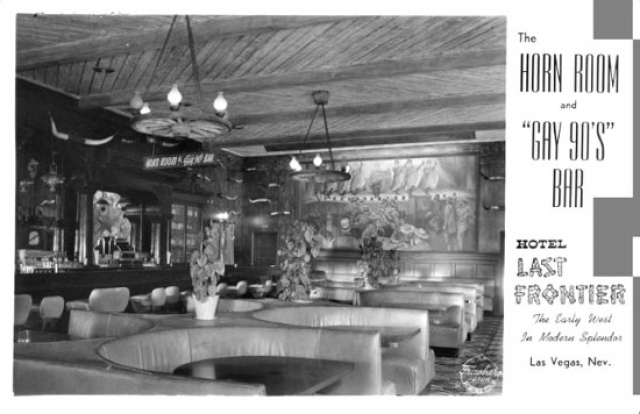
A good number of the fixtures and fittings, including the antique 40-foot mahogany and French beveled-glass bar from the Arizona Club, were salvaged before the demolition, and many of these items were purchased by wealthy Texan R.E. Griffith and his nephew, William J. Moore, owners of the Last Frontier Casino, which they opened on the Strip in 1942. The pair took up the Old West theme established by the existing El Rancho and really ran with it. The property’s attractions included the Horn Room, whose walls showcased a quantity of animal horns, and the Gay ‘90s Bar, a fin-de-siècle saloon, which basically comprised the Arizona Club’s original bar with a few new flourishes, like bar stools in the form of western saddles, some of which seated two.
The Last Frontier was the earliest pioneer of theming on the Strip, culminating in 1950 with the opening of the Last Frontier Village. This popular tourist attraction was a pre-Disneyland-esque theme park that was free to enter and featured no less than 900 tons of Old West memorabilia, including working "authentic" western attractions, plus retail establishments.
In 1955 the property changed hands and was re-branded the New Frontier. It was refurbished and redecorated in modern contemporary western style, but they kept some of the original intact, which we’re pretty sure included that bar. The property then changed hands a couple more times and was eventually torn down in the mid-‘60s and rebuilt.
Over the next few decades the New Frontier passed through several more sets of hands, including those of Howard Hughes (who shortened the name to the plain old Frontier), Marget Elardi, and Phil Ruffin, who changed the name back to the New Frontier, then sold it to the Elad Group, owner of New York’s Plaza Hotel, in 2007. On July 16, 2007, 60 years after it debuted, the Frontier closed its doors for good. It was imploded on November 13, 2007, to make way for a multi-use complex that will feature the Plaza name.
Prior to the property’s implosion in November of that year, a public auction was held for all remaining fixtures and fittings, from chairs to chandeliers, poker tables to palm trees. We checked out the catalog (which you can see by clicking here) and although it contained several other bars (see Lot numbers 376, 649, and 650, for example), we could find no mention of the Arizona Club piece. So we put in a call to the Senior Vice President of the Great American Group, who happens to be an LVA member and QoD fan (hello, Roger!). The Great American Group was the auction house in charge of the New Frontier's sale (and that of the Stardust and Nevada Landing). He very helpfully did some sleuthing for us and confirmed that the mahogany bar was not present in the property when they appraised it and had evidently disappeared during one of the earlier remodels.
He found the great postcard below that shows it in situ in the Horn Room in 1943, but that’s the last confirmation of its presence we found. Our guess is that it was either the major remodel in 1955 or else the mid-‘60s rebuild that spelled the end for this bar. If anyone else knows anything else, whether a verified sighting on a certain date or word of the bar’s subsequent owner (if it escaped the scrap heap, which we sincerely hope), please let us know.
In the meantime, for an interesting interactive timeline regarding the history of what’s now simply called Brunswick, which made the elusive bar, click here. Founded in 1845, it quickly became the preeminent maker of billiard tables in the world, subsequently diversifying into other areas, including the front- and back-bar business (c. 1878), bowling, soda fountains, marine technology and boat building, and fitness equipment.
Images appear courtesy of UNLV Special Collections and Pomona Public Library.
UPDATE: 06-19-2008 Sincere thanks to the reader who wrote in with this update:
"I operate the WestVegas.com website and was the creator of the EarlyVegas.com website.
"Four years ago I was contacted by the man who owns the old Arizona Club bar. The bar is still alive and well and in storage (as of 2004) somewhere on the East Coast."
http://www.sellauction.com/ga/disp_cat.asp?pg=4&images=yes&eloc=EVENTS/GA072607/&xls=no&areg=072607&DispLstAmt=250&lane=6