We doubt very much that Las Vegas has a race track in its future, since it has two such catastrophic failures in its past.
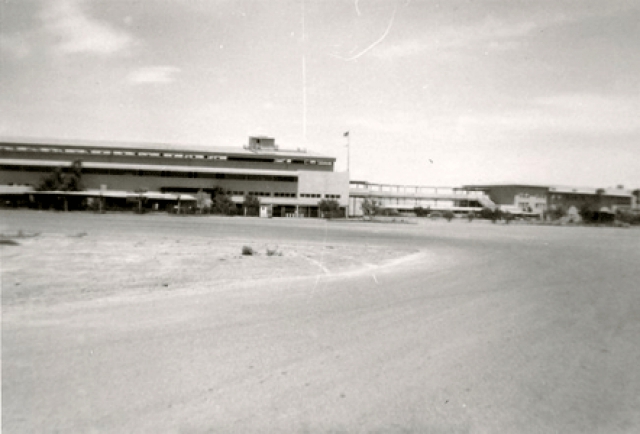
Here's what we wrote about this very topic in January of this year, plus some additional information we received subsequently from the lovely Barry Meadow, a professional race bettor who's an occasional contributor to this column and sent us the original (unedited) version of an article he wrote for Gaming Business magazine in 1981 about the sorry state of the Las Vegas Downs dog track. Plus, we've provided some excerpts from the Las Vegas Sun's excellent new history site, which includes a couple of articles about the horse track and its inauspicious opening, together with a 1958 photograph of the defunct facility just prior to its demolition.
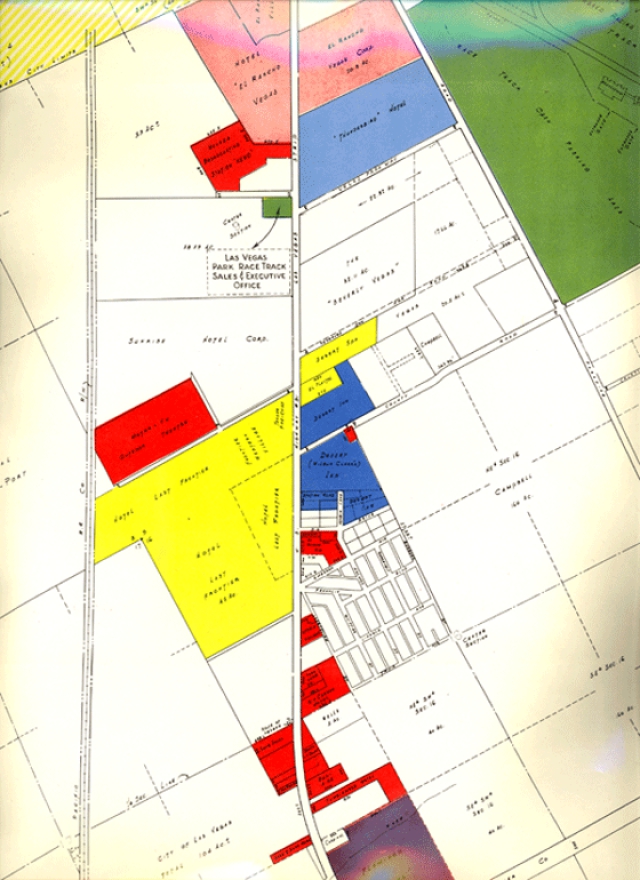
There have been two race tracks in Las Vegas, although the first was so short-lived that you'd certainly be forgiven for never having heard of it. You can see its location in the map below (big green area, top right), on the north end of the Strip behind the Thunderbird Hotel, which seems to have earned it the informal name of the "Thunderbird Downs," although the sales and executive offices on the other side of the Strip (see the small green box by the Nevada Broadcasting Station) indicate that it was actually called Las Vegas Park Race Track, which was accessed solely via a narrow gravel road called Las Vegas Park Way, which ran from Paradise Road to the track.
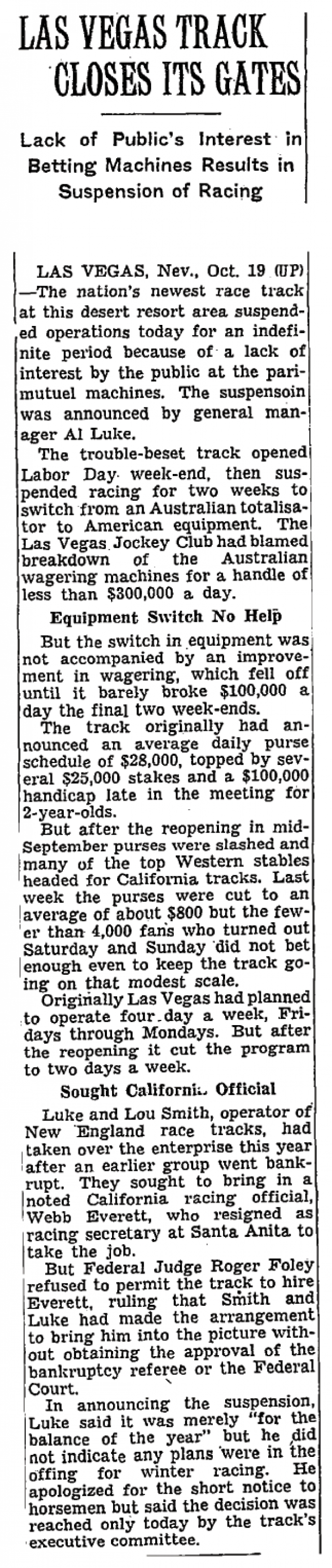
According to a report we tracked down in the Oct. 19, 1953, edition of the New York Times, this thoroughbred race track, which had already gone bankrupt once before it even opened, debuted Labor Day (Sept. 4) of that year, only to immediately suspend business for two weeks to switch from the Australian "totalizator" to an American model, after the Las Vegas Jockey Club blamed the breakdown of the original machine for the poor handle of less than $300,000 a day. Here's an excerpt from the Las Vegas Sun's coverage of opening day:
"At the close of yesterday's session, President Lou Smith offered his apologies to the track fans because of the failure of the totalizator to function properly. Smith said that all tickets will be issued by hand today and this should assure prompt service.
"There were still many things to be done at the track to make it the polished venture that the owners would like to have: first of which would be the elimination of the Australian-type ticket selling machines.
"Another major bug still to be ironed out by the Jockey Club is the paralyzing traffic jam of motorists attempting to attend. Only one entrance is provided for racing fans, and many cars were forced to wait almost an hour on the clogged highways approaching the track, before gaining entrance to the parking lot. Hundreds gave up after a long wait, and returned home.
"Adequate change in the cashiers' windows, paper cups for beer drinkers instead of the breakable zombie glasses now in use, and an improved public address system would give the operation more of a professional appearance, according to the complaints voiced."
As it turned out, the totalizator switch proved to be of no help, with the track barely breaking $100,000 per day its final two weekends. Plans to operate four days a week were scrapped and with purses slashed to $800 (as opposed to the $28,000-or-so intended average), many of the top Western stables abandoned the track in favor of California. Less than 4,000 fans turned out for the final Saturday and Sunday meetings and this lack of public interest resulted in the $4 million track's final closure on Oct. 19, followed by a second and final bankruptcy.
It seems some scandal followed in the wake of this short-lived fiasco, with the Oct. 20 edition of the Los Angeles Times reporting that directors and officers of the track had been ordered to appear in Reno on Nov. 2