You're half right. Frank Sinatra never played the Flamingo, but Dean Martin did.
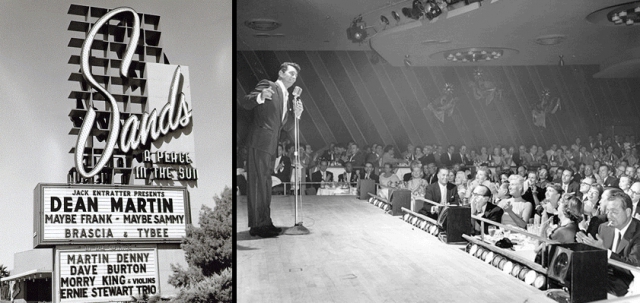
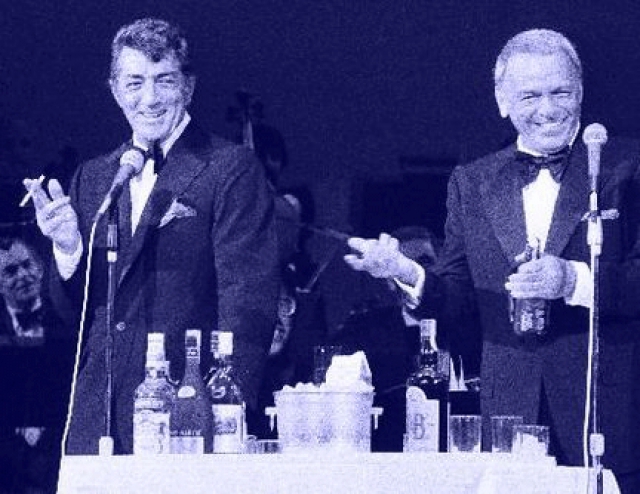
Ol' Blue Eyes made his Las Vegas debut on September 4, 1951 at Wilbur Clark's Desert Inn, to which he returned for more dates the following July. Sinatra's career had been in something of a slump prior to the Vegas performances, but he received favorable reviews and in 1953 returned to play the newly opened Sands Hotel's Copa Room, which turned out to be the start of a famous and lengthy engagement there, both as a solo performer and as part of the "Rat Pack".
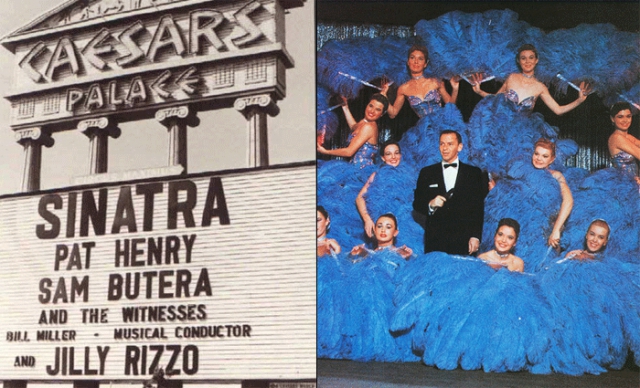
When Howard Hughes bought the property in 1968, Sinatra's relationship with the Sands quickly soured. His line of credit in the casino was cut off and he physically came to blows with executive Carl Cohen, who knocked out two of the singer's front teeth during an argument in a hotel restaurant. Sinatra reacted by driving a golf cart through the front window, effectively terminating his contract there. The following day, he signed with Caesars Palace, where he headlined in the Circus Maximum showroom.
In 1971, at the age of 55, Frank Sinatra announced he was retiring, but two years later The Voice was back performing and in '74 he returned to Vegas for another short stint at Caesars Palace, where he would return in later years. Other performances followed over the years at the Golden Nugget, Bally's, the Riviera, the Desert Inn, and finally, the MGM Grand, where he performed for the last time in Las Vegas on May 29, 1994. When he died at his California home in May, 1998, the hotels on the Strip dimmed their lights in tribute. A 4-CD box set of his Vegas years, plus a DVD, is available, spanning 1961-1987.
Before becoming a performer, Dino Paul Crocetti worked briefly as a blackjack dealer in an illegal casino and in his later years as a Strip headliner would sometimes be found dealing cards for fun in the casino.
Having changed his name to Dean Martin in 1946, he was introduced to young comic Jerry Lewis, with whom he'd form a decade-long comedy partnership. Martin arrived in Las Vegas in September, 1949, where he and Lewis got a gig headlining at the Flamingo, in the pre-Strip days when it was still called Highway 91. The following year, their Vegas-themed movie, My Friend Irma Goes West, was the first movie premiere in Las Vegas history.
In 1952, Dean was on vacation in Vegas when the Flamingo's headliner, Kay Starr, fell sick and Dean filled in for a solo spot, which proved to be the real start of his career in this city. When the Sands opened later that year, he and Lewis left the Flamingo and were signed to the Copa Room. They split, acrimoniously, in '56 but Martin continued as a solo act at the Sands, and then alongside the rest of the Rat Pack.
When things went sour at the Sands and Sinatra moved to Caesars, Dean Martin signed a $200,000 per week contract with the Riviera Hotel, in which he was a part-owner. In '73 he signed a long-term contract with the original MGM Grand (now Bally's), where he made his final appearance in 1990. He died five years later, having suffered from debilitating ill health and personal tragedy (his son was killed in a plane crash) and was honored with the same light-dimming on the Strip as they would later be done for his old buddy Frank.
As to why both performers' Walk of Stars tributes were placed outside the Flamingo, we guessed it was because it was the most historic building left standing that either of them had regularly played, a conjecture that was confirmed by the organization when we asked. With its proximity to Sinatra's old stomping ground (Caesars) across the street and Martin's former ties to what's now Bally's, it seems like a fitting enough location. The presentation was finally made back in February of this year, with Martin's daughter Deana on hand to accept on behalf of her father. Theirs are the 43rd and 44th stars on the four-mile sidewalk that runs along both sides of the Strip between Sahara Avenue and Russell Road.
Images appear courtesy of UNLV Special Collections. For more on the Rat Pack era here, check out The First 100, our award-winning collection of biographies of the the hundred most influential people in Las Vegas' history. As a taster, here's a link to the chapter on Frank Sinatra, penned by R-J entertainment columnist Mike Weatherford.