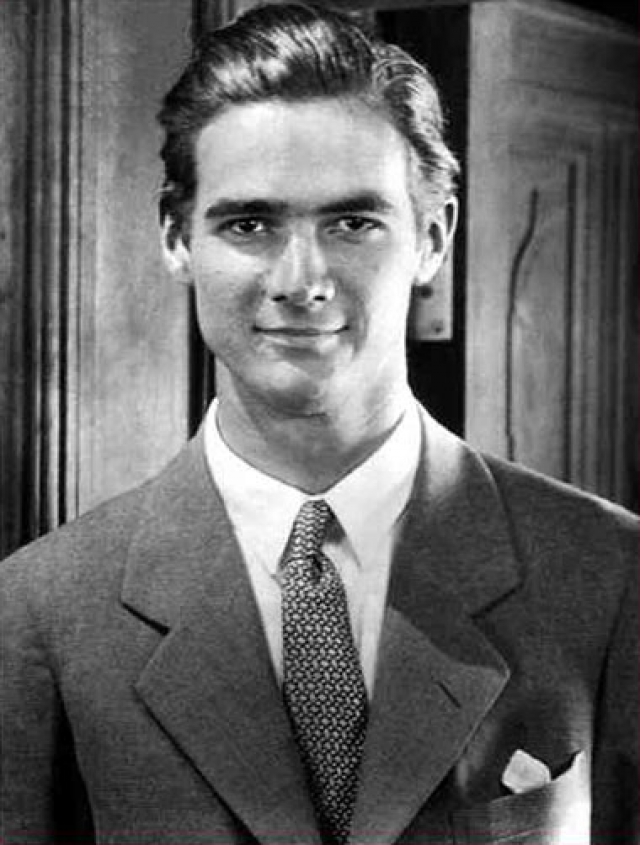
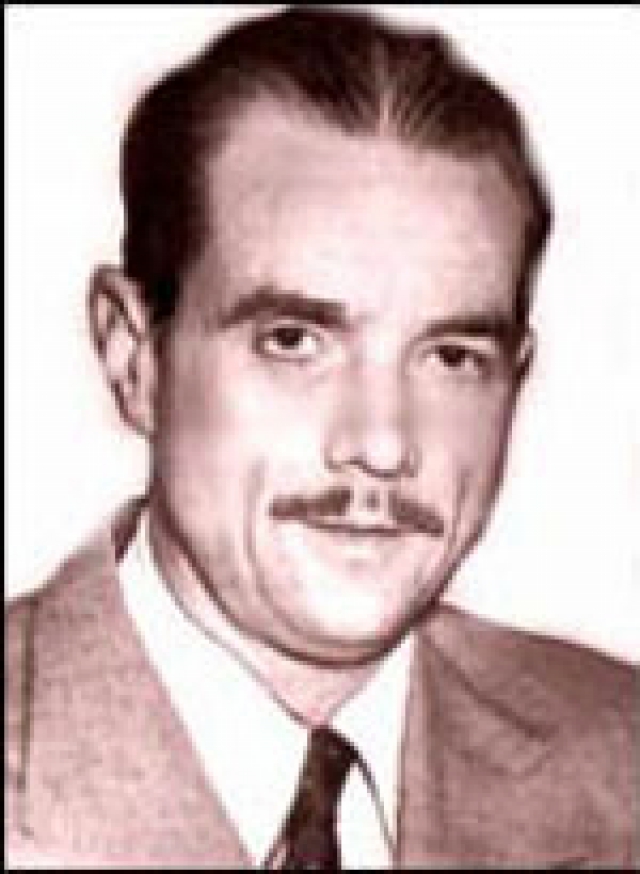
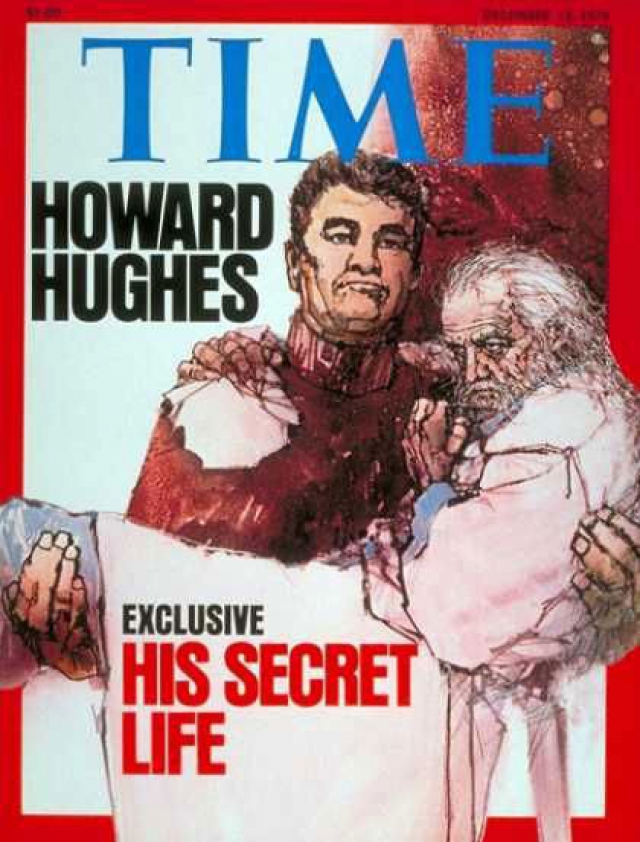
This answer was written by Huntington Press senior editor Deke Castleman, who's followed the Howard Hughes saga since the early '70s.
Here's what the world believes about the death of Howard Hughes: He died on April 5, 1976, at the age of 71. The official cause of death was listed as kidney failure.
According to Wikipedia, "His reclusive activities and drug use made him practically unrecognizable; his hair, beard, fingernails, and toenails were long, his tall 6'4" frame now weighed barely 90 pounds, and the FBI had to resort to fingerprints to identify the body. Hughes was in extremely poor physical condition at the time of his death; X-rays revealed broken-off hypodermic needles still embedded in his arms and severe malnutrition. Howard Hughes' alias of 'John T. Conover' was used upon the arrival of his body at a morgue in Houston, Texas, on the day of his death."
End of answer, right?
Not so fast.
A most intriguing twist on this extraordinary and enduring story surfaced recently -- that Howard Hughes actually lived to be 96 years old and died as recently as November 21, 2001, in Dothan, Alabama, after assuming another man's identity in 1969, giving a mentally deranged drug-addict imposter his own identity, and being married to one Eva Renee McLelland for 31 years.
That probably sounds as outlandishly implausible to you as it did to me -- before I read a new book, Boxes -- The Secret Life of Howard Hughes, written by Douglas Wellman and published by Omaha-based WriteLife.
Boxes (the title refers to Hughes's compulsive refusal to unpack his belongings from his beloved cardboard carry-alls) presents exhaustively researched, abundantly documented, and compellingly fascinating evidence that, to wit: In 1969, when Hughes snuck out of the Desert Inn where he'd lived in seclusion for three years, he left in his place a shell of a homeless man picked up, presumably, on the streets of Las Vegas. And he was the "Howard Hughes" the media followed as he was hauled around the world on stretchers (Bahamas, Nicaragua, Canada, back to Nicaragua, London, back to the Bahamas, and Acapulco), reportedly on his death bed for seven years until the poor man, John T. Conover or whoever he was, died of neglect.
Meanwhile, the real Howard Hughes, according to Boxes, moved to the Panama Canal Zone, showing up there in September 1969 as one Verner Dale Nicely, posing as an aircraft maintenance supervisor at Howard Air Force Base, and conducting his business affairs through a cadre of shadowy Mormon aides. At the same time that his bed-ridden alter-ego was losing weight at an alarming rate, the real Hughes was, on occasion, meeting high-ranking officials, flying experimental aircraft, and chatting over the phone with friends, partners, and journalists. He didn't disappear for good after his presumed death, and he lived with his wife Eva in complete seclusion in Alabama for the better part of 25 years.
Hughes' other alter-ego, Verner Nicely, was born in 1921 in Ohio, served in the Navy during World War II, went to work in Panama for the CIA in the late 1950s, and was last heard from in 1967 when he was assigned to the incipient War on Drugs in South America. Verner Nicely was 15 years younger, five inches shorter, and had different colored eyes than Howard Hughes, but Hughes was passing himself off as "Nik" Nicely (which he pronounced NICK-e-ly) when he met Eva McLelland in Panama in October 1969.
The two were married in Panama on May 13, 1970 (more than a year before Hughes' divorce from Jean Peters was finalized).
The book is based mainly on the detailed (and documented, complete with never-before-seen photos) memories of Eva McLelland. Eva unraveled "Nik’s" secret slowly but surely through her years being married to one of the world’s classic mystery men. Indeed, if the book is true, then one of the richest, most famous, and most unusual men in the world successfully pulled off one of the greatest disappearing acts in history.
Eva kept it a secret of her own till a year after the death of Howard "Nik" Hughes, when she told the story for the first time to Mark Miller.
Miller worked for the foundation to which Eva bequeathed some land she owned in Alabama; during their dealings, they became friends. He even accompanied Eva to Florida, where she scattered "Nik's" ashes, and on the way back to Alabama she unloaded the whole tale on him.
At first, Miller didn’t believe her at all. And he didn't fully believe her until he’d compared her stories to the public record for more than five years.
That’s when Miller brought in Douglas Wellman, author of the eventual book. Wellman met Eva McLelland when she was in her 90s (she died in 2009 at the age of 93), did his own research, and came to the same conclusion as Miller: This was "Mrs. Howard Hughes."
It’s perhaps doubly ironic that Howard Hughes had once himself been the subject of an elaborate hoax. The infamous Clifford Irving sold a bogus biography of Hughes to McGraw Hill, which Hughes personally denounced in a long conference call in 1970 (when the Hughes’ stand-in -- lie-in might be more appropriate -- was incoherent in a hotel room in the Bahamas) in 1972.
The only way to know whether or not you believe this story is to read the book, judge it on its own merits, and come to your own conclusion. That’s what I did. And I came away with a surprisingly warm feeling about the whole tale: that Howard Hughes, whom I've always deemed a tortured genius, in the end found someone to love him and did, in his way, love in return.
Bottom line: It’s much more endearing to believe Boxes than it is to doubt it. It has a happy ending.
Boxes -- The Secret Life of Howard Hughes is available from Amazon.com, a steal at $8.