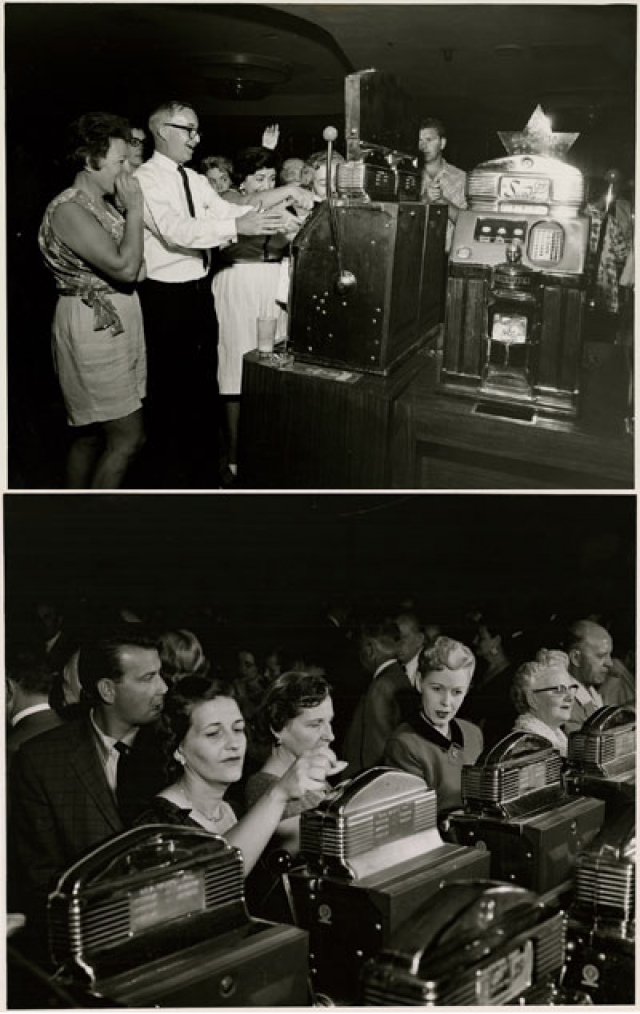
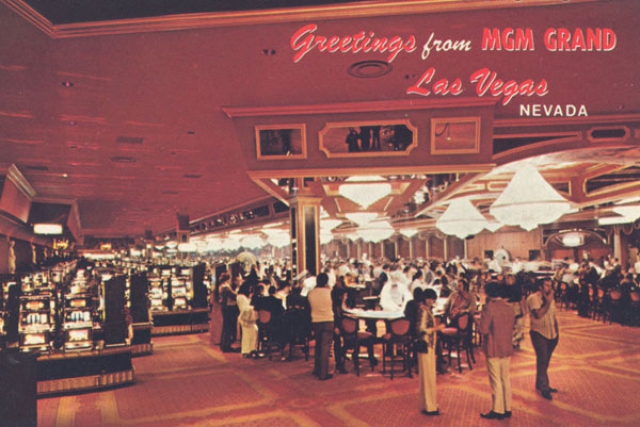
We confess to not being slot-machine history experts, and while broad histories are available, it's proven tricky pinning down specifics on the earlier technological advancements.
What we think is the case was that the first significant innovation came in 1964, when Bally Technologies introduced the first electromechanical slot machine, called the "Money Honey," which paved the way for future mechanization. Powered by electricity, this machine possessed new sound and light effects, as well as having multi-coin capacity, and it was the first slot machine ever to have a hopper, allowing for bigger payouts than this.
While the Money Honey was still operated by a lever that had to be cranked and was still played standing up, with integrated fully-electromechanical operations, slot machines went on to incorporate "bottomless" hoppers and automatic payout systems; the need was removed for the traditional mechanical pull lever, replaced by buttons, although those levers from the "one-armed bandit" days remain as nostaligic vestiges even on some machines to this day.
It seems the other innovation that actually brought about this transition from standing to sitting, however, came much later, sometime in the '80s or early '90s, when an IGT game designer called Richard Fiore is credited with having developed the first so-called "slant-top" or "low-level" machine, which included a stool so the player could sit down. The initially omnipresent "stand up" or "upright" machines that still require players to stand are rarities on the casino floor these days.
L-R: Sands slots in the late '50s/early '60s; original MGM Grand (now Bally's), which opened in 1973 and burned in 1980. Images appear courtesy of UNLV Special Collections.