Of course we can!
Blue Diamond, which is now what's officially defined as a "census designated place" (a recognized population center for statistical purposes, but lacking the municipal government of its incorporated equivalent, which would be a village), was formerly known as Cottonwood Springs and originated as a stop on the Old Spanish Trail for traders from Santa Fe, New Mexico, to California in the 1830s and '40s.
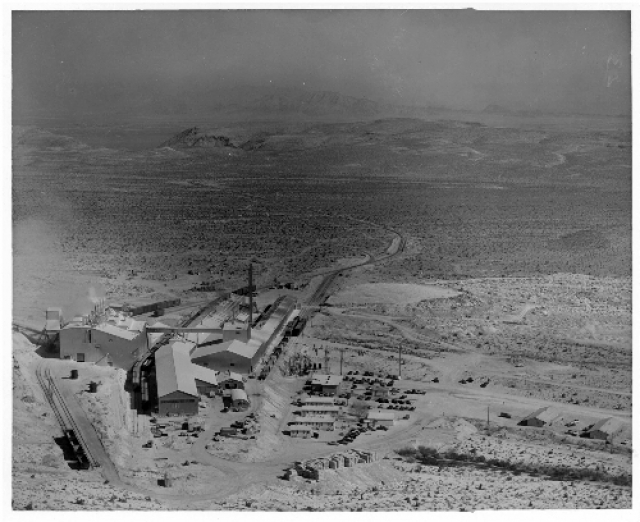
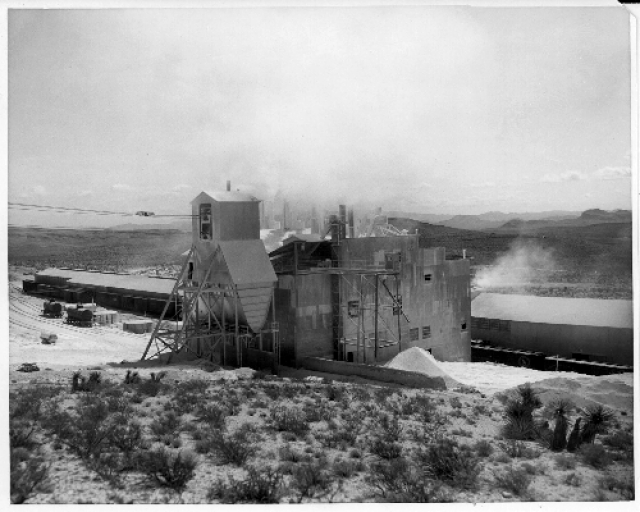
In 1923, however, the name was changed to Blue Diamond when the Blue Diamond Company took over the gypsum mine there and built corporate housing for the workers. Gypsum is the principal ingredient of Plaster of Paris, a building material that dates back 9,000 years and is also used for casting limbs and for decorative purposes.
At first we could find no connection between diamonds and plaster, but apparently the gypsum mined at Cottonwood Springs was of the finest variety -- the equivalent of a blue diamond in the precious-gem world -- and hence the company evidently chose to name itself and the town for this rare grade as an indication of its product's quality. The mine closed in 2005, but there's a Blue Diamond Lathe and Plaster in Lake Havasu, Arizona, which was founded in 1997, so apparently this is a not-uncommon metaphor in the gypsum world.
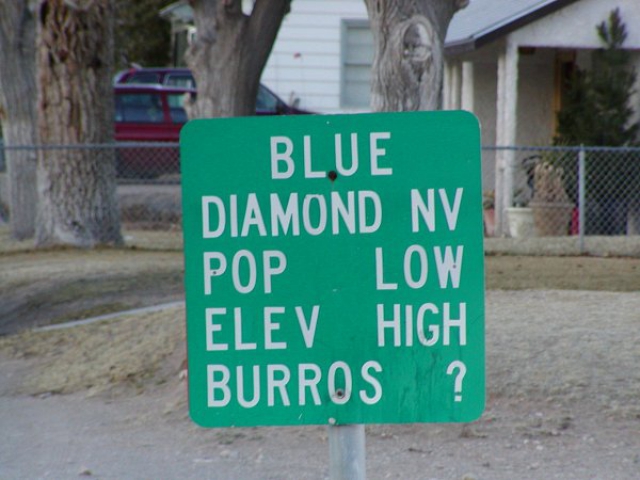
Although the mine has closed, the gypsum plant in Blue Diamond remains. It's changed hands a half-dozen times in the past four decades and is currently called Bpb Gypsum Inc., which is owned by CertainTeed Corporation, a subsidiary of Saint-Gobain -- one of the top-100 industrial companies in the world. In 2010, the official population of Blue Diamond was 290 (plus a lot of burros).
Historical images appear courtesy of CertainTeed Gypsum.