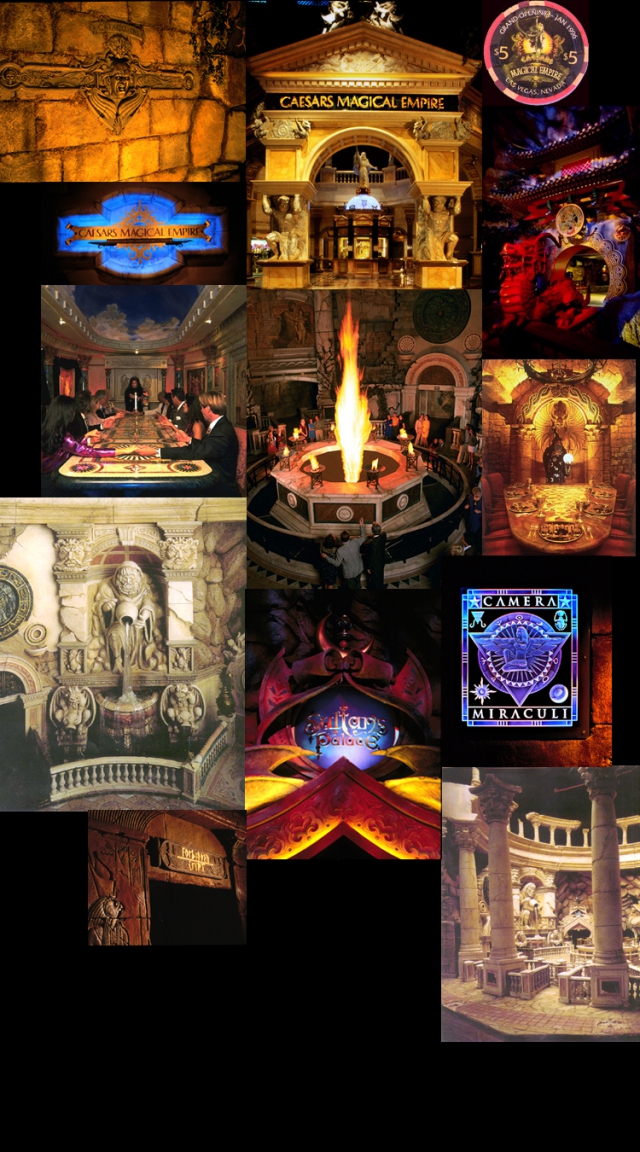
We thought we were done with our historic odyssey down Las Vegas Boulevard, revisiting forgotten attractions of yore, but then we came across some previously unseen sources that cast a new light on some old ideas. Plus, we received so much positive feedback for our trip down memory lane that we figured a few more installments wouldn't hurt, so we'll start with a journey back in time, to when Caesars Palace got all mystical for a moment...
The year was 1996 and magic was BIG -- TV was awash with "Worlds Greatest Magic"-type specials and Lance Burton was commencing his 13-year gig in his custom-built 1,274-seat theater at the Monte Carlo. Las Vegas was at the height of its family-friendly phase, and theming was still "in", so in this context Caesars Palace decided to build a high-end attraction that would capitalize on the public's seemingly unquenchable thirst for illusion.
The 66,000-square-foot "immersive" experience that was Caesars Magical Empire took 800 tons of steel and more than a year to construct, at a cost of around $70 million. Attention was paid to the smallest details, from the custom signage created by Creo Industrial Arts, to the concept and structure designed and built by Gary Goddard's Landmark Entertainment Group. The creative team's efforts were rewarded when the attraction received the prestigious Themed Entertainment Association's Award for Outstanding Achievement.
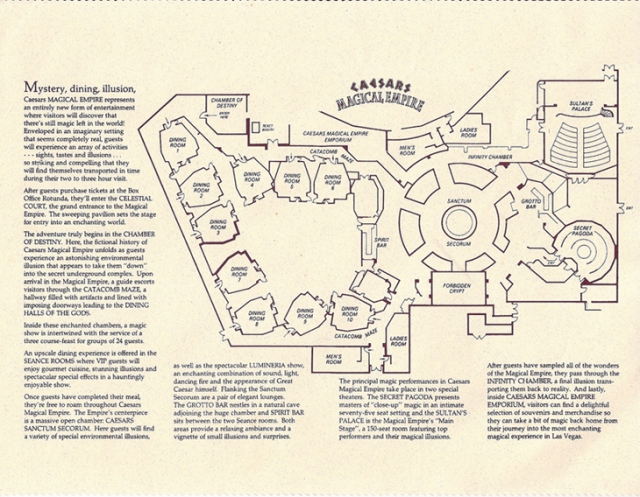
Imported Italian marble was used for the "Celestial Court" entrance way (adjacent to the Olympiad Race & Sports Book), from whence initiates would enter the "Chamber of Destiny" and experience the sensory illusion that they were being lowered into ancient catacombs. (In fact, it wasn't the guests but the the walls that moved, raised by a giant electric winch, while the floor was shaken by pneumatic actuators).
The centerpiece of the Magical Empire was the Sanctorum Secorum, a circular 70-foot-high-domed rotunda, complete with a dramatic fire pit and a resident wizard. Guests were escorted by Roman centurians through the "underground" labyrinth of passages for a magical dining experience replete with touches of wizardry and sorcery -- even the restrooms featured optical illusions. After dinner, there were multiple theaters to visit, featuring close-up performances by some talented magicians, which was all part of the package. With the city's typical disregard for both chronology and geographical consistency, these additional rooms were named things like the Secret Pagoda Theater and the Sultan's Palace, but at least the two Thai foo-dog statues, not to mention the reproductions of artifacts from ancient Egypt and Iran, were based on authentic relics, or so the PR officials assured the media.
In fact, it was the attention paid to detail, and the crew of 200 that the attraction employed, that probably proved to be the downfall of Caesars Magical Empire. 66,000 square feet is a lot of space to take up, especially in a town that was still earning its bread and butter in terms of slot-machines-per-square-foot back then. Expectations of 2,400 guests per day at CME proved to be wildly optimistic (each dining chamber sat up to 24, but tickets were pricey for that time, starting at $70+ for the dinner-and-show experience). From early 2000 rumors of closure were rampant, but CME limped on until the end of 2002. By that point, the family-friendly experiment was truly over, spelling the end of the road for one of Las Vegas' more ambitious and and impressive themed attractions, which was closed that November and demolished to make way for the Colosseum and PURE nightclub.
For all those who missed it, here's one last animated glimpse of Caesars Magical Empire, courtesy of the official promo video, which played constantly outside the attraction. Click on the image captions below, too.