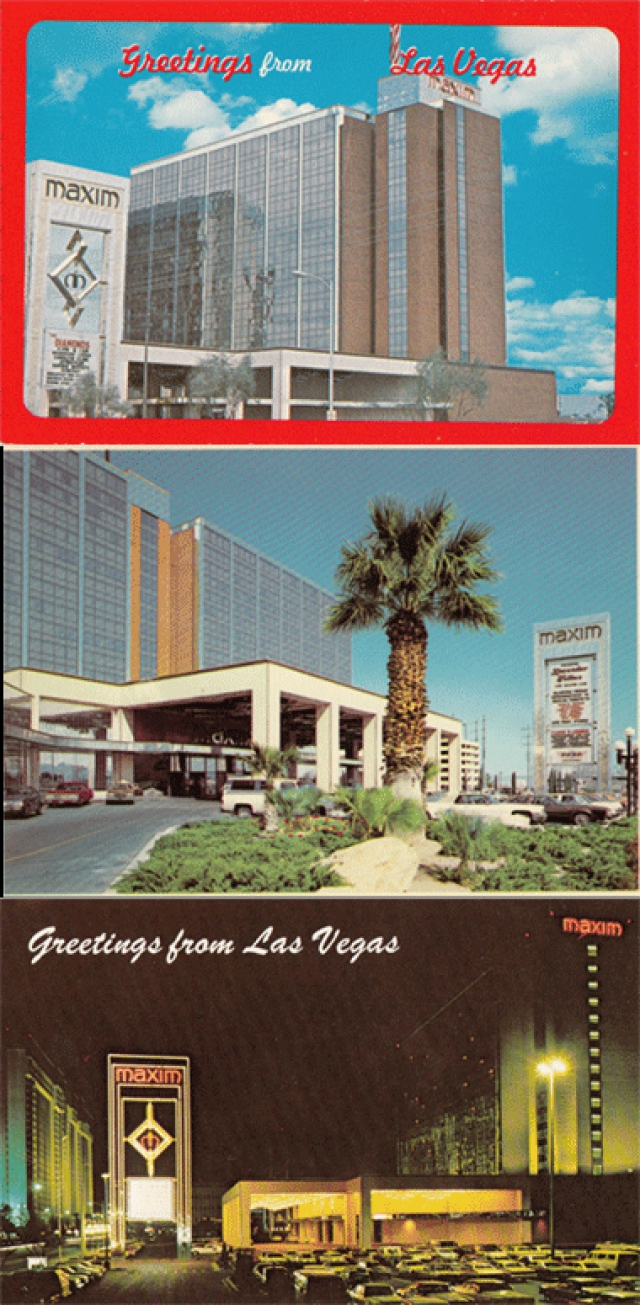
We concluded Part II of this answer on Tuesday, with the Maxim reaching the end of the road in its original incarnation and closing, pending its transition to the first Westin in the U.S. to offer a casino (now renamed separately as the Max Casino, as a tribute to the original property).
However, the original questioner wanted to know if there was any truth to something they'd heard about there being a "Mob" influence at the Maxim back in the day. While we found no evidence to support this claim in anything we read in the course of our research, or from what we were told by eye witnesses who worked there, but we did find some previous murkiness relating to the plot of land at 160 E. Flamingo that would eventually become the site of the Maxim in 1977.
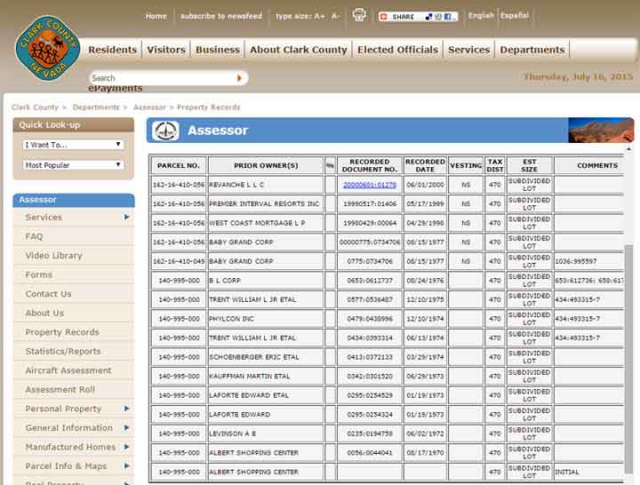
At this juncture, we'll enter Exhibit A (see thumbnails below). It's a screenshot from the records of the Clark County Assessor's office for the parcel number relating to 160 E. Flamingo, from which we noted the frequency with which the site appeared to change in the early '70s. Out of curiosity, we googled all the names listed.
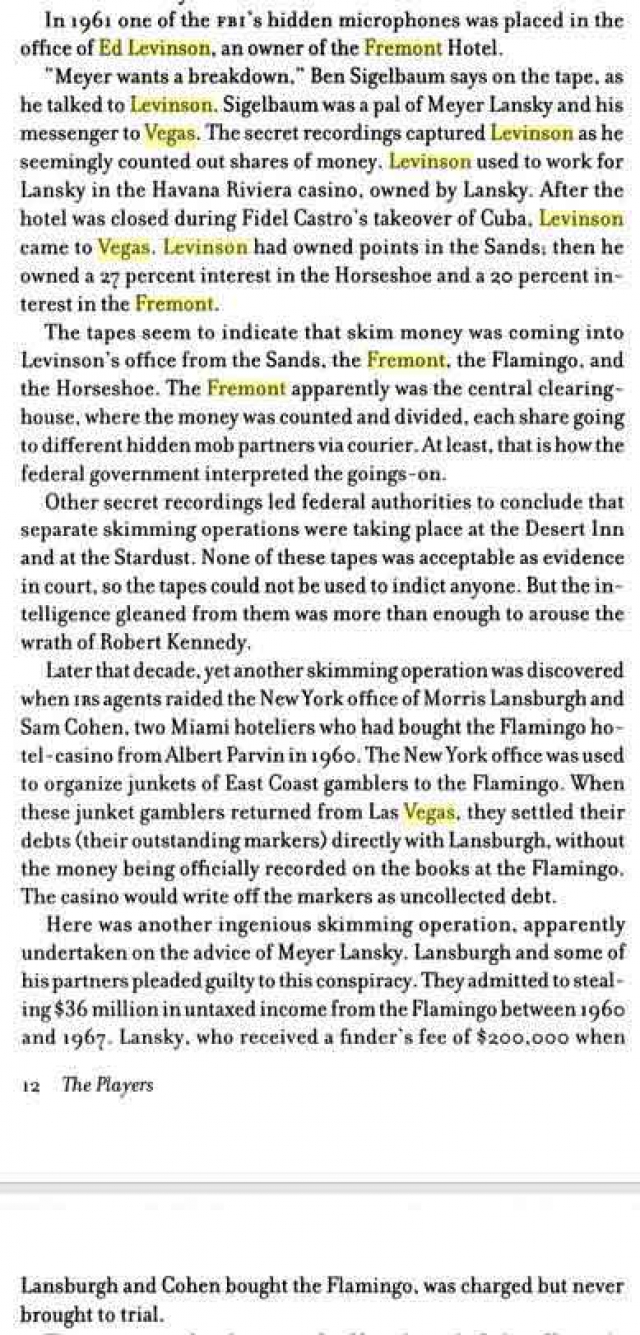
Most searches yielded nothing, or nothing of interest, but we were intrigued about listed buyer E A Levinson, back in 1962. Could this be Ed Levinson -- owner of downtown's Fremont Hotel and a former employee of Meyer Lansky's Havana Riviera resort-casino on Cuba? If so, then according to Jack Sheehan's The Players, when Levinson's office was tapped by the FBI in the early '60s, the recordings revealed that the Fremont was being used as the central clearing house to launder skimmed funds being siphoned in from the Sands, Flamingo, and Horseshoe casinos [see Exhibit B].
While we can't be sure about the Levinson connection, however, or if he and the mysterious "E A" are, in fact, one and the same, when it came to the next name on the list, Edward LaForte, we hit pay dirt.
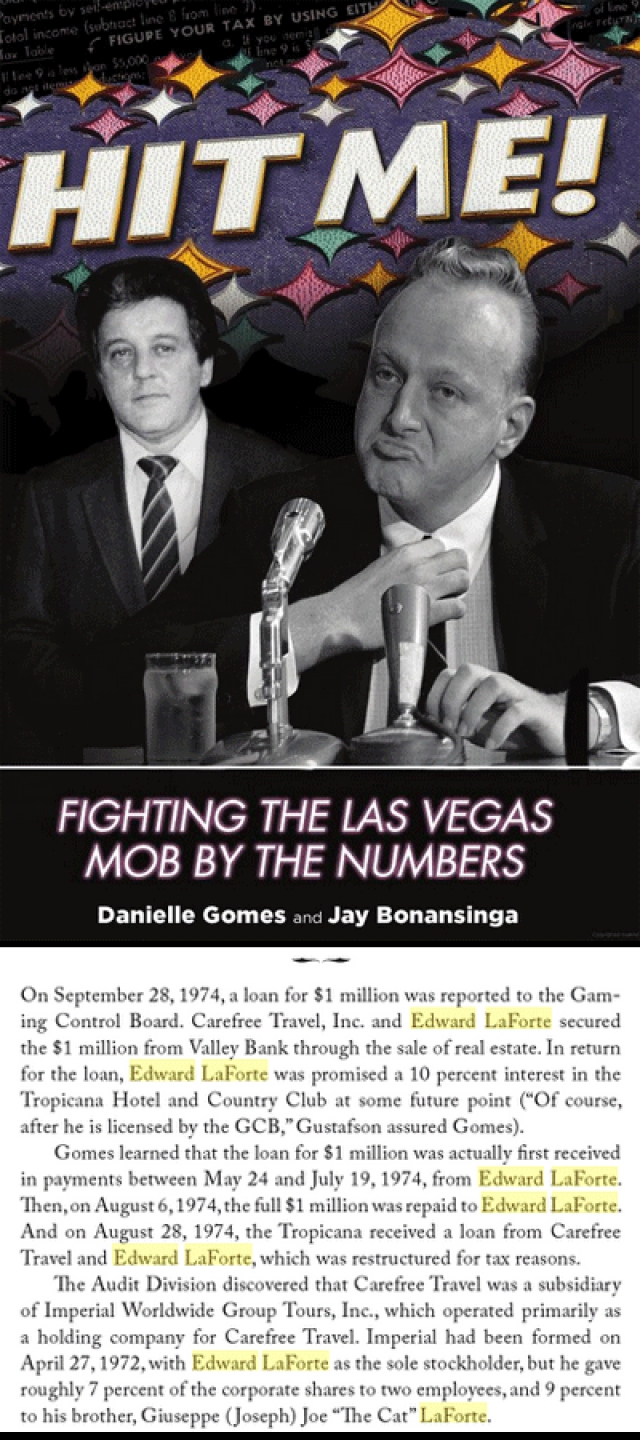
On September 28, 1974, a $1 million loan to the Tropicana was reported to the Nevada Gaming Control Board. The loan was secured by a company named Carefree Travel and an individual named Edward LaForte. The Trop was already being investigated for its Mob connections and the loan was an immediate red flag, so one of the investigators dug a little into LaForte's identity and background. It turned out that while Edward himself had no criminal record, he was known to spend a lot of time at known Mafia hangouts in New York's Little Italy; close personal associates of Edward LaForte included Paul Castellano and Carmine Lombardozzi, both capos in the Gambino crime family.
Edward's brother Joe "the Cat" LaForte, meanwhile, was known to be running the numbers racket and the loan-sharking and narcotics businesses for all of Staten Island, reporting directly to Castellano, with an arrest record as long as your arm for charges including illegal bookmaking, felonious assault, and rape. An investigation by the Gaming Commission found the loan to be from an unsuitable source and that $1 million became the first loan recession in Nevada gaming history. In the words of Hit Me!: Fighting the Mob By the Numbers [Exhibit C], the report into the Tropicana's loan "clearly linked Carefree Travel, Edward LaForte, and Joseph LaForte, to organized crime."
Hopefully this unexpected discovery satisfies all you fans of Las Vegas Mob History (we may quit QoD and become a private investigator).
Still, while we can attest to the fact that in the early '70s, at least one of the owners of 160 E. Flamingo -- the site that would later house the Maxim -- was unquestionably connected to the Mob, and the same may be the case for at least one other name on the list, by the time the Maxim was built, there's no further evidence of any Mob ties. We received some non-specific anecdotal whisperings from a couple of readers, who'd spoken to long-time employees ... but there was nothing substantive in any of that and the two independent former employees with whom we spoke, whose tenure at the Maxim collectively spanned 1977 to 1989, both denied any knowledge or evidence of any kind of organized-crime influence at the property.
And so concludes the main history lesson, but we'll conclude with a few random tidbits and factoids about the Maxim that are worth sharing, but that didn't really fit in neatly anywhere else:
Many thanks to the reader who shared their rare and historic Maxim postcard collection with us.