We pick up from yesterday, just as the gloves were about to come off in the Station vs. McMackin showdown.
According to Station, although McMackin had owned the Roadhouse since 1992, he had "never fully remodeled the Roadhouse and the Roadhouse never operated in the manner represented to the Henderson City Council." Gaming rights held under an expired 1988 conditional-use permit could not be revived, Station argued. Meanwhile, McMackin had been denied a fifth extension of his city-grandfathered status, in part, because the council had lost patience with years of unfulfilled promises of upgrades at the Roadhouse. That policy shift gave Station the elbow room it needed to get around the Roadhouse's standing under state gaming laws.
Station also sued Henderson over an accusation that City Council members had met secretly to discuss the Roadhouse issue. At the closed meeting, a majority of the City Council members instructed the director to deny Sunset's appeal," read Station's filing. Calling Station's allegations "scandalous," the city responded, "The council is allowed under statute to hear from its attorneys, strategize with its attorneys and offer their opinions and guidance to their attorneys," part of an elaborate series of claims and counterclaims.
Station called the city's action a "backroom deal that was contrived to try and circumvent the law," adding that it learned of some of the internal workings of Henderson government after city employees had a "guilty conscience" and ratted out Assistant Director of Community Development Tracy Foutz. "It became clear that Foutz had been intimidated into signing that letter. It is believed that, upon cross-examination, Foutz will be forced to concede that the true reason for his conversation with the mayor was to confirm that a majority of the City Council members were in agreement to send the letter," wrote Station attorney Todd Bice.
Defending its regulatory prerogatives, Henderson said Station did not enjoy a "right to a certain profit level or to a certain market share." McMackin consultant George Garcia piled on, accusing Station of trying to "create uncertainty. By doing that they are creating a hostile environment. Clearly the lawsuit is intended to do that."
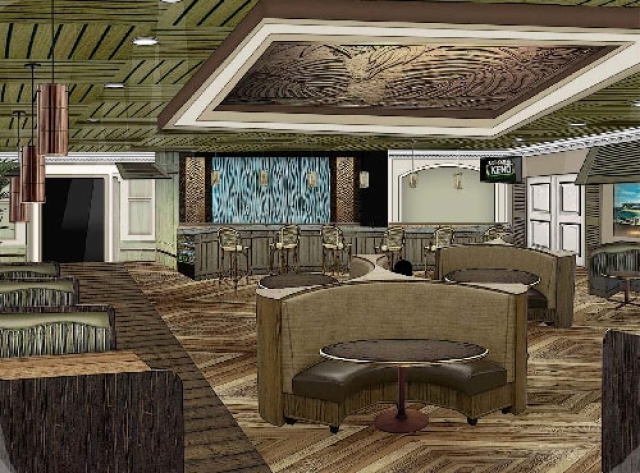
McMackin put plans to renovate the Roadhouse (see image below) on hold. "Due to Station’s aggressive litigation stance to thwart any competition, any plans to move forward are contingent on the outcome of this lawsuit against Bob McMackin and the city of Henderson," spokeswoman Elizabeth Trosper said. "The Roadhouse is positioned at the gateway to the city and its transformation will serve as a catalyst for future economic prosperity," Trosper continued, perhaps getting a bit carried away by her own rhetoric.
"I never met the Fertitta brothers. I know they do a lot of charitable stuff. I thought kindly of them until this came about," McMackin told R-J columnist Jane Ann Morrison.
While fighting Station on one front, McMackin was hit in the flank by another lawsuit, the second one filed by Creekside Holdings. It accused him of interfering with a prospective $14 million sale to First Capital Financial Corp. in 2007. McMackin, it alleged, had gone behind Creekside's back to try and negotiate directly with First Capital, cutting broker Penn Realty out of its commission. McMackin's response was that he was required to pay Penn six percent, not the five percent stipulated in his previous settlement with Creekside.
As for the ongoing dispute with Station, McMackin found himself undercut in March 2012, when Henderson City Attorney Josh Reid reversed the city's previous legal position and opined that, yes, McMackin would have to build a hotel if he wanted to reopen the casino. (Henderson city attorneys had swung back and forth like a weathervane on this point.) Station dropped its litigation against Henderson and withdrew its allegation of open-meeting-law violations. "Henderson officials have been pink-slimed," Morrison wrote, simultaneously deploring the clout wielded by Station while acknowledging that it had been in the right in the Roadhouse brawl.
As for McMackin's revival of the Roadhouse, the new-hotel obligation that the settlement imposed on him was pretty much the death of that project. It's one thing to revamp a smallish, existing casino – quite a more expensive proposition to build a hotel from the ground up.
The Roadhouse has been the frequent site of "trailer stations" -- one-day, 18-slot casinos. In 2004, Cashell Gaming Management Services held one, followed in 2006 by "Roadhouse Casino" (i.e., McMackin) in 2008 and 2010 by Capado Gaming Corp., and four years ago by Silver State Gaming. Since Nevada Gaming Control Board records show no subsequent one-day casinos (a condition of maintaining one's gaming entitlement), it is likely that the Roadhouse's casino status has lapsed and it would have to go through the extensive licensing process – and build that hotel – if it is ever to ride again.