Logout

Question of the Day - 04 February 2020

Q:

Please help me understand the whole buyout/leaseback action going on in LV. I don't understand what Blackstone, for example, is gaining by buying Bellagio. They paid hundreds of millions of dollars, but what do they gain besides monthly rent payments from MGM Resorts International? Does MGM keep all the profits from gaming, room and food revenue? It's said that the sale is a win-win for everyone, but I don't see how.

A:

We put your question to two respected Wall Street analysts, as well as to MGM Resorts International itself. None of them responded.

However, we got lucky with Deutsche Bank analyst Carlo Santarelli, who explained that when Blackstone purchased Bellagio, “Blackstone essentially bought a future rent stream. They paid for $245 million of rent in year one and that rent grows roughly 2% a year for 50 years. They effectively own a securitization of future cash flow at a 5.6 % interest rate today and that rate goes up every year with the rent escalator. They have no capital obligations going forward. For them, it’s purely a cash outlay today for a future income stream at a rate that exceeds their cost of capital.”

For MGM's part, the deal makes no sense (or money) without the revenue streams from gambling, hotel rooms, food and beverage, nightclubs, etc. What MGM is paying in rent is chump change compared to what it stands to make on cash flow thrown off by customers.

What you're seeing is an increasingly popular phenomenon among casino companies: selling their physical assets to a real estate investment trust (REIT) or private-equity firm like Blackstone. Caesars Entertainment and Penn National Gaming are the other major players who have done this. 

Still, MGM sold Blackstone on paying top dollar for Bellagio, but was evidently unable to swing a comparable deal for MGM Grand. The Green Monster is still on the market and MGM — having been unable to buy out Dubai World’s 50% of CityCenter — is shopping its own half of CityCenter to prospective buyers. MGM Springfield, in Massachusetts, is also on the block. In that case, it’s a chance to make a quick return on what has been an under-performing asset. 

The only major casino company not to have joined this asset-light trend (with which Station Casinos is now flirting) is Boyd Gaming.

“After studying it, we've developed the viewpoint that owning our own real estate is strategically important,” CEO Keith Smith told Casino Life magazine.

Boyd has dabbled in REIT relationships, as when it leased Ameristar St. Charles and Ameristar Kansas City from landlord Gaming & Leisure Properties, Inc. But while it will make deals with REITs when properties become available, it won’t be shedding current assets, as MGM is wholeheartedly doing.
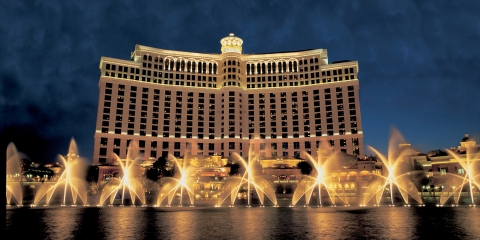
 

Please help me understand the whole buyout/leaseback action going on in Las Vegas.
No part of this answer may be reproduced or utilized in any form or by any means, electronic or mechanical, without the written permission of the publisher.

Have a question that hasn't been answered? Email us with your suggestion.

Missed a Question of the Day?
OR
Have a Question?
Tomorrow's Question
Has Clark County ever considered legalizing prostitution?

Comments

Log In to rate or comment.
  • Dave Feb-04-2020
    AP backoff
    As I understand it, these changes do not affect the average player. In fact, the average player may not even be aware of these changes.
    
    But how do they affect an advantage player who has been backed off and/or trespassed? Listeners of the Gambling With An Edge podcast know that frequent guest Bob Nercessian (sp?) often talks about how the chain of ownership can affect such actions — and can sometimes be very hard to follow.

  • Diamonddog2801 Feb-04-2020
    How does it stay feasible?
    Thanks for the article - very well explained. What I can't understand though is if the future 'rent' goes up by 2% per year, will it not reach the point whereby MGM's margin is cut to the point of not being financially feasible to continue with the arrangement? 

  • Kevin Lewis Feb-04-2020
    Shortsighted
    During the Dubya recession, casino profits tanked, but at least they still had their physical properties and could use those hard assets to leverage debt if they needed to do so to weather the storm. Now, in the coming recession, they'll have no way to keep up the (slowly rising) rent payments when revenues drop.
    
    This has been exacerbated by the way the casinos are treating their customers these days. The gouge mentality and charging for every conceivable thing are driving away what used to be loyal customers. I think we'll see a string of casino operator bankruptcies when the economy crashes (as it must, and soon).

  • Luis Feb-04-2020
    It´s All about the Money
    All I know is if MGM is envoled, It´s all about their profits,I know it´s a bussines but MGM specialy is all about their profit and how to increase it, even if it means afecting their consumers, it´s all clear ever since they instituted the resort fee, the paid parking, etc. Shure, others are following their footsteps, but in the long run will it be for the best interest of the typical Hotel - Casino guest?, I doubt it very much. 

  • rokgpsman Feb-04-2020
    Leaseback
    By selling the property (but retaining the rights to operate the property) MGM gets an instant inflow of a huge amount of money from Blackstone, along with the normal monthly money from the resort's operations. They can use that large amount of additional money from Blackstone to pay down their borrowing debt  from past activities and save a trainload of interest payment money, or they can use the money from Blackstone to help them acquire or build additional properties to increase their monthly revenue and the empire they own. You can be sure MGM has run the numbers and it makes financial sense for them to do this. New mega-properties cost a fortune to build, selling their older properties in an arrangement like this lets them use their existing properties to finance the new properties. That's why they are selling some of their choice resorts, to get the most they can from fewer of these leaseback deals.