

The following is a combined two-part interview with Four Queens and Binion's owner Terry Caudill. It appeared earlier this month on LasVegasAdvisor.com's popular feature, Question of the Day (QoD).
It provides a rare insight into the philosophy that keeps Four Queens and Binion's at the forefront of the Las Vegas downtown bargain scene. Equally rare is that Terry Caudill broke his own no-interview policy to open up about his business.
Normally, Question of the Day is paywalled and accessible only by Las Vegas Advisor (LVA) members, but we've made this one visible to everyone. Every day of the year for the past 20 years, the experts at LVA have answered a question submitted by a member on anything and everything having to do with Las Vegas and gambling.
Also behind the paywall are complete up-to-the-minute listings for parking fees, resort fees, and buffets, the greatest gambling information ever compiled in one place, and much more. The Diamond membership fee is only $3 per month for website access.
The LVA Platinum membership comes with the best package of Vegas coupons available anywhere, including four for the Four Queens and Binion's! You can see the whole list here.
We hope you enjoy this Question of the Day and check out LasVegasAdvisor.com to prepare for your next trip to Las Vegas!


Question: How do the owners of Four Queens and Binion’s manage to keep costs down at a time when other companies are gouging customers to the bone?
For Terry Caudill, owner of TLC Casino Enterprises that owns the Four Queens and Binion's, it’s not a matter of cost, but of maintaining quality. He made an exception to his no-interview policy expressly to answer your query.
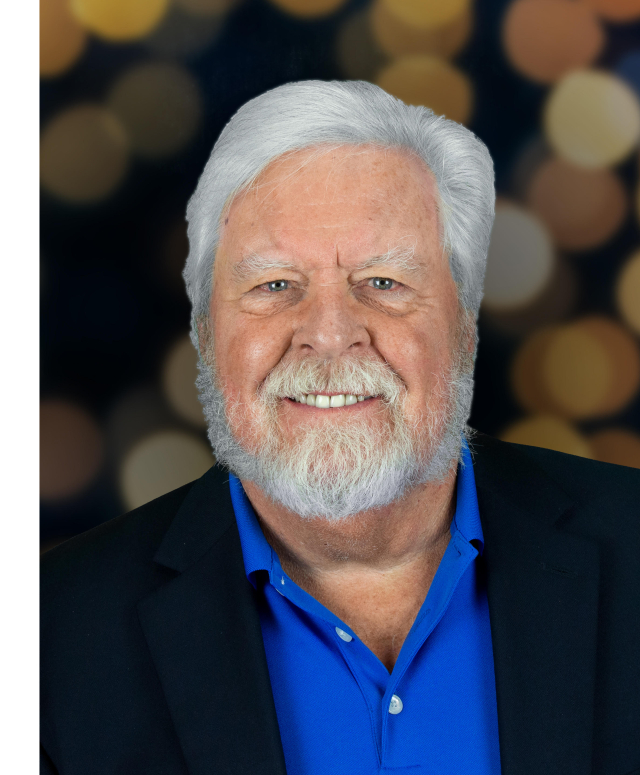
We're grateful for the question and for Mr. Caudill's time and attention. It's a long and very well-thought-out answer, not only worth your time to read carefully, but it's also so refreshing to listen to a Las Vegas casino owner talk candidly about the same value philosophy on which the Las Vegas Advisor was founded 40 years ago and has never wavered from.
“That's an excellent question,” Caudill began. “I’m thrilled that somebody’s actually asking a question like that.
"Number one, I'm very very cognizant of and careful about how we deal with our employees, our customers, and our vendors. Whenever we make a decision, we ask ourselves, ‘How is it going to affect our employees, our customers, our vendors?’ Above all, honesty is the number-one thing. We have to be honest with our employees, good news or bad news. We have to be honest with our customers and vendors."
“Another of my beliefs is, value has always been a driving principle for us. I tell my people all the time, ‘I’ll listen to complaints about pricing, because we have to raise prices from time to time. But I don’t ever want to hear complaints about quality.’ First of all, you have to provide the quality. Then you decide if you can provide that in a cost-effective manner.
 “I don’t believe in resort fees. They’re a misnomer and a ripoff. Resort fees were originally intended to have things like the spa that people may or may not choose and if they chose to use those things, it was an extra cost. That's not what’s going on today. The resort fee is nothing more than a disguised part of the fee. You don’t get a different set of amenities with or without the resort fee in ninety-nine percent of the cases. A resort fee is dishonest. It’s just trying to hide part of your actual cost.
“With no resort fee, I ask myself, ‘Why aren’t we the first ones to fill up? Why aren’t we a hundred percent full every night?' But I’m not going to change my philosophy. We’re not going to have a resort fee. It’s a ripoff. It’s deceptive.
“The other thing I’m not quite as adamant about. I’ve also stayed away from a la carte. A lot of people have advised, ‘You could make a lot more money if you’d make Hugo’s Cellar a la carte.’ I say, ’Yeah, but that’s not the concept. The concept is, you come in and you pay for a meal. You get a meal.’ You can call me old-fashioned, if you’d like to.
“Another part of our strategy is that we don’t set our policies and procedures on a day-by-day basis. I set operating strategies on a three-to five-year horizon. I’m not saying we don’t have to tweak once in a while, but we try not to have a knee-jerk reaction every time something changes out there in the world. We’re more likely to stay the course with what we believe is the right long-term approach and not make some short-term reaction. It helps us to be more stable, steady, predictable.
“We’re not chasing the last dollar. We’re trying to look at policies and procedures that work for the long term and give people true value. You start to think about your customers: Where do they come from? What are they expecting? They want a nice room. It doesn’t have to be fancy, but it has to be nice and clean. The food doesn’t need to be fancy; I don’t need French sauces. But it has to be good and wholesome. It needs to be good-quality food, a good-quality room. That’s our customer.
“I tend to look at our customer as a Midwestern-value person. They still appreciate a value in the world. When it comes to gaming, I never ask my people on a daily or even a monthly basis, 'Did we win or lose?' I don’t care. I look at trends. If we do it right and follow the rules, all we care about is driving volume. We get our percentage. We don’t need to sweat every single dollar. Letting people win is good business. That’s the best advertising in the world, for somebody to come here and stay, have a nice room, good food, and win a few dollars. They go home and tell their neighbors, ‘Hey, we won money at the Four Queens or Binion’s!’
“The heart and soul of the success of our operation are my employees. It all starts with my employees. Our motto is, ‘Friendliness and cleanliness.’ Well, that starts with them. The employees take care of my customers, so if I take care of my employees and they do a good job, then they in turn take care of my customers.
“We rely very very much on repeat business and that comes very much from our employees taking care of our customers. My employees make that happen.
“I’ve been in Las Vegas since 1983, but I was in Reno for 10 years before that,” Caudill recalled. "I've always been fascinated by the gaming industry. My background is accounting. I have degrees in math and accounting and to see the pure science of math interacting with human psychology is the most fascinating thing in the world to me.
“I came here when everything was transferring over into corporate, but I still love the nostalgia of Vegas. So when we had a chance to buy Binion’s, I wanted to keep the name of Benny Binion alive, not try to supplant it or change it. It’s a mixed reputation, but it’s Benny Binion! He’s an icon in this town. We try to respect the traditional Vegas. That’s epitomized by downtown.
“Downtown properties, you have to walk the floor. You have to be a presence. You can’t run these properties from 2,000 miles away. The customers need to see you. Your employees need to see you. You need to see what’s going on. All of those things together create a philosophy and it’s worked for us.”
Caudill was eager to explain his working method, which mostly amounts to practicality and hard work.
“Most of this past year, we’ve been a hundred people short. What happens? My people who've been here a long long time and believe in me, they’re busting their tails. They’re working overtime. They’re doing what they have to do. Everybody’s just chipping in and making it work. We try to keep our costs as low as we can. That’s why we have to have that repeat business.
“We control our costs well enough to where we haven't had to raise our rates as much as others. When they started this resort-fee concept, people just saw the money and the public didn’t seem to catch onto it. They called and were quoted the rack rate, but not the resort fee. A lot of people, in the early years, didn’t know about the resort fee until they went to check out. ‘What is this?’ Now, all of a sudden, people seem to have accepted it as a given. To me, that’s just not right. We’re not making a killing, but we’re doing fine.
“When it comes to the Strip, yeah, I think the Strip got carried away with their pricing and I can give you a couple of recent examples in F One and the Super Bowl. Some of our customers were priced right out of the market. That’s OK; they can come on some other weekend. But that’s not a value for them. That’s why I love downtown, why I stay downtown. The Strip -- it seems like they want every last penny.
“I worked for Circus Circus Corporation for eleven years. I was chief accounting officer and I talked to Wall Street. Back then, our most direct competitor was probably Caesars and I told Wall Street, ‘Look, somebody comes to town with a budget: $500 or $1,000. We want that budget the same as Caesars does. The difference between us and Caesars is they want it Friday night and we’re willing to get it by Sunday night.’ We want their money, but we want to give people more value for their money, so they’ll come back again.
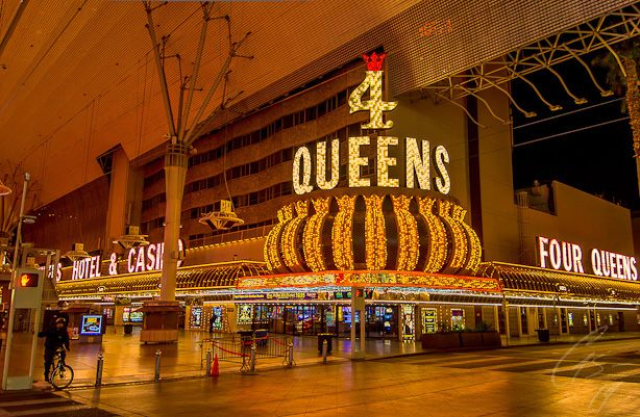
“Those are the things I believe in. I’ve owned Four Queens … we’re in our 21st year. We bought Binion’s in 2008. We bought it at the worst time you possibly could. The economy immediately fell off the cliff. We had a situation where we were borrowing money. I had to call all my vendors and say, ‘Look, the summer’s slow. We’re going to get behind. We’ll catch you up in the fall.’

“Because we had a reputation and a working relationship with them, they bought into that. They said, ‘Fine.’ They worked with us. I fell behind as much as a million dollars in the summer and then in October when business got better, we paid it back.
“I couldn’t do it by myself. I couldn’t do it if I didn’t have my entire staff buying into all these philosophies. We have the lowest turnover in the business. Since COVID, it’s just been a nightmare for anybody to keep up the number of employees. But my employees have stepped up. They know we’re trying to find people and they step up and fill the gap.
“I know of casino properties that have 60 percent turnover in a year’s time. That's ridiculous. Turnover costs you money. Training people, retraining people, that costs you money. Turnover is way more expensive than most entrepreneurs give it credit. It costs you more than you think it does. But my people do it right. They take care of the customer and I trust them. I don’t have to worry about them. It might be my plan, but without them, I can’t make it work. Gotta have their buy-in.
“But we’ve survived. We’ve hung in there. A lot of that’s due to the employees, customers, vendors. You sit down and say, ‘Hey guys, we’ve got a problem. But we’re going to work through it with you and here’s how.’ You can’t run and hide.
“My bankers asked me, ‘Terry, have you thought about ways that you could maybe save money?’ I literally told them, ‘Look, I recycle paper clips and rubber bands. I buy my clothes at Kohl’s when they’re on sale. Don’t tell me about saving money.’ It’s always been part of my DNA to be very cost-conscious and not waste anything. I guess the employees have picked up on that same philosophy.
“We just stretch everything a little bit further. It sounds like I’m apologizing for doing something right!”



 |
Texas Transplant
Apr-02-2024
|