

Gambling revenues hit a bit of a speed bump on the Las Vegas Strip, inching downwards after a March that saw flat visitation, with tourists making up for a worrisome, 37% plunge in convention attendance. Strip casinos won $716 million, a 1% declivity from last year. The Strip’s saving grace was baccarat, with the house playing lucky: Win was up 74% despite 4% less wagering. (A bad month at baccarat can break a quarter.) Slot winnings of $401.5 million were 4% higher despite flat coin-in, while table games winnings plummeted 15% to $203 million, on 7.5% less money wagered. It definitely hurt to not have the CON/AGG expo this year, nor the NCAA college basketball tournament. Strip hotel rates felt the pinch, down 17% on 85% occupancy (92% on weekends), even though rates were still 31% higher than in pre-Covid times. Some cold consolation could also be had in auto traffic from California that was 1% higher than last year and air traffic that was not only 2% higher but 14% above 2019.
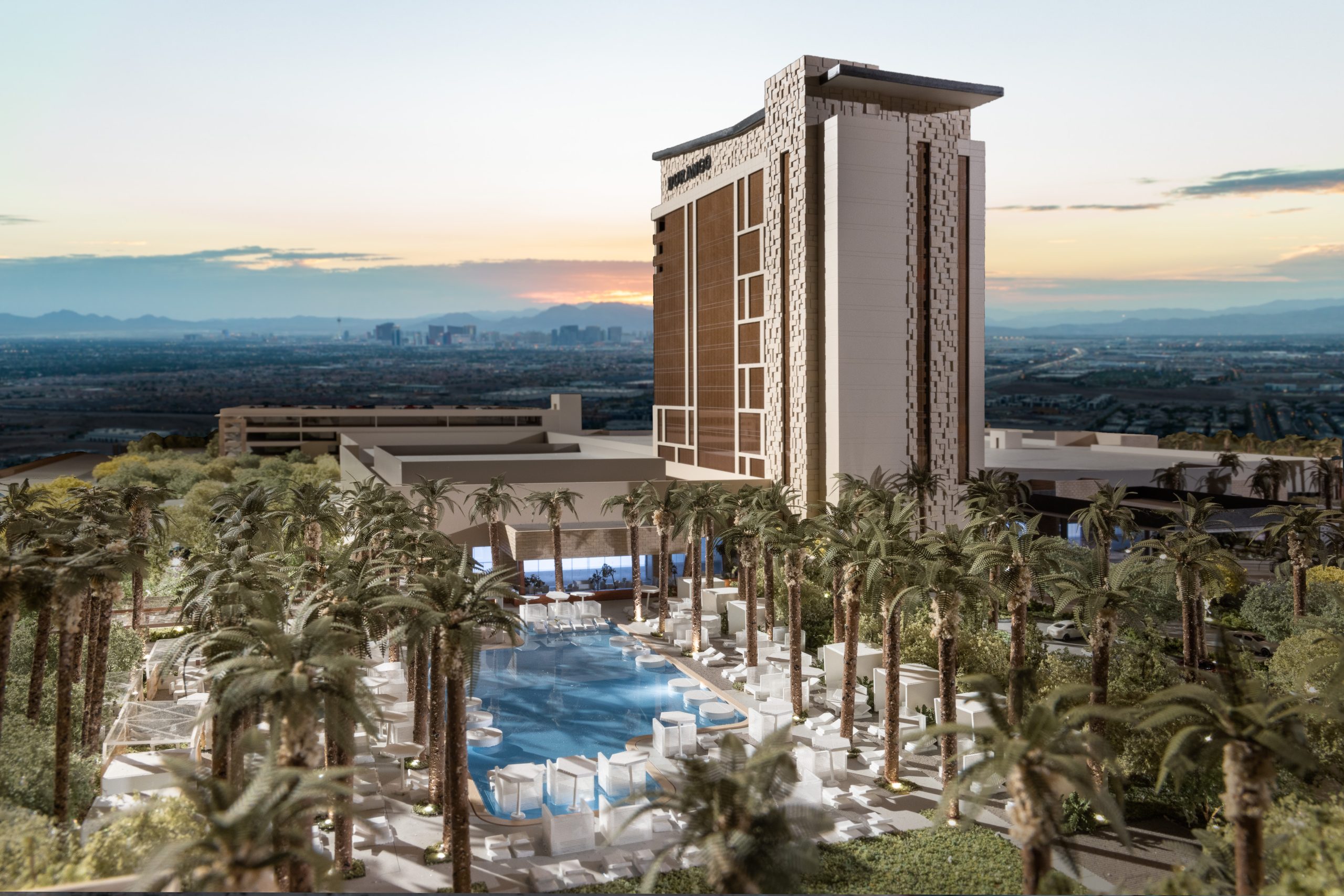
Downtown got walloped, its $76 million take a 13% downdraft. High airfares from Hawaii didn’t help. The Boulder Strip also got hammered, -9% to $78 million. Indeed, the only locals jurisdiction to keep its pecker up was miscellaneous Clark County (read: Durango Resort), which was +6.5% to $167 million. North Las Vegas slipped 4% to $26 million, Mesquite was flat at $19 million and yet Laughlin managed a 2% climb to $49.5 million. Things were quite copacetic in economic barometer Wendover, hopping 7% to $25 million, whilst Reno fell 6% to $52 million. That left Lake Tahoe, -5.5% lower to $16 million.

Whistling past the graveyard may have been what Boyd Gaming executives were doing vis-a-vis Durango Resort. They claimed the newcomer wasn’t hurting them—but how else to explain the doleful numbers above, or the earnings miss that Boyd reported soon thereafter. Wrote J.P. Morgan analyst Joseph Greff, hardly a doomsayer, “There is no way to sugarcoat BYD’s 1Q24 earnings miss. It was broad based and very surprising.” He blamed low-end gaming consumers, an area in which Boyd has reported softness ever since Covid-19 hit. While Greff was relatively dismissive of Durango’s impact on Boyd’s Las Vegas casinos, he was “nervous” about low-end play, as well as revived promotional warfare in Sin City. Greff’s price target for BYD shares went all the way down to $67/share from $80, while his rating of the stock was lowered a notch to “Neutral.”
“While the optimist in us would point to easier year-over-year comparisons going forward, we struggle to find a reason why this consumer would be stronger in the 2Q24 through the rest of this year versus the last 12 months,” Greff wrote of the marginal, absent gamblers. Where Wall Street expected $231.5 million in revenue from Vegas locals, Boyd delivered $225.5 million, down 6% from 1Q23. Downtown was supposed to bring home $58.5 million but offered up $53.5 million instead, with emaciated cash flow, too. Cash flow was lackluster in the Midwest and South, too, but revenue was solid: $501 million, just what Greff anticipated. Indeed, he called it the “best performance in nearly 2 years.” Boyd should also get an incremental lift from the June opening of drastically revamped Treasure Chest, near New Orleans. (In Kenner, technically.)

Internet gambling was a bright spot, bringing home $146 million of bacon where Wall Street anticipated $132 million, while e-cash flow was on the button. Sky River Casino, in California, continues to outperform under Boyd management. In spite of the disappointing returns, Boyd paid out a small dividend and bought back $105 million worth of stock. In addition to Treasure Chest, Boyd has also embarked on a wide-ranging program of capex maintenance that includes upgrades at Blue Chip, Ameristar St. Charles, Gold Coast, The Orleans and Valley Forge Resort.
Exercising diplomacy, Deutsche Bank analyst Carlo Santarelli termed the 1Q24 results “challenging.” However, he dropped his rating to “Hold” from “Buy.” He also shaved seven bucks off his $78/share price target. Metaphorically shaking his head, Santarelli wrote, “While we still view BYD as a strong relative value play within the Gaming sector, we struggle, at this time, to identify; 1) near term catalysts, 2) a change in the cadence of property level results, or 3) an event that triggers a re-rating in shares, though a sale, or partial sale, of the FanDuel stake would certainly be multiple enhancing.” Let’s hope they don’t do that: It’d be like killing the golden goose in order to make lunch. The Deutsche Bank boffin was skeptical of cash-flow growth, citing slowing momentum amongst Las Vegas gamblers, higher costs and regional performance that was “grinding lower.”

Savage weather in January burnt a bigger hole in Boyd’s finances than anticipated, with Santarelli chronicling the “despite the favorable commentary around the subsequent months, we simply don’t see much to merit conviction in a consumer re-accelaration in drive-to gaming markets, over the near term.” Attributing as much as $20 million in monthly gambling revenue to Durango (Boyd execs fessed up to $20 million to $25 million in cannibalization), Santarelli contended that it was probably giving Boyd as much headwind as anybody else “with the Strip adjacent assets performing a bit worse.” Upstart regimes at The Rio and Palms Casino Resort were also believed to be giving Boyd fits in the form of renewed promotional warfare, as well.
“While regional comparisons are undoubtedly easier, we struggle to see how the gaming consumer of tomorrow is better than the gaming consumer of yesterday, and as such, we think a slowing of declines is the likely scenario,” Santarelli wrote, turning his gaze to the hinterlands. He also felt Boyd bosses would take advantage of the stock’s debility to snap up even more shares.

Truist Securities analyst Barry Jonas opined that he liked Boyd still “for low leverage, real estate ownership, continued capital returns, and its 5% FanDuel … ownership.” He also seemed to put more stock, pardon the pun, in the Durango Effect, while also citing the renewed promo wars. He said Boyd hasn’t responded aggressively to Durango … but that others have been less restrained. In light of Boyd’s description of locals play, he thought Station Casinos and Golden Entertainment might be “more cautious” in their respective earnings calls. In closing, Boyd promised post-January “growth and steadiness” from its regional outposts. Let’s hope they’re right.
I quit going to Belterra in Florence, Ind. The craps table went to crapless craps and the roulette table now has 3 0’s. That is what I play, and I refuse to play those games at Belterra. Also, the big bonus at the Ultimate Texas Holdom table is $5. Used to be $1. You are running the regular players away. I now drive an hour away to Caesars to play craps and roulette. Greed has taken over at Boyds
Boyd has really done everything they could to push players away from them especially downtown. Offer coming out there are worse than ever. Further reducing the players club’s point value in the area of food. They need to look long and hard at what they want to be. If they think they can compete with other “nicer” DT casinos, then they have a way to go. Pushing the players that they used to cater to away is clearly not working.