

Hoosier daddy? That’s the question as Indiana casino revenues inched up 1% from December 2022 and 9% from 2019. This, along with news from the East Coast (see below), shows gambling holding fast as an American pastime, regardless of anything else that is taking place economically. Hard Rock Northern Indiana drove the increases. It powered along with $36.5 million, up 7%. The latter number is particularly noteworthy, as former Chicago Mayor Lori Lightfoot (D) painted a target on Hard Rock’s back when she blessed a Windy City casino. After a initial dip in business, the score is now Gary 1, Chicago 0.
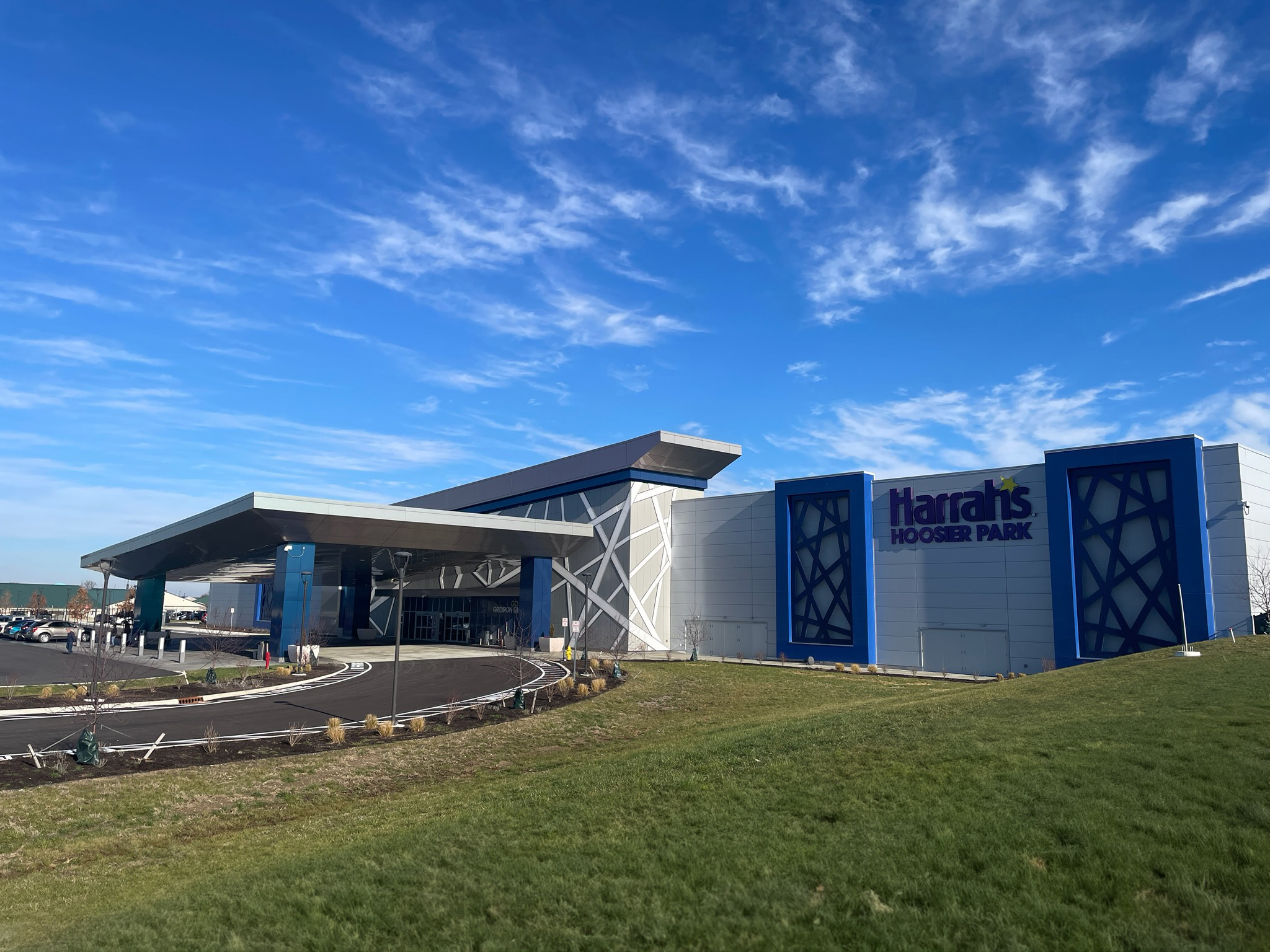
Horseshoe Hammond continued its slippage, down 8% to a still-enviable $23.5 million. Ameristar East Chicago dipped 7.5% to $15 million and Blue Chip jumped 11% to $12 million, although its primary competitors are tribal casinos in southwestern Michigan. Racino Horseshoe Indianapolis climbed 5.5% to $27 million, retaining the #2 spot, and while it was too soon for $40 million in renovations at Harrah’s Hoosier Downs to be unveiled, business is already starting to recover, up 2% to $18 million. Nearly all the casinos and racinos were revenue-positive. Exceptions included Bally’s Evansville, still hurting from new Kentucky competition to the tune of -6% and $14.5 million. Also down was Hollywood Lawrenceburg ($13.5 million, -2%). Belterra Resort ascended 2.5% to $8 million, Rising Star leapt 15% to $4.5 million, Caesars Southern Indiana was flat at $23 million and French Lick Resort hopped 7.5% to $8 million.
Sports betting win rose 19% to $50.5 million, on handle of $503 million (up 17%). FanDuel and DraftKings were neck and neck, $21 million to $19 million respectively. ESPN Bet and BetMGM were deadlocked just north of $3.5 million, and Caesars Sportsbook brought in $2.5 million. Fanatics and BetRivers, both failing to find traction, were a combined $2 million.

Coming at $103 million, casino takings in Massachusetts were flat with 2022 last month. Despite a 4% dip, Encore Boston Harbor led the parade with $66 million. MGM Springfield, where boss Chris Kelley has quietly departed, nevertheless hopped 5% to $23.5 million. And Plainridge Park jumped 10.5% to $13.5 million. Meanwhile, $659 million of sports betting handle turned into $62 million in revenue, at a decent, 9.5% hold. DraftKings practically devoured the market, with 50.5% share, while FanDuel contented itself with 32.5%. ESPN Bet grabbed 7%, passing BetMGM (5%), Caesars Sportsbook (2%) and moribund WynnBet (1.5%).

It wouldn’t be a week without somebody affiliated with The Powers That Be in Las Vegas coming out and spinning the Las Vegas Grand Prix numbers. This time it’s Las Vegas Convention & Visitors Authority prexy Steve “The Shill” Hill. “Formula One performed somewhat better than expected,” he boasted, even though projections of casino winnings and economic impact have been quietly backpedaled—and F1-related hotel rates have sunk like a stone. The question of whose expectations we’re therefore discussing is simply begged. But when presented by reporter Buck Wargo with some uncomfortable numbers, The Shill starts to hem and haw. “Occupancy wasn’t up very much. We have to get better from an event standpoint,” Hill waffled. “We were concerned, and our visitors were concerned, about what the environment would be around the race. That turned out to be great too. Moving around was much easier than we expected and it means people can come and get around.” In what parallel universe was that?
Hill at least gets paid to spread the manure around. Where does Truist Securities analyst Barry Jonas get the idea that “We expect F1 going forward to have wider appeal.” Based on what? Casinos that cater on bread-and-butter players, like the Caesars Entertainment flotilla, suffered during Formula One Weekend, while the lucre flowed upward to MGM Resorts International and Wynn Resorts. Even Hill acknowledges that F1 needs to be augmented with concerts and viewing parties, to draw a broader crowd. However, his answer for anemic drive-in traffic (-5.5% in November) is to blame it all on I-15 congestion. Yup, the roads must have been crowded with people fleeing F1. That’s the ticket.

Anyone remember Caesars Windsor? It’s the casino, operated but not owned by Caesars Entertainment, that has been suffering for decades from the infusion of gambling into nearby Detroit … and from post-9/11 border paranoia by the U.S. government. Turns out there’s a quiet, Canadian-style slugfest going on for the right to the next managerial contract. The Ontario Lottery & Gaming Corp., which owns Caesars Windsor, must decide between the present tenants, Bally’s Corp. and Mohegan Gaming & Entertainment. Caesars’ resume speaks for itself, as does MGE’s. The latter also has the advantage of already operating two casinos in Ontario, so it’s also a known quantity. Bally’s is the wild card and its track record is less than inspiring.
It would cost either Mohegan or Bally’s (the latter being hard up for money these days) as much as $80 million to rebrand the resort. That’s one of several reasons the incumbent is heavily favored by civic leaders, union bosses and tourism boosters. “Windsor needs an international casino operator who can do what’s needed to win customers and stop them from playing across the river in Detroit,” said Unifor Local 444 President David Cassidy, a Caesars proponent. MGE has international experience as well, having just opened Inspire in South Korea. Again, Bally’s is the odd man out, its global exposure being strictly digital in nature. But it continues to be a guppy trying to swallow various and sundry whales. Then there’s the matter of having to rebuild the casino’s database from scratch, which both MGE and Bally’s would have to do. Even if they win, they lose. Whoever is victorious, Windsor will have 20 years to get used to them.
Jottings: State Sen. David Marsden (D) continues to stump for a casino in northern Virginia. However, local opposition is increasing in intensity. The best argument for the gambling hall is that it would be twice as lucrative as the one rejected by Richmond … When Innovation Group says Nebraska doesn’t need more than six racinos, we tend to believe them. The Nebraska Racing & Gaming Commission commissioned the study in response to pressure from dormant Bellevue. The latter’s desired racino would make $61 million a year—mostly cannibalized from other tracks … Feb. 2 is the drop-dead date in Culinary Union talks with 21 Las Vegas casinos. The Culinary is waxing pessimistic about the chances for a labor accord by that date … Internet gambling is dead for the legislative year in New Hampshire, reports Global Gaming Business … Gambling is a no-no in Ecuador, although not if incoming President Daniel Noboa gets his way. His economic plan calls for re-legitimized wagering, a move we applaud … SCOTUS having turned a deaf ear to its pleas, Imperial Pacific appears all but certain to lose its casino licenses in outlying U.S. territories. The operator’s troubles and nonfeasance have been dragging on for years … Hope springs eternal for sports betting here in Georgia. At least one bill has already been voted out of committee, which is a good start.
Casino Windsor was a MUCH better place to gamble (speaking as a USA citizen who lives in Ohio) before Caesers took it over. Much better comps, toll refunds, FREE concert tickets etc etc