

Today’s S&G is written with a heavy heart, as we have little good news to impart. At least there was a mixed signal from New Jersey. Gamblers went to Atlantic City less … but played online more. Terrestrial casinos were down 3.5% to $231 million, whilst iGaming was up 23.5% to $244 million, outgrossing Atlantic City for the second straight month, as the Garden City casino industry consumes its own tail. Mind you, traditional casinos got left out of much of the iGaming action, dominated as it was by DraftKings (25%) and FanDuel (21.5%) with BetMGM (22%) sandwiched in between. Good news for Bally’s Corp.: It garnered 2.5% of the action, giving them something to crow about at the impending earnings call, still TBA.
Sports betting was a blowout, with handle falling 16.5% to $1.1 billion wagered. Winnings for the books also plummeted, -20.5% to $70 million. FanDuel fell back 20.5% and DraftKings surged 13.5% but FanDuel retained the lead, $23.5 million to $20 million. BetMGM was the most robust of the also-rans with $8.5 million. The remainder of the field comprised Bet365 ($3 million), Caesars Sportsbook (ditto), Fanatics ($4.5 million), ESPN Bet ($4.5 million) and BetRivers ($1 million).
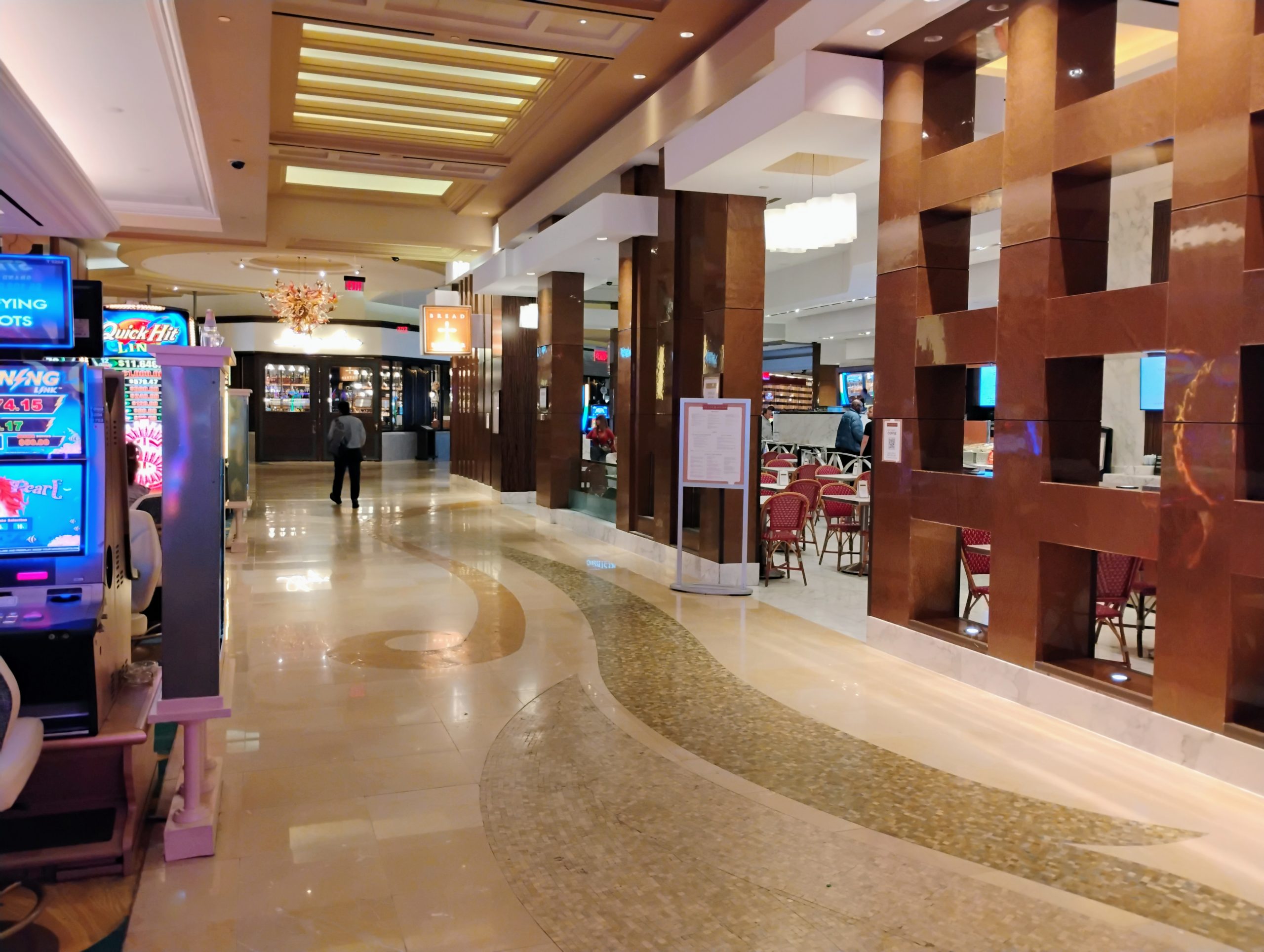
As for the traditional casinos, only Borgata (above) had a revenue-positive month, up 3% to $58.5 million. Flat trajectories were maintained by Hard Rock Atlantic City ($44.5 million), Harrah’s Resort ($21 million) and Tropicana ($20 million). Ocean Casino Resort took the worst tumble, plunging 15% to $34.5 million. Caesars Atlantic City felt a 10% smack, down to $16.5 million. Among the grind joints, Resorts Atlantic City fared best, -2.5% to $13 million, compared to Golden Nugget ($12 million, -14%) and Bally’s Atlantic City ($11 million, -6%).

iGaming was also robust in the great state of Michigan, although the good news stops there. Brick-and-mortar casinos failed to produce the March comeback that stock analysts predicted. Hollywood Greektown performed best by being flat at $27 million. MGM Grand Detroit slipped 5% to $54 million and Motor City decline 6.5% to $36 million. I-casinos, by contrast, were up 21% to $260.5 million, as Michiganders chose to play from home. Dollar figures aren’t available but BetMGM held a 26.5% market share to FanDuel‘s 26% and DraftKings‘ 16%. That left 7.5% for Horseshoe and 3% for Hollywood Casino.
Sports betting was marked by dismal, 7% hold that drove winnings down to $33 million (-21.5%) on handle that was only 1% off ($475 million). To rub it in, operators gave away the store with $18.5 million in promotional outlays. Before that, FanDuel had $14 million to DraftKings’ $9.5 million and BetMGM’s $4 million. Others participating included PointsBet ($2 million) and ESPN Bet ($1.5 million), while Caesars Sportsbook didn’t even make it to our cutoff point.

The time has come to discuss the bleak future facing gaming stocks, which suffered worse-than-average reverses during the recent, tariff-driven wipeout of the stock market. “The tumult in the broader market brings to bear discussion on the multi-year underperformance of the sector,” wrote Jefferies Equity Research analyst David Katz, noting that the gaming group had risen but 5% since the begining of 2020, whereas the market as a whole had burgeoned 65%. Of Las Vegas, Katz said, “Our impression from management teams through the quarter is that volumes, pricing, and margins are largely as expected.” Even so, he kept a watching brief on upcoming group business and international travel, two canaries in the Sin City coal mine.
The meat of Katz’s investor note dealt with his downgrade of six major gaming stocks. Boyd Gaming went from $93 per share to $86 and Station Casinos from $52 to $41—below where it was trading yesterday. Las Vegas Sands dropped from $67 apiece to $53 and Wynn Resorts from $118 to $111. Churchill Downs was trimmed from $162 a share to $160 and Caesars Entertainment’s target went from $50 to $36. He went so far as to call Macao-centric Sands “a disappointment.” It’s not likely to be helped by MGM Resorts International CEO Bill Hornbuckle‘s announcement that he’d be tracking developments in Texas and casinos weren’t getting anywhere down there.

Hornbuckle’s comment was made at the East Coast Gaming Congress, an event highlighted by his and Caesars CEO Tom Reeg‘s blithering insensitivity to the pain being felt by consumers. Either they are prescient (as Reeg has been in the past) or whistling near the graveyard by putting all their eggs, in case of a recession, in the iGaming basket. Reeg said he “sees a dichotomy between investor expectations and what’s going on in actual business operations,” according to Truist Securities analyst Barry Jonas. While Reeg admitted things might become dire for consumers, he opined that it would take a while more for actual pain to be felt. Hornbuckle waved away recessionary fears with the blithe stat that MGM hotels in Las Vegas ran at 82% occupancy during the Great Recession of 2008. As well they might, “Panelists did seem more concerned on softer international travel trends, to which Vegas is more susceptible,” wrote Jonas.
While David Cordish warned of iGaming having a deleterious effect on jobs and investment, Hornbuckle and Reeg scoffed. The former called it “a net add,” saying that digital operations had swelled MGM’s database from 30 million souls to 45 million. Reeg added that, should a recession strike (some on Wall Street feel it already has), Caesars Sportsbook and Caesars Palace Online will soften the blow. Given their performance to date, we might be forgiven for our skepticism.

Before leaving the Congress, we should note that panelists had a consensus which should be worrisome for Wynn Resorts, Caesars Entertainment and almost anyone putting their marbles on the heart of New York City. The sentiment was that while MGM Empire City and Resorts World New York City are shoo-ins for megaresort status, the third license is unlikely to go to anyone in Manhattan. That’s bad news for Caesars, Wynn and several other would-be operators. But it’s glad tidings for Steve Cohen (who would put a casino near Citi Field, in tandem with Hard Rock International), for prospective Sands Nassau (pictured), and even for penurious Bally’s Corp., out on the former Trump Links. Speaking of Bally’s, Caesars and MGM, they got a jolt of negativity on their Atlantic City front, as panelists predicted a revenue of hit of as much as 25% from Gotham.
Which kinda brings us full circle.