

“Casino security” is a bad joke or, at best, a contradiction in terms. The Paul Blarts who patrol casino floors aren’t there to protect you: Their remit is to keep the sacrosanct slot machines safe. God forbid you should need help in a perilous casino situation because you ain’t getting any. Not from Big Gaming. Case in point, the gay-bashing incident at MGM Grand Detroit last summer, where security guards stood idly by as casino patrons were assaulted. Maybe it’s not “aiding and abetting” but it sure looks like “depraved indifference.” Thank goodness nobody got shot.
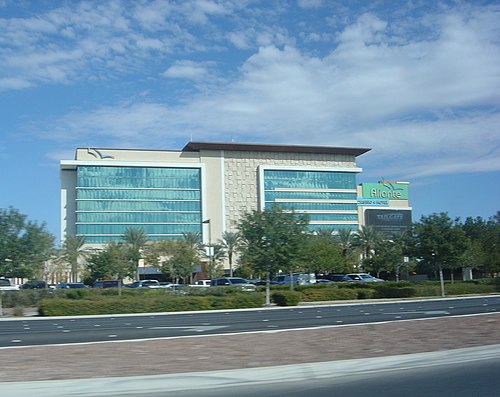
Na’Onche Osborne wasn’t so lucky. He made the fatal mistake of playing at Aliante Casino and got gunned down for his trouble. Now his family is suing Boyd Gaming for failing to provide adequate security on the Aliante premises. Not only was perpetrator Aerion Warmsley able to escape the casino, he led the Keystone Kops, er, Las Vegas Metro on a not-so-merry chase that took him all the way to Boulder Highway and Sahara Avenue before he was apprehended. The grammatically challenged court filing alleges that Aliante’s vicinity was the scene of “burglaries, aggravated batteries, criminal mischief, grand theft, domestic disputes, aggravated assaults, death investigations, drug activity, trespassing, suspicious incidents, disturbances, and/or shootings.” In other words, “crime was reasonably foreseeable at this subject premises.”

Unlike casino bosses in Macao, those in Las Vegas would rather drink their own urine than install metal detectors as casino entrances (which is weird when you have to pass through one just to get into that den of crime, your local symphony concert). That could have prevented the Osborne shooting, as well as a recent farce at Rampart Casino wherein Metro and the FBI are still looking for clues (having initially withheld details of the robbery) in an incident in which an AR-15-brandishing crook held up the casino. The operative mantra in casino security is not so much “stand down” as “see no evil.” Rather than defend the indefensible in the Aliante incident, Boyd is wisely keeping mum.
Even so, Osborne’s birth mother may well have a case. Recently, a skill-games operator in Pennsylvania was found liable in the shooting death of a convenience-store employee, who was also in the wrong place at the wrong time. The presence of the gray-market “skill” games was deemed to have led to a preponderance of risk for employees and security was found to be inadquate. Sort of like Boyd’s. In a casino, the only think that’s safe are the executives’ posteriors.

We thought it was overly pessimistic of Vici Properties CEO Ed Pitoniak to basically write off the New York City area for casino investment. Then we saw this graphic. It really sank in then. Geez, those casinos are going to be way off the beaten path! It’s a triumph for the NIMBYs: Put the casinos where as few people as possible can see them. How do you feel now about sinking $4 billion (or more) into a suburban megaresort?
All the last three proposals have cleared the environmental-impact hurdle now … however, not without controversy. Also, MGM Empire City now knows how long it has before the Grim Reaper comes knocking: 2029, which is when the upgraded Resorts World New York City has pledged to be fully open. That is, unless Genting Group makes a successful plea for a temporary Class III casino to bridge the interval—possibly as soon as next March. Then it’s bye-bye, Empire City (a Class II facility).
Mind you, New York State‘s casino regulators could still nix one or more of the three finalists, unlikely though that seems. Gaming wunderkind Jess Marquez recently took a deep dive into the New York Gaming Facility Location Board‘s recommendations and found a fair number of caveats. As we’ve reported earlier this week, Genting was very economical with the truth when it comes to its deplorable regulatory record. However, as Marquez points out, the Empire State is “hamstrung” by the need to achieve a pre-set amount of casino revenue, ethical probity be damned. The Board estimates three megaresorts will generate an average of $5.5 billion a year between them by 2033, which seems a mite optimistic, but is certainly more level-headed than some of the revenue projections of the applicants themselves. (The dreaded Penn National Effect, named after a company that always highballed its numbers.)

According the Board, Bally’s Corp. (top) was actually conservative in its revenue forecast while Genting relied upon dubious “assumptions related to tourism and high-end play.” It wouldn’t be the first time a Resorts World-branded property took leave of its fiscal senses. One thing the Board did was slam the door hard on Genting’s wish for tax rates lower than the ones Genting itself proposed. Having rashly committed to 56% on slots and 30% on table games, Genting appears stuck with those figures.
Resorts World NY also proposed a mammoth 6,000 slots and 780 tables. It has been cleared for only the 4,635 slots and 534 tables that its designs actually showed. Genting was also faulted for a near-nonexistent commitment to local businesses, as well as theoretical benefits “tied to land not owned or controlled by Resorts World.” In one stinging remark, Board members tartly noted that Genting suffered from a “history of projects delivered late or over budget.” And the nicest thing they had to say about Resorts World sweeping its regulatory failings under the rug was that it was “concerning” and should be looked at further.
Heavy investment in the Bronx and a strong DEI commitment weighed in Bally’s New York‘s favor. So did the inclusion of the erstwhile Trump Links in the project. Our eyebrows went up at the assertion, though, that “the company’s available assets and liquidity options support its equity investment in the project.” What assets? What liquidity? Soo Kim has sold everything in sight and his Chicago folly exhausted Bally’s borrowing capability. In fact, Bally’s is assuming that somebody, anybody is going to take a $1.7 billion share of the $4 billion project. The Board appears to have convinced itself that Gaming & Leisure Properties Inc. will play Daddy Warbucks again to Kim’s Little Orphan Annie (“significant backing from a large real estate investment trust”). However, we recently spoke with GLPI President Brandon Moore and he was more equivocal, to say the least.

$8.1 billion Metropolitan Park met with the fewest demurs. Hard Rock International‘s track record of development and its balance sheet were a one-two punch in Steve Cohen‘s favor. He’s got the best brand name in gambling in his corner. Hard Rock was also the only operator to pay more than lip service to responsible gambling. Aside from potentially inadequate stormwater runoff, the biggest qualm re Metropolitan Park was that Cohen is cannibalizing surface parking to build the casino. Decent mass transit aside, the problematic aspect of that should be obvious. Also, Cohen’s commitment to affordable housing appears more nice than substantive. That’s the sort of amenity that tends to go by the wayside when such things get built.
Even if only Cohen and Hard Rock appear to be lead-pipe cinches at this point, we wish the best of luck to all three applicants. One of them will need it.
In Atlantic City, I was able to see security camera monitors in two casinos. One had all their screens set on table games, the other had one screen on a public area, all the others on table games.