

“Not-so-buried Treasure,” said Truist Securities analyst Barry Jonas about Boyd Gaming, in a playful allusion to its new Treasure Chest casino, which has been steadily outperforming the New Orleans market. Even so, he kept his price target at $77/share but rated the stock a “Buy.” Big deals were deemed unlikely, Penn Entertainment takeover talk having long since gone off the boil. Boyd beat Wall Street estimates across all divisions, delivering net revenue of $961 million and cash flow of $337 million.
Hotel-room demand was reported to be up in Las Vegas, which came in 4% ahead of expectations (+11% in Downtown), despite softness at The Orleans and Gold Coast. Both of those properties are in the midst of major hotel upgrades, as is Suncoast. Can they make them smell less like ashtrays? Deutsche Bank analyst Carlo Santarelli wrote that Boyd “continues to demonstrate strong operational discipline, while its strong balance sheet position allows it to invest for growth in its current portfolio, invest in future developments, and return capital to shareholders” in the form of a $202 million share repurchase.
“A stable consumer was the core message on the call, with the commentary similar to what management has been saying for some time now,” Santarelli continued. Beyond local “pain points” at Gold Coast and The Orleans (thanks to heavy promotional activity from the competition), Boyd has its plate full with development and reinvestment, starting in Norfolk ($750 million to develop the former Pamunkey Tribe casino), an Ameristar St. Charles convention center, and hotel upgrades at IP Biloxi and Valley Forge Resort, a $450 capex regimen over all, not counting the Virginia outlay. Santarelli stuck with his “Hold” rating but raised his price target from $71/share to $72.

David Katz of Jefferies Equity Research also stayed on “Hold,” but hiked his price target from $66 to $73. He noted that the Norfolk project would often softly with a 2025 temporary casino, en route to a 2027 debut with a 50-table/1,500-slot permanent playground. Nor did he forget the locally targeted Cadence Crossing project in Henderson, planned for a 2026 rollout and slated for 450 slots, or a land-based conversion of low-rolling Par-A-Dice in Peoria. Boyd also folded Resorts Digital into its online repertory, adding to its New Jersey and Pennsylvania iGaming base.
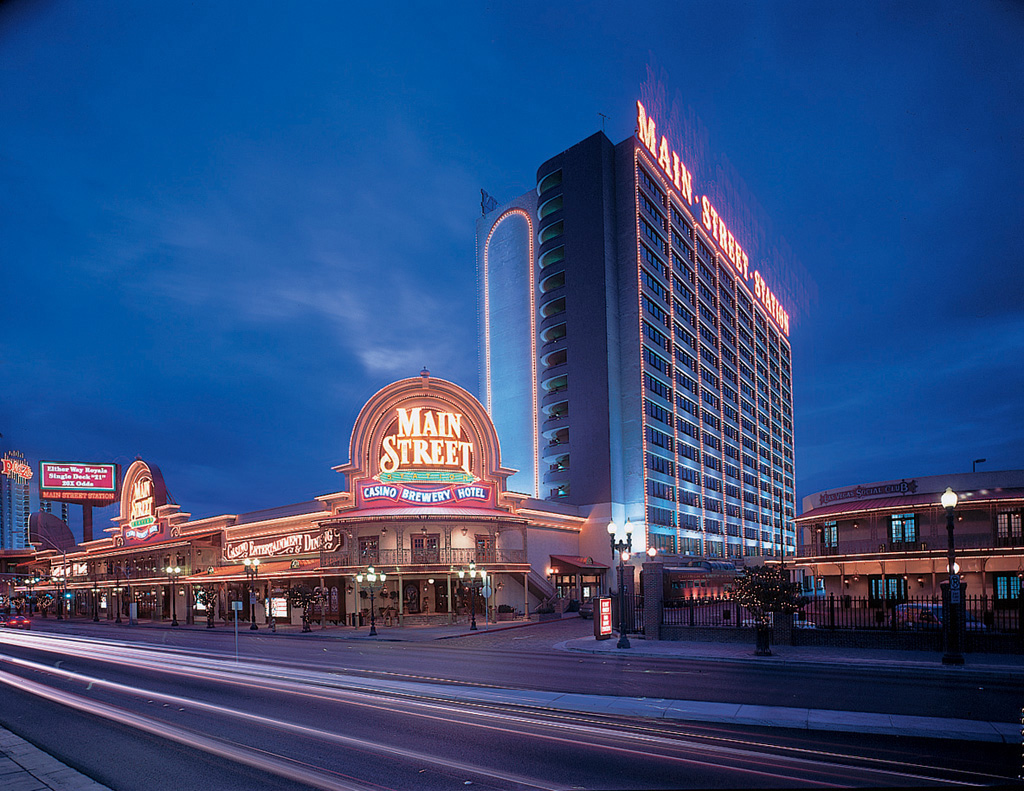
Most cautious of the analysts was J.P. Morgan‘s Joseph Greff, who remained “Neutral” with a $69/share target, up from $68. Greff had more color on Cadence Crossing, soon to break ground and having the 12,000-home Cadence suburb at its doorstep. He also elaborated on the Norfolk casino, which will feature 200 hotel rooms and no fewer than eight restaurants (1.8 million residents on tap). He warned that Caesars New Orleans could blunt business momentum at gangbusters Treasure Chest 2.0. But traffic from Hawaii is up at the Fremont Hotel and Main Street Station. Blessedly, some things never change.

A seemingly long time ago, irascible casino mogul Steve Wynn claimed that his eponymous firm was “essentially a Chinese company.” That sentiment didn’t play well and never came true. By contrast, Las Vegas Sands really ought to rename itself China Sands, dependent as it is on Macao and Chinese tourism to Singapore, and doubling down on both. Sands narrowly beat Wall Street’s anticipated numbers, reeling in China cash flow of $583 million in 3Q24. Greff opined that Sands EBITDA “can grow from here with the Londoner Grand Casino having opened in late September, along with 300 new suites (with 1,200 more to come, in phases, through 2Q25) and the refurbished Venetian Arena will open with entertainment events starting in November.”
Another $484 million in cash flow was engendered by Marina Bay Sands, albeit 5% less than Greff anticipated. But he noted that another 244 MBS suites came on line last month so “we think the property’s future prospects are bright.” Also, with reinvention of blah Sands Cotai Central as The Londoner largely compete, the future looks rosier for Sands in Macao. Management further juiced the stock price by buying back $484 million worth of shares. In the works for 2031 (should we live that long) is Marina Bay Sands #2: 570 luxury suites and a 15,000-seat arena, built at an eye-popping cost of $8 billion. If it were almost anybody other than Sands, we wouldn’t say it was possible.

Katz noted a few downsides to the Sands 3Q24, including low hold in Singapore. “We anticipate that as macro conditions improve and renovation-related disruptions decrease, the company could be better-positioned within Macau and Singapore,” he wrote, but hewed to a “Hold” rating and a $60/share target (up from $44). Except for Four Seasons Macao, none of the Sands properties he covered performed up to his expectations. Santarelli was more aggressive, putting a “Buy” rating on LVS and raising his price target to $60/share from $55. He called the numbers “consistent with our forecasts … we see the results as largely uneventful, with Macau fairly solid, relative to expectations, and MBS likely coming in a bit lighter than most assumed.”
Although analysts did not think it worthy of comment, Sands CEO Rob Goldstein hedged his commitment to Sands Nassau on the call, complaining about the prospect of iGaming in New York State. He fears it could prohibitively cut into Sands’ bottom line. Hey, he’s honest about his concerns, a refreshing change from the late Sheldon Adelson‘s hypocritical citation of specious moral worries. Meanwhile, chief lobbyist Andy Abboud continues to play Baldrick to Goldstein’s Edmund Blackadder, loudly proclaiming that Sands is going to stay in Texas and get obnoxiously all up in everybody’s business until casino gambling is legalized down there. We’re not sure that loud-and-proud is the way to go in the Lone Star State—and Sands’ lack of results to date would seem to validate our skepticism.

“Lots of pieces to the puzzle,” Katz rightly wrote of Churchill Downs, which was propelled out of the third quarter by ongoing outperformance in Virginia and continued puissance in Terre Haute (above). CHDN reaped revenues of $628.5 million, right in line with Wall Street‘s consensus, if well ahead of Katz’s $611 million target. Horse racing and slot-like “historical horse racing” machines also did a great deal to drive the beat. Churchill Downs is sufficiently bullish on HHRs that it’s planning a $45 million HHR parlor in Kentucky, plus a $42.5 million expansion of Rosie’s Richmond, both of which should be in business by early 2026. It also tiptoed out its The Rose casino in Dumfries, Virginia (1,650 HHRs, a 102-room hotel), with a full opening planned for Nov. 7.
Jonas was sufficiently exuberant about Churchill Downs to publish two investor notes on it, atop extensive recent coverage. Allowing for softness in regional gambling at present, “we continue to favor CHDN as a ‘diamond in the rough’ with unique growth levers and future M&A optionality … Terre Haute continues to ramp nicely given the properties optimal location and limited competition in the area,” contributing $12 million in cash flow. Given the hopeless entanglement of Big Gaming and Big Tobacco, it’s grimly apt that Churchill Downs is staking hopes in the Bluegrass State partly on the expansion of a Philip Morris plant near its planned, Owensboro slot parlor. Coughing begins in roughly 15 months.
Churchill Downs also continues to expand its titular race course, adding 8,300 more seats and amenities for 2,800 well-heeled guests. These should recoup their $85 million cost in less than eight years, a nice ROI to be sure. Given the softness of casino gambling at present, Jonas clipped a dollar from his price target (to $165/share) while remaining “Buy” rated on the stock. Management remains hungry for Virginia-derived dollars, pushing for additional slot machines beyond its massive, 5,000-device allotment. It’s also full steam ahead on its controversial project for bucolic Henrico County, the Roseshire Gaming Parlor (175 HHRs).

On the Las Vegas Strip, there may be a cooling of Gaming & Leisure Properties Inc.’s ardor and appetite for a Bally’s Corp.-branded megaresort, to be presumably built (or so Soo Kim believes) on GLPI’s dime. Said GLPI CFO Brandon Moore with an ominous laugh, “we’re awaiting the outcome of that [study process], and waiting to find out how many dollars we’ll be asked to provide—and willing to provide.” Bally’s hasn’t got a pot to piss into and, with $5 billion in debt, is begging the question of how it will pay for its pipe dreams. Kim seems to be trying to stay one step ahead of the bill collector while aspiring to fantasy projects in Las Vegas and the Ozarks.
Since Caesars does not have anything on that corner, I venture that they will somehow end up there with a new casino. Still, that corner will be empty for a few years. No stadium, no Athletics. Just another resort/casino. And they no longer have their FAA waiver for hotel height. That whole study will have to be done again, which takes about 18 months.