

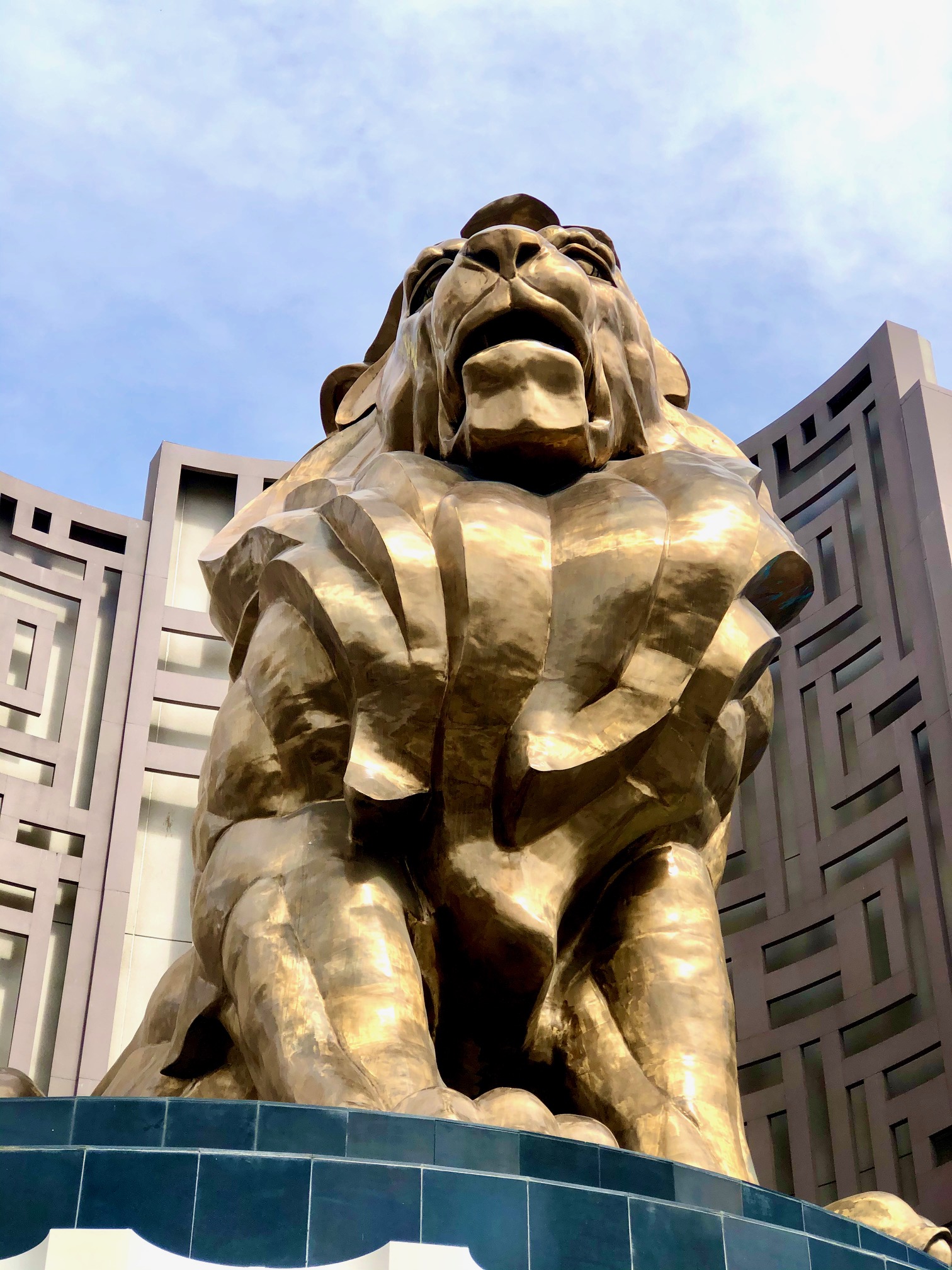
Live by the tables, die by the tables. Maryland‘s casinos, as a whole, were down 5.5% from last year. But factor in MGM and that becomes a 25% plunge. MGM National Harbor plummeted 41.5% to $67 million. Admittedly, the year-previous figure was fattened by record table game revenue. But almost 42%? Yikes. Slot play was only off 5% but table winnings toppled 48%. Despite the revenue implosion, MGM held onto first place, as Maryland Live dipped 3% to $58 million.
Clearly, Caesars Entertainment has decided that while Horseshoe Baltimore is a relative bust, it makes enough money to keep in the portfolio. However, it’s been a long time since we’ve heard any talk about capex reinvestment in the place. It made its usual $15 million, falling 15% as it continues to gradually slump. The only revenue-positive place was Ocean Downs, up 2.5% to $8 million. Hollywood Perryville slid 11% to $7 million and Rocky Gap Resort dipped 6% to $5 million. Maryland had a roughly comparable performance to West Virginia, where revenue fell 6%, with tables down 7% and slots off 5%. Hollywood Charles Town did worse than average, dropping 7% at the tables and 10% at the usually reliable slots.

They don’t like it on Wall Street when you miss your earnings forecast. That’s what Bally’s Corp. did and it shaved some dollars off its year-end revenue and cash-flow guidance, albeit not many. That wasn’t good enough for Deutsche Bank analyst Carlo Santarelli, who noted that the reported numbers were “light” of previous guidance “though broadly in line with Consensus.” President George Papanier tried to pin the blame on Illinois regulators, claiming that they caused “three months of delays” in reopening Medinah Temple as a casino. So is Papanier saying the place would have been ready in late June, as he implies? We doubt that it was. Besides, the Bally’s crew are big boys. This isn’t their first rodeo in the Land of Lincoln.
That wasn’t the only dog that didn’t hunt. The company claimed, per Santarelli, that the earnings miss was partly due to a pause on Tropicana Las Vegas redevelopment (read: demolition), while Major League Baseball mulls a relocation vote. Again, Bally’s knew how the calendar (or should have). The Trop is producing more money as a casino-resort, even by Bally’s admission, than it would as a pile of rubble. Which didn’t rule out CFO Marcus Glover offering to flip the hyper-valuable property if the price is right. The only excuse that rang true were “headwinds” in overseas online gambling. No more than a passing mention of Atlantic City, a major omission. In New York City, “management believes it is well positioned … given the community support for its project at the Trump Ferry Point golf course.”

However, we’re not alone in thinking Chairman Soo Kim has bitten off more than he can chew. Santarelli wrote “we struggle to see how the financing scenario for Chicago bodes well for the NY license, despite our view, that BALY has a solid location.” In other words, when you’ve punted $1.2 billion of Windy City financing into 2025 and if (as Santarelli believes) the Ferry Point site could potentially be awarded to Bally’s late next year, how do they keep all those multi-billion-dollar balls in the air? The State of New York is not going to sit and wait patiently for Kim to finish Bally’s Chicago (pictured) first, then move on to Gotham.
As for the recalcitrant online sector, Bally’s execs expect break-even two years from now, with negative ROI of $60 million this year and $30 million next. In another attempt to right the online ship, Bally’s transferred management of its digital operations to White Hat Gaming, sacking 300 employees in the process. The company continues to transition—with success—from emphasizing sports betting to treating it as “a funnel” (Glover) to i-casino.
Shaving six bucks off his price target for BALY, Santarelli re-set it at an awfully realistic $9/share and stuck with his “Hold” rating. Those who set store by “Buy low, sell high” might disagree, although it’s definitely a long game in this case. Truist Securities analyst Barry Jonas wrote that he was “Lowering the bar” on BALY, dropping his price target three bucks to $13/share. He opined that “investors are overly bearish about new developments and leverage despite land-based stability.” A definitive Oakland Athletics move to Las Vegas or financing news regarding Bally’s Chicago could, he added, be quick-fix catalysts for the stock. One area in which Bally’s underpromised and overdelivered was corporate costs, down to $47 million from a projected $55 million. Casino/resort revenues were a record $359 million, although competitive pressures drove profit and operating margins down in Evansville, Vegas and on the Boardwalk. The Medinah Temple temporary casino appears to be doing better than expected (without any marketing, notably) and should hit the projected $50 million ROI by the second quarter of next year.

The Street likes the kind of surprise that DraftKings delivered. Stock boffins expected $705 million in revenue and got $790 million. Not only was this a 57% improvement from 3Q22, “this is despite a $40m unfavorable sports outcomes impact to the start of the football season in September,” wrote J.P. Morgan analyst Joseph Greff. Whereas he expected a $200 million negative ROI, DraftKings contained the damage to $153 million, yet another pleasant surprise. And he expected DraftKings to spend 43.5% of revenue on marketing but it contained that cost to 38%. The cash-on-hand balance of $1.1 billion was also more than anticipated. Greff chronicled that Jason Robins‘ company “is benefitting from recent product and technology investments that are paying off with its structural Sportsbook hold percentage increasing—in large part due to increasing parlay mix.” It’s not only getting “significant” contributions from legacy states but new territories are paying off at an even faster rate.
For 4Q23, DraftKings is mapping a 47% increase in revenue to $1.2 billion and ROI of $200 million. Next year could see it gross as much as $4.8 billion and deliver ROI between $350 million and $450 million, comfortably about Wall Street estimates. Greff nudged his DKNG price target up to $39/share from $37, projecting positive ROI of $1.2 billion in three years’ time. “Our projections reflect its currently strong technology and product momentum resulting in higher retention, increasing parlay mix, and reduced promotions and external marketing expenses,” he wrote. He added that the company had “a strong moat” against oncoming ESPN Bet, having already staved off Caesars Sportsbook. DKNG leadership stated that they had “seen no discernible impact on our business from macroeconomic factors.” So there’s that too.

“Given high expectations, we believe DKNG needed sizeable beats on both the net revenue and adjusted EBITDA lines, and we believe these results delivered on that front,” reacted longtime DraftKings skeptick Santarelli. “We also believed DKNG needed to provide 2024 guidance that allowed investors to believe $400 mm of [ROI] was a reasonable expectation for 2024.” He seemed satisfied on both counts. He stuck with a relatively conservative $31/share price target and a “Hold” rating. Expanding subsequently on his views, he wrote that Robins (above) “met investor expectations, with the high end of the range likely better than the more bullish forecasts.” As to the company’s projections, he held that it “likely boils down to organic industry growth, as measured by net revenue, and the ability of DKNG to maintain, or perhaps grow, market share.”
Jonas showed no such restraint, calling it “another impressive quarter” for Robins. “[R]esults surpassed our high expectations.” He lauded DraftKings as “one of the best (if not the best) growth stories in Gaming today and [we] have strong conviction that DKNG will be a LT winner in Interactive.” According to Jonas, the beat was driven by strong customer retention, high hold and new states. Vermont is live and Maine, North Carolina, and Puerto Rico soon will be. Returning to the subject after the earnings call (DraftKings felt bullish enough to pre-announce earnings), Jonas wrote that he expected punters to return to DraftKings after trying ESPN Bet—and presumably finding it wanting. “iGaming continues to impress,” he added.
Looking ahead to 4Q23, football is driving the revenue bus but basketball and hockey aren’t far behind. Not only have promotional expenditures rationalized, at least somewhat, “the rate of promotion continues to decline as the company’s player base matures … For states launched 2018-2021, handle and revenue continue to grow while external marketing’s fallen double digits.” (Jonas) And DraftKings already has 5% market share in Kentucky. We await more detailed results from the Bluegrass State with bated breath. Your move, analysts.
While DraftKings teased a Nov. 14 investor day, it should prepare to have its thunder stolen. Penn Entertainment launches ESPN Bet that same day. Stop the presses!

“Bluster” you say? In contrast to bland, toothy-grinned assurances from the C-suites that everything is A-OK in labor talks with Culinary Union, we’ve got our most concrete evidence yet that a strike is imminent. According to the Nevada Current‘s impeccable Dana Gentry, management staff at MGM Resorts International is being trained to prepare and serve beverages at the company’s Las Vegas Strip casinos. “Good luck to them,” exclaimed Culinary spokeswoman Bethany Khan. “They also need to clean rooms, wash dishes, clean the casino floor, make the drinks, cook the food, serve the guests, and everything else.” That is going to be a tall order and we’re presently three days away from a labor action that would paralyze large parts of 18 Strip resorts. By the way, we’re pleased to see our “Big Three” coinage (Caesars Entertainment, MGM and Wynn Resorts) being picked up by the Culinary and the mainstream media. Glad we could oblige.
Things don’t bode so well for strikers in Detroit, faced with scab-staffed casinos and hardball executive tactics. Did the UAW misjudge Big Gaming’s resolve? Will it have to capitulate? We hope not but strikers are on the receiving end of donation bins put out at MGM Grand Detroit, MotorCity and Hollywood Greektown. Supposedly the UAW had a well-stocked strike fund from which to draw. Evidently not. “Our pay is down. We’re limited on funds. So, it’s nice to see everybody rally and help us out,” one striker told Fox 2 TV. Added City Councilman Raeshawn Binder, “We need the support, and we’re trying to do our best.” That may not be good enough.
Perhaps to stiffen strikers’ resolve, the Detroit Casino Council quantified the differences between the bosses and the workers. After trying to zap employees with a $60 increase in health-insurance premiums, now Big Gaming is offering $40. (It used to be free.) They’re closer to an agreement on raises. Labor was an extra $3.25 an hour. Management is offering $1.95, leaving a $1.30 gap to be bridged. While there’s scant transparency to the Vegas talks, bosses in Detroit are coming across as a real bunch of stiffs. However, who thought Big Gaming was on the verge of prevailing in the organized-labor capital of the world?