

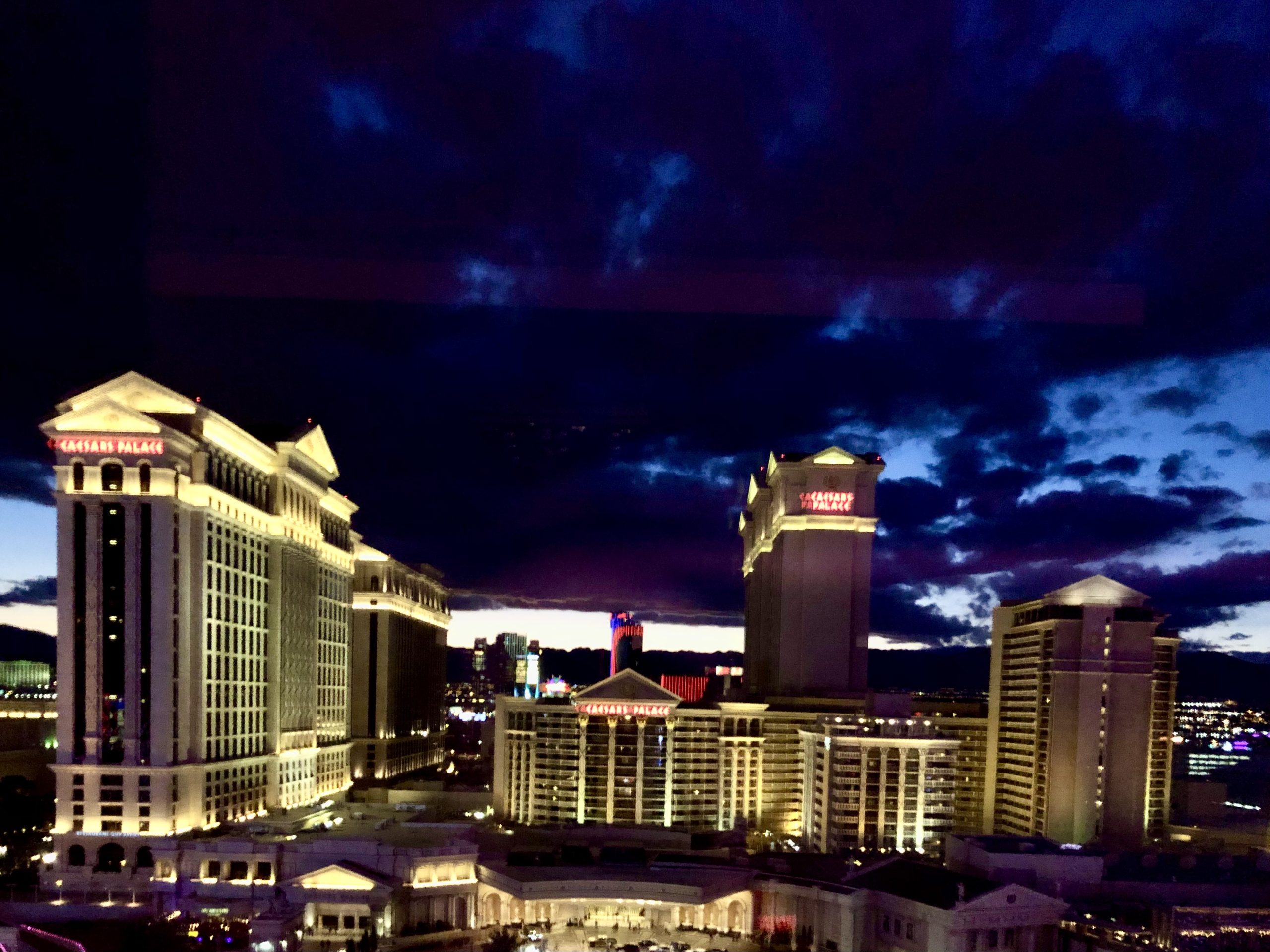
We warned you. Last week we predicted February’s casino numbers in Las Vegas (and indeed in Nevada) wouldn’t be pretty. And they’re not. The Las Vegas Strip plummeted 14% and the Silver State overall was down 9%. Mind you, the plunge had more than a little to with February 2024 seeing a Super Bowl in Las Vegas while February of this year had no such drawing card. Indeed, Super Bowl Weekend in Sin City this year was reported to be pretty weak. In case you’re wondering, when compared to 2023, the Strip was still down—albeit just 3%.
That being said, a sudden declivity in tourism from Canada and Mexico couldn’t come at a worse time. It certainly didn’t help. Miscellaneous Clark County, still apparently enjoying a lift from Durango Resort, ticked up a point to $144 million. Otherwise, drive-in traffic didn’t seem to get much beyond the border. Laughlin was flat at $42 million and Mesquite‘s $16.5 million represented a 3% uptick in business. (Similarly positioned Wendover, however, dropped 7.5% to $21.5 million, a baleful portent. When Wendover catches a cold, Nevada comes down with pneumonia.) Downtown stumbled 5% to $72.5 million, North Las Vegas dipped 2.5% to $23 million and the Boulder Strip slipped a point to $74.5 million, as locals came through but tourists didn’t.
The dropoff fell hardest on Lake Tahoe, which plunged 17.5% to $17.5 million. Reno was off 6.5% ($56 million) and Sparks ceded 2.5% to $13.5 million. But let’s take another look at the Strip, if we must. Slot play wasn’t necessarily bad, although coin-in was off 4%. At $382 million, the one-armed bandits were flat with 2024, which makes for a win of sorts, given the circumstances. Players were parsimonious at the tables, wagering 22.5% less. They were also 7.5% luckier, losing only $221 million. Baccarat was a catastrophe, as luck definitely favored the players. The house won 51.5% less (or 87.5%) on 31.5% lower wagering. Since Sin City can’t dial up a Super Bowl every year (much as it might be wished), some future coping strategies may be in order.
Speaking of Super Bowls, recent capers by Kalshi have brought cease-and-desist orders in both Nevada and New Jersey. Predictably, Kalshi threw a temper tantrum, filing lawsuits in both the Silver and Garden States. The prediction market yowled that its constitutional rights were being violated. We’ll get to that but first, where, oh where, could Kalshi—which has Donald Trump Jr. on its payroll—get the idea to go lawsuit-happy? Oh. Yeah. Kalshi and Robinhood started dabbling in sports betting ahead of the most recent Super Bowl, and Kalshi has already collected $237 million in March Madness handle. And yet is say it’s not sports betting. Just commodity trading. Just like daily fantasy sports weren’t really sports betting. Uh huh. Tell us another one.
Unlike its predecessor, the new administration has been supine (we wonder why) in its approach to the breakout of prediction-market betting. So this will have to be fought out in the courts, the nominal referee— the Commodity & Futures Trading Commission—being hors de combat. And as Geena Davis observed in Thelma & Louise, “The law is some tricky shit!” Follicle-fine distinctions between a wager and an “event contract” will be litigated, probably all the way to SCOTUS, and it’s impossible to predict on which side the courts will come down. After all, then-Gov. Chris Christie (R) of New Jersey lost every round in his fight to legalize sports betting … until he got before the Supremes.
Sticking with the Garden State, it’s illegal to place a bet on college sporting events in New Jersey. But Kalshi and Robinhood are doing it anyway. Which seems like a good reason to place the cuffs on them. Besides, they have no constitutional right, their delusions to the contrary, to offer nationwide sports betting. The Supreme Court was crystal-clear about placing that prerogative where it belongs, with the states. What Kashi and Robinhood are doing is creating de facto federalized sports betting, unregulated and answerable to no written law. In fact, it would directly contravene the Federal Wire Act, which forbids the placing of wagers across state lines. (Ahem!) If federalized, nationwide sports betting were to be instituted, it would not only stand the Supreme Court’s ruling and the Wire Act on their heads, it would take us back to the days of the Bradley Act. And who wants that?