

“No matter how horrible things are, they can always get worse.”—from Executive Suite by Ernest Lehman.
A faltering economy has claimed its first victim in gaming. Thanks to the new administration’s ‘yes/no/maybe/but maybe not’ policy on tariffs, we’re starting to see pushback against U.S.-based firms. Specifically, Alberta has put the kibosh on the purchase and import of American-made slots and VLTs. Howard Stutz reports that “the province’s action could cost major gaming manufacturers headquartered in Las Vegas millions of dollars in lost sales.” If you don’t “share a free trade agreement with Canada” you’re SOL, pal.
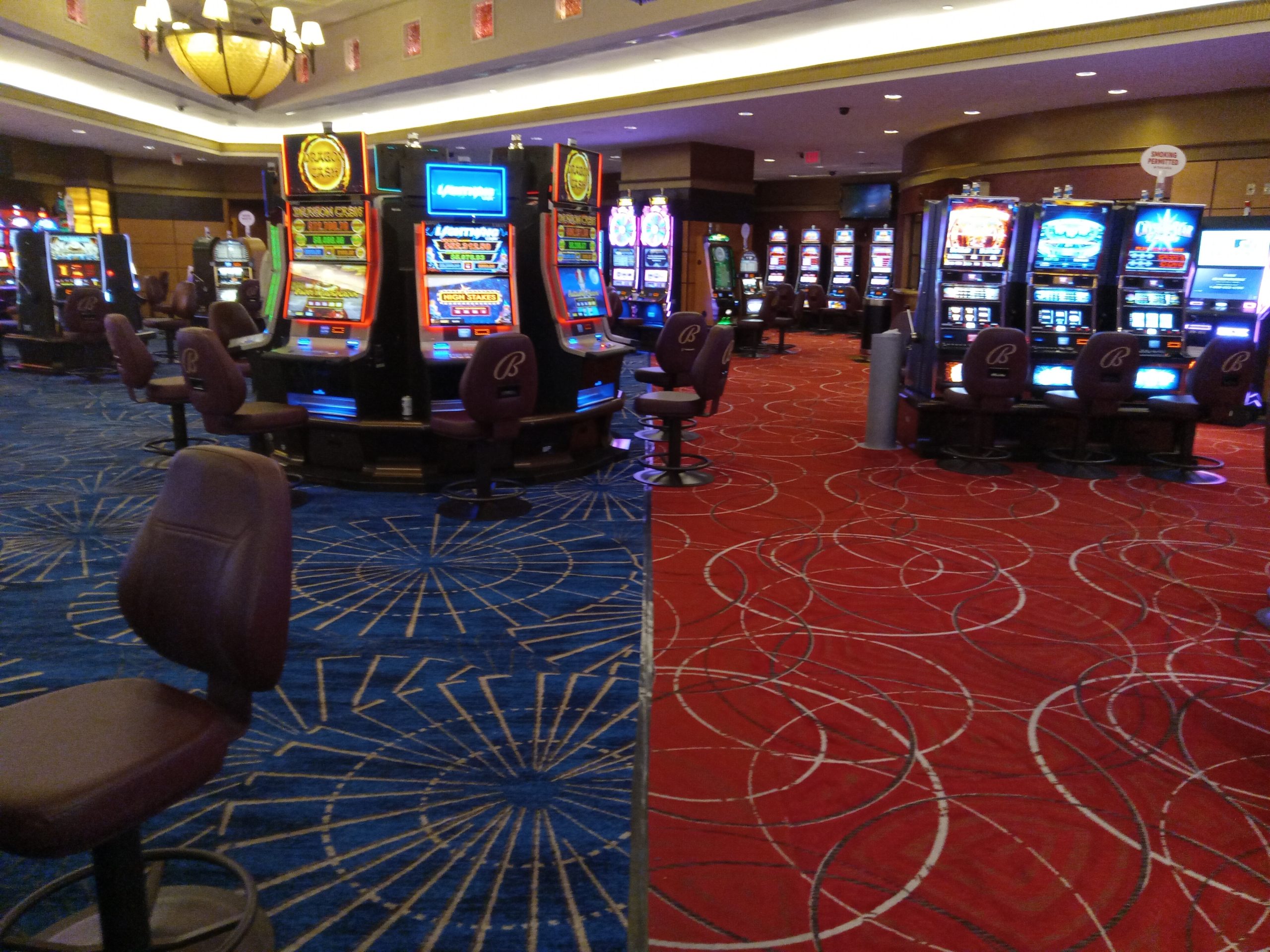
The move is especially painful as Alberta was perceived as the next, big, North American growth market. Should other Canadian provinces follow suit the slot industry could find itself begging for mercy. The primary pain points are Ontario and British Columbia. As Stutz points out, Canadian casinos are state-sponsored, cutting Big Gaming’s CEOs out of the loop. Already both the highly respected Eilers & Krejcik Gaming consultancy and the Association of Gaming Equipment Manufacturers are sounding worried. The companies that stand to suffer the most from a Canadian boycott are the who’s-who of the industry: Light & Wonder, Aristocrat Gaming, International Game Technology and Konami Gaming. IGT implied it could make slots in Canada, while everyone else is keeping mum. Alberta may only contribute 4% to their bottom line but Big Gaming has historically valued the 4,000 slot sales lost far more than the all those gained.
Slot-makers may be the first cannon fodder in the White House‘s scattershot trade war, but brick-and-mortar casino operators are dodging bullets, too. Casino stocks slid along with the rest of the New York Stock Exchange. The hardest blow fell upon Penn Entertainment, which dropped 9.5% in a single day. But other major operators are feeling the pinch. After all, Las Vegas’ two largest international tourism markets are Canada and Mexico, two nations that have been singled out for heavy tariffs and, in Mexico’s case, probable military action. American Gaming Association President Bill Miller looks like a damn fool for proclaiming that happy days are here again for Big Gaming, especially in light of the industry’s record run of prosperity in 2021-4.

If that weren’t enough, February brought a string of downturns in regional gambling, after a phat January. The suddenness of the declivity is as noteworthy as their decisiveness. We’re not talking about a percentage point here and two percent there. For instance, Detroit‘s three casinos slumped 6% last month. MGM Grand Detroit was the pace car, off 6% for $46.5 million. Hollywood Greektown fared better (and it needed to), off just 3% for a $23 million gross. MotorCity Casino got walloped 10%, pushing it down to $28.5 million.
Want more? How about nearby Indiana, which saw casino receipts dip 5%? On a same-store basis it was worse, -11%. The brightest spot was sports betting … which we’ll get to presently. Even Hard Rock Northern Indiana was down 9%, reaching $34.5 million. It was still comfortably atop a Hoosier State in which every casino and racino was revenue-negative, save for Harrah’s Hoosier Park, flat at $17 million. Horseshoe Hammond actually slowed its erosion, off 6.5% to $20 million, albeit still a shadow of its former self. Ameristar East Chicago stumbled 14.5% to $13 million whilst Blue Chip (below) dove 16% to $9 million.

Of the larger properties, popular Caesars Southern Indiana suffered the worst, plunging 22% to $16 million, while Horseshoe Indianapolis was off 5.5% to $24 million. Terre Haute Casino did $11 million, Belterra Resort was off 6% to $7 million, French Lick Resort plummeted 21.5% to $5.5 million and Bally’s Evansville faceplanted -13.5% to $13 million. One of hardest blows fell upon little Rising Sun, which sank 24.5% to $2.5 million, while Hollywood Lawrenceburg faded 6% to $12 million.
Hoosier State sports betting saw punters wager $424 million (up 6%) for revenue of $47 million, a 27% leap. FanDuel bested DraftKings $19 million to $17 million. Other participants were BetMGM ($3 million), Caesars Sportsbook ($2 million), newly endangered ESPN Bet ($1 million), Bet365 ($2 million) and Fanatics ($1.5 million). BetRivers fell below our Mendoza Line.
It was a mixed bag for Missouri, where gambling win faded 5% but was 11% better than in pre-pandemic 2019. A 4% increase in table winnings cushioned an -8% slalom in slot takings. Three casinos were revenue-positive. In St. Louis, plucky River City hopped 6% to $21.5 million. Outstate, new and refreshed product at Century Casinos did the trick. Century Caruthersville leapt 10% to $4.5 million while Century Cape Girardeau nudged up 2.5% to $6 million. Horseshoe St. Louis, a property that’s been on the ropes, managed to hold the line with a flat February ($12 million). Hollywood St. Louis lost 8% ground to $19 million while nemesis Ameristar St. Charles ceded 2.5% for $23 million. Ameristar Kansas City ($15 million, -11%) led a debilitated Kansas City market of Argosy Riverside ($12 million, -13%), Harrah’s North Kansas City ($13 million, -4%) and Bally’s Kansas City ($10 million, -11%). The other outstate casinos weren’t worth writing about, save for the fact that Mark Twain Casino no longer had table games to counter the slot slump: It dove 23% to $2.5 million.
As casinos headed south, sports bettors clung to their habits, betting 8% larger in Maryland ($463 million). A lofty, 13% hold translated into $59 million for the bookies. With $3 million, Fanatics gave BetMGM ($4 million) a run for its money. FanDuel was tops with $32.5 million, doubling up DraftKings’ $16.5 million. Once again, BetRivers didn’t make it to the Mendoza Line. Those who did were Caesars Sportsbook ($1.5 million) and ESPN Bet ($1 million).
End of an era. The tireless analyst for the Nevada Gaming Control Board, stat master Michael Lawton, must finally be tired. He’s stepping down, following NGCB Chairman Kirk Hendrick to the exit door. Unlike Hendrick, he’ll be difficult to replace. In other news, a scary-old-looking Penn & Teller trotted out a new three-card-monte-themed game on behalf of fledgling firm Casino Adventura. Everybody got dressed up for the occasion save for The Rio CEO Patrick Miller, who looked like he’d just come back from a busy afternoon of loan sharking. Would it kill you to put on a jacket and tie, dude?