

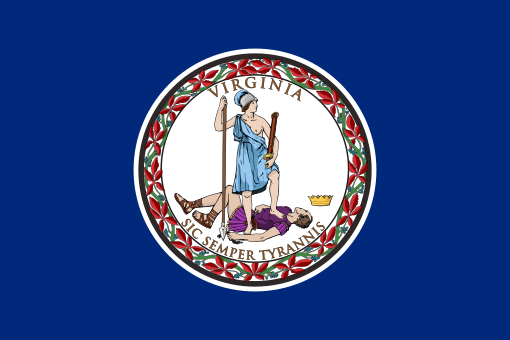
While we don’t know how closely Bally’s Corp. is behind the political contretemps currently playing out in Virginia, it’s the second time in recent history that a high government official has taken non-kosher acts on the company’s behalf. The flashpoint is a letter from Petersburg City Manager John Altman to Bally’s, announcing that the company had been tapped to develop the city’s sole casino, “the result of an extensive vetting process.” Trouble is, the City Council met a week later, behind closed doors, and unanimously voted in favor of a $1.4 billion rival bid by Cordish Gaming. We had predicted Cordish would get the nod for the obvious reason that it put the most money on the table.
Although Bally’s was an also-ran in terms of what it was prepared to spend and had been singled out for financial dubiousness by consultant Davenport & Associates, heavy pressure appears to have been coming down from Richmond to give it the nod. Reports the Virginia Mercury, “The city claims the letter was signed under duress as the General Assembly pressured local officials to pick a certain casino company or risk losing the project entirely.” Sounds like a shakedown to us. The compromising letter, to Bally’s senior veep Christopher Jewett was never actually sent nor countersigned by Jewett.
The Petersburg city fathers did not help their cause by short-circuiting the bidding process and preemptively selecting Cordish, a blunder reminiscent of Chicago then-Mayor Lori Lightfoot‘s maladroit handling of casino awards in the Windy City. The city, however, doubled down on its extortion claims, by stating in a formal resolution that “a letter of intent was received by the City Manager’s Office to proceed with Bally’s as the City’s preferred casino gaming operator with a demand that the City sign the letter of intent (Exhibit C) or face the bill being voted down or indefinitely tabled.” So, according to the city, it was pick Bally’s or else. How does a company with such shallow pockets wield so much political clout?

According to council members, Cordish came recommended by Davenport, as well as by a previous consultant. Given its string of East Coast successes, it’s easy to see why. But the choice didn’t sit well with local labor unions, nor with state Sen. Lashrecse Aird (D, above), who appears to have been the point person for the shakedown. Unite-Here said the fix was in for Cordish, which had won an abortive, 2022 bid, and “Lashrecse Aird, in contrast, wants to bring good development to Petersburg that benefits workers and residents alike.” That’s clumsy code for “Pick Bally’s or we picket you.” Why them? According to Aird, state Sen. Louise Lucas (D) and Speaker of the House Don Scott (D), there was a “labor peace agreement” between Bally’s and the union, a consideration that apparently trumped all others … such as solvency, and Bally’s liquidity is very much in question these days. At least Bally’s could take comfort that Davenport recommended them for a second round of consideration—unlike Penn Entertainment, which didn’t make the first cut, the unkindest cut of all.
Aird, for her part, tried to spin her role as a go-between for Soo Kim as “honest collaboration.” (Scott delicately pushed his colleague under the bus.) Petersburg isn’t out the woods yet, as the bill giving it gaming prerogatives doesn’t kick in until July 1 and Cordish will have to be voted up or down in November. Meanwhile, the City Council is clamming up about how it came to choose Cordish (a PR blunder, at minimum) and refusing to release the minutes from the infamous, closed-door conclave. A special session of the Lege could exact retribution on the city next month and the various also-rans of the selection process might sue. To his credit, Gov. Glenn Youngkin (R) tried to nix a provision requiring Petersburg to run its final choice by the Lege, an obvious invitation to trouble. Unfortunately, Youngkin’s political overreaches within Virginia cost him majorities in both houses of the Lege, leaving him to deal from a position of weakness.
Unite-Here is also angling on behalf of also-ran Rush Street Gaming and of long-shot casino bidder Warrenton Group, an inexperienced bidder that never had a snowball’s chance in Hell of surviving the bidding process. Cordish aside, there are no winners in this game. Petersburg scored an own-goal but scuttling its RFP procedure in favor of a peremptory selection. And Aird, a freshman legislator, has overplayed her hand in what can be called, at best, a rookie mistake. As for the Lege, it finds itself trying to bar the barn door now that the horse has fled. Good luck with that.

Add casinos in Motown to the list of those facing adversity last month. Detroit gambling halls took in $108 million, 2% off last year’s pace and a 14% plunge from 2019. MGM Grand Detroit suffered little, flat at $50 million. Hollywood Greektown was microscopically positive at $25 million but MotorCity took a lump, down 4.5% to $33 million.
While the three casinos in Massachusetts were 2% above their 2019 levels last month they slumped 4% from last year, down to $97 million. Encore Boston Harbor declined 5% but remained the champ at $61 million. On-the-block MGM Springfield was down 4% to $23 million, while slots-only Plainridge Park hopped 3% to $14 million. Sports betting added $51 million on handle of $592 million. Favorite son DraftKings was first with $24.5 million, though FanDuel flexed some muscle at $20 million. Crumbs were divided between BetMGM ($2.5 million), ESPN Bet ($2 million), Fanatics ($1 million) and underperforming Caesars Sportsbook (sub-$1 million).
Sports betting also made itself felt in Illinois in March, where $1.3 billion in handle turned into $99.5 million in revenue. Low hold was to blame for the result, as handle shot up 18% from last year. FanDuel was top dog here, with $41.5 million, followed by DraftKings‘ $33.5 million. BetRivers made a strong showing with $7.5 million, and ESPN Bet ($5 million) bested BetMGM ($3.5 million). Could ESPN Bet be finally gaining traction? Let’s hope so. Caesars Sportsbook was its closest rival with $4 million, while Fanatics was a couple of increments behind ($4 million). FanDuel did the best on parlay bets, very favorable to the house, BetMGM the worst.