

“Much better than a quarter ago,” J.P. Morgan analyst Joseph Greff said of Boyd Gaming‘s second-quarter numbers. The company had arguably shocked Wall Street with its 1Q24 underperformance, so this week’s news was salutary. While Greff, for one, didn’t move off his “Neutral” rating, he did add a dollar to his $67/share price target. “Importantly, its Las Vegas Locals properties showed better/less-bad results,” he wrote of Boyd, adding that Downtown was trending nicely and even the Midwest/South casinos outperformed his estimates … with a last-minute boost from crazy-busy Treasure Chest, whose new iteration debuted in June.
Speaking with the Nevada Independent‘s Howard Stutz, Boyd CEO Kevin Smith dismissed talk of a Penn Entertainment buyout by Boyd and Greff suspected as much. “Our take here is that BYD really isn’t warm on PENN and sees such M&A as complex and challenged,” he said (and we tend to agree). Otherwise, “we come away feeling less concerned about the state of the low-end gaming consumer and definitely feel better than a quarter ago after BYD sounded the alarm a little bit.” Still, Greff harbored doubts: “we struggle to find a reason why this consumer would be stronger in the 3Q24 through the rest of this year versus the last 12 months.” Despite “cheap” valuation on the stock and attractive free cash flow, Greff wasn’t entirely keen on Boyd, awaiting further clarity on the behavior of low-end gamblers.

By the numbers, Boyd won $225 million from local Vegas gamblers where Wall Street had expected $221.5 million, despite newish competition impinging on The Orleans and Gold Coast. The Street expected $53 million from Downtown and Boyd delivered $57.5 million, and Midwest/South properties garnered $522 million instead of the forecast $514.5 million, boosted by a 100% increase in revenue at Treasure Chest. Although Boyd execs attributed competitive pressures in Las Vegas to Durango Resort, Greff blamed it on smaller rivals who had ramped up their promotional efforts in a big way in order to defend market share.
The concerns of Deutsche Bank analyst Carlo Santarelli were eased, though he stood by his “Hold” recommendation on the stock. For his part, worries about Boyd stretched back to early 2023. His conclusions included that the Vegas-locals market “is not in free fall, and likely improved, on a same-store basis, from a down ~5% Y/Y net revenue environment in the 1Q24 to a down ~1% Y/Y net revenue environment in the 2Q24.” Still, he was less than convinced that Wall Street would respond favorably. Unlike Greff, Santarelli thought Boyd bosses kept their options open on mergers and acquisitions: “We come away feeling similar to our prior sentiments, as we continue to believe that BYD has interest in potentially expanding the footprint, but will be cognizant of price, and we believe bid/ask dynamics are likely an issue for any potential buyers in this environment.“
While hailing “disciplined execution” by Boyd, Jefferies Equity analyst David Katz thought the 2Q24 numbers the exception, not the rule. He reluctantly stayed on “Hold,” despite allowing that an extensive regime of capex investments presented no great financial risk. Katz wasn’t impressed with the locals numbers, either. One positive harbinger was the ahead-of-schedule expansion of tribal Sky River Casino, near Sacramento, run by Boyd. More gambling (400 new slots), more parking (1,600 spaces) and a hotel (300 rooms) are on the drawing boards.

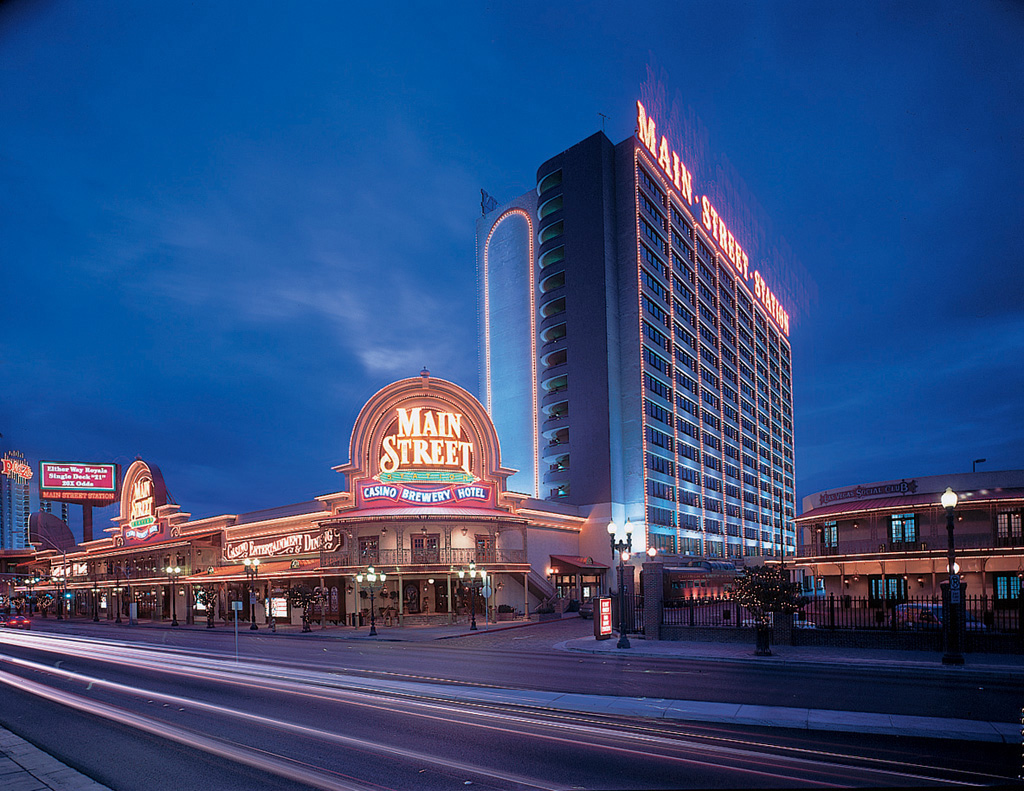
“Buy”-rating Truist Securities analyst Barry Jonas was most positive of all, writing that “expectations may have bottomed after a few weak quarters.” He thought a Penn deal—indeed, any major transaction—wasn’t going to happen anytime soon. Jonas explained his “Buy” as a reflection of Boyd’s low leverage ($3 billion in debt), real estate portfolio and FanDuel stake. Can’t argue with any of that. He reported that airfares from Hawaii have gotten better and that this is showing up in the Downtown results, and that renovations to Main Street Station and the Fremont Hotel are yielding dividends. Boyd will be going up against a record 4Q23 but is optimistic about the quarters to come.

Lowering its guidance yet again, Las Vegas Sands posted the latest in what Santarelli described as a series of negative revisions. 2Q24 cash flow from Macao had already been a big disappointment, coming in at $562 million and not the $609 million that Wall Street had been led to expect. Marina Bay Sands was an uncharacteristic letdown, reporting cash flow of $441 million, well below the Street’s anticipated $489 million. “Broadly, we do not anticipate the results themselves, nor the call commentary, will be well received by investors, however, with shares at current levels, we struggle to believe much of anything incrementally positive was priced in heading into the print,” Santarelli opined.
While Santarelli thoughts Sands has bottomed out in Macao, Greff was less optimistic, thinking the turnaround would be at year’s end when The Londoner comes fully back online. He noted that Sands had outperformed in both mass-market and VIP gambling revenue but that this was offset by higher promotional outlays. (If you’re Sands and you’re having to buy business in your signature market, it’s probably not a good thing.) “We continue to believe that Singapore remains healthy and see capex here driving medium-to-longer term EBITDA growth,” he added. Sands, meanwhile, will continue to prop up the stock price, buying back $400 million to $500 million in shares per quarter.
Happily, visitation to Macao is beginning to closely rival that of 2019, while Singapore air traffic in the spring has exceed pre-Covid volume. Sands may have $4.7 billion on hand but it is groaning under $13.7 billion in debt. As long as CEO Rob Goldstein chooses to throw money at the stock price, that’s not going to change. Plus, Sands will be spending over $1.5 billion in the balance of the year, $600 million of it to upgrade Marina Bay Sands, most of the remainder to diversify its Macanese appeal. Like Greff, Katz adopted a watching brief, opining that macroeconomic issues in China were impairing the company’s upside. He shaved two dollars off his target price on LVS, lowering it to $45/share.