

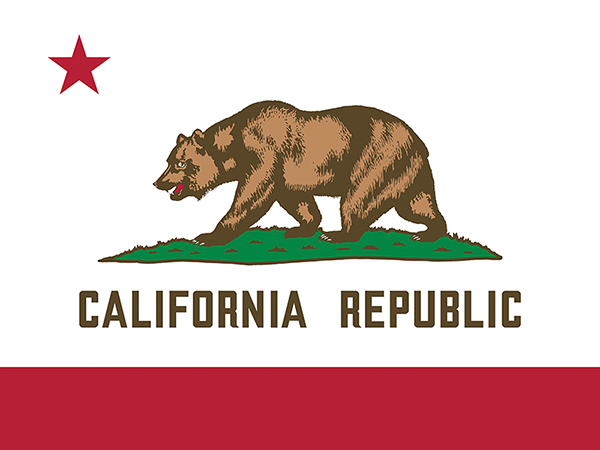
Any child knows that ‘daily fantasy sports’ is a fancy name for sports betting. The primary fantasy at work is the notion that it ISN’T sports wagering. If you field the 2025 Los Angeles Dodgers but swap out a measly player or two, you’re in clover. After all, the success or failure of your “team” is predicated on real-world stats as compiled by real-world athletes. It’s sports betting, plain and simple.
DFS purveyors like DraftKings and Underdog have been trying to get around California‘s ban on sports betting (which we hope will soon be repealed by electorate) with their wink-and-nod ‘fantasy’ games. Meanwhile, the state’s tribes and card rooms have to stand on the sidelines, watching the big boys cash in and build databases. If and when sports betting is legalized in the Golden State, the only gold being mined will go to scofflaw DFS operators.
No longer. Last year we called for the resignation of California Attorney General Rob Bonta (below). He stuck around anyway and thankfully he’s now using his power for good. He’s issued a legal opinion that pick ’em games and other DFS strategems constitute unlawful sports betting. Bonta is now attempting to make new law by fiat, simply upholding the 1909 penal code. Meanwhile, Gov. Gavin Newsom (D), to his eternal discredit, is throwing in his lot with the ‘Draftduels’ of the world. For the moment, DFS providers are expected to cease and desist voluntarily. Like that’s gonna happen.

Fortunately, any attempt to flout the AG’s opinion flies in the face of California Supreme Court precedent, which holds that the alleged “skill element” in wagering is irrelevant: “The essential requirement of a ‘bet’ or ‘wager’ is that participants win or lose based on the outcome of an uncertain future event, such as a sports competition, even if skilled bettors consistently come out ahead.” (The Commodity Futures Trading Commission should familiarize itself with that basic concept.)
Newsom is going to try to broker some form of compromise but we don’t see any gray area to be had. Either it’s sports betting or it ain’t and if it is, it’s up to the people to change it. Which they see loath to do. Under the status quo ante, tribes and card rooms were getting gypped by the DFS industry. As California Nations Indian Gaming Association Chairman James Siva said, “Where is the enforcement? Where is the accountability? It is now imperative that the state back up this legal opinion with strong enforcement and that lawbreakers be held to account.” The ball’s back in your court, Mr. Bonta.

Better late than never? Having waited until the taxation horse bolted before barring the barn door, the American Gaming Association has belatedly come out against the newly increased tax on John Q. Gambler’s winnings. As the dust settles from last week, we’re learning who to thank for this kick in the collective keister. It was none other than Sen. Mike Crapo (R, above) who decided to stick it to players by capping deductible losses at $90K. (Crapo’s allegiance to the anti-gambling Church of Latter-Day Saints may help explain why he singled out gamblers for unfair treatment.) The senator from Idaho is juiced into his Senate seat for the balance of the decade, so we can only hope wronged gamblers have long memories (and big checkbooks) when Crapo next stands for reelection.
Meanwhile, Reps. Dina Titus (D) and Ro Khanna (D) are introducing legislation to try and claw back that tax hike on punters. Lotsa luck, especially as they’re on the minority end of a narrowly divided House of Representatives. If the GOP coalition hasn’t splintered up to this point, it’s unlikely to do so and disgruntled players will have to wait until the 2028 midterms to hope for electoral redress. We wish them luck but, when seniors are getting booted off Medicaid and school kids will be going hungry after being denied SNAP benefits, it’s going to be awful hard to gin up outrage on behalf of shortchanged casino players, legitimate though the latter’s grievance is.

Where is the AGA in all this? Totting up a fantasyland wish list for Congress to enact: “increase in the slot tax-reporting threshold; repeal of the sports betting excise tax; maintaining the corporate tax rate; a bonus depreciation extension; repeal of the requirement to capitalize and amortize research and experimental expenditures … and maintain deductions for business state and local taxes.” Pardon us while we fall on the floor laughing. Does Bill Miller really think that he’s going to get all that past Speaker of the House Mike Johnson (R)? Not bloody likely. Maybe an item or two … and not the ones that matter to the average casino player or employee.
For instance, members of Congress on both sides of the aisle are covetously eyeing the excise tax for their own purposes, so that’s not going anywhere. Nor is this government inclined to give away tax dollars it could scrounge from your slot jackpot. And so on. Maybe the AGA hasn’t noticed—to evoke the late, great Bill Paxton in Aliens—but it just got its ass kicked.

Nature abhors a vacuum. So it would appear does Bally’s Corp. It’s been inescapable in the news this week. Its $4 billion Bally’s Bronx project looks a little more concrete, if not more fungible, after the company released some additional project renderings—ones that don’t look like they were scribbled on a cocktail napkin, for a change. At present, the casino-selection process is working through a raft of subcommittees, all of which report to the statewide committee charged with the final choices. If Bally’s gets the nod it will have its work cut out for it: Probable competitor Resorts World New York City is the top-grossing U.S. casino outside of Las Vegas. Good luck making a dent in that.

Just up the road in Rhode Island, Bally’s has inked a pact with Sweden-based Evolution, which will now be supplying game product to Bally’s iGaming platform. Not that Bally’s needs the help. It’s juiced into a Rhode Island monopoly. Some lawmakers tried to open the playing field to other companies in the last Lege but nothing doing.
Things aren’t going as swimmingly in Australia, where Bally’s has a twofold problem on its hands at Star Entertainment. For one, if a pair of Far East investors stick with Star’s Queen’s Wharf Casino, they want somebody else running it: Delaware North … Crown Resorts … anybody that isn’t Bally’s. Maybe they got spooked when Soo Kim shot off his mouth in the Sydney Morning Herald that he was going to run the Star casinos as down-market properties. It would serve the cheeseparing Kim right if this were payback.
Speaking of cutting the cheese, Kim’s minions have offended Star rank-and-file employees by trying to pay for a 4% pay hike by slashing overtime payments by 25%. Complained a worker-friendly broadsheet, “This means workers would be paid close to minimum wage during a cost-of-living crisis and paid less than workers doing the same work in other venues.” Sounds like Bally’s, all right.
UPDATE: Good news. Rep. Troy Nehls (R) has come over to the side of gamblers, in an effort to get the recent tax hike reversed. https://frontofficesports.com/obbba-gambling-tax-hike-trump-repeal/
I just saw your comment, and was going to note that. Next bill that goes up, that will be on it. As for the jackpot threshold for a W2G, that is not so much a legislation item as it is a policy item from the IRS. A little pressure from the top might work. But like you said, they are looking for every penny, and the low reporting threshold helps in that area.
I’m keeping my fingers crossed, Lucky. As of this morning, three GOP House members and two Senators had broken ranks to denounce the tax hike (and effectively recant their votes for it). Expect to hear a lot of “I didn’t know what was in the bill.” My bigger fear at this point is, that if the Titus/Khanna/Nehls FAIR Act comes up for a vote, some liberal Dems will defect to the anti-gambler dark side. Lord knows, the word “casino” is still a pejorative term at both ends of the political spectrum.
I think they will vote it out in some legislation coming up. A bargaining chip. As for the reporting threshold, they could make a law that sets it instead of waiting for the IRS to change it. We will see if the fair act comes up for a vote any time soon.