

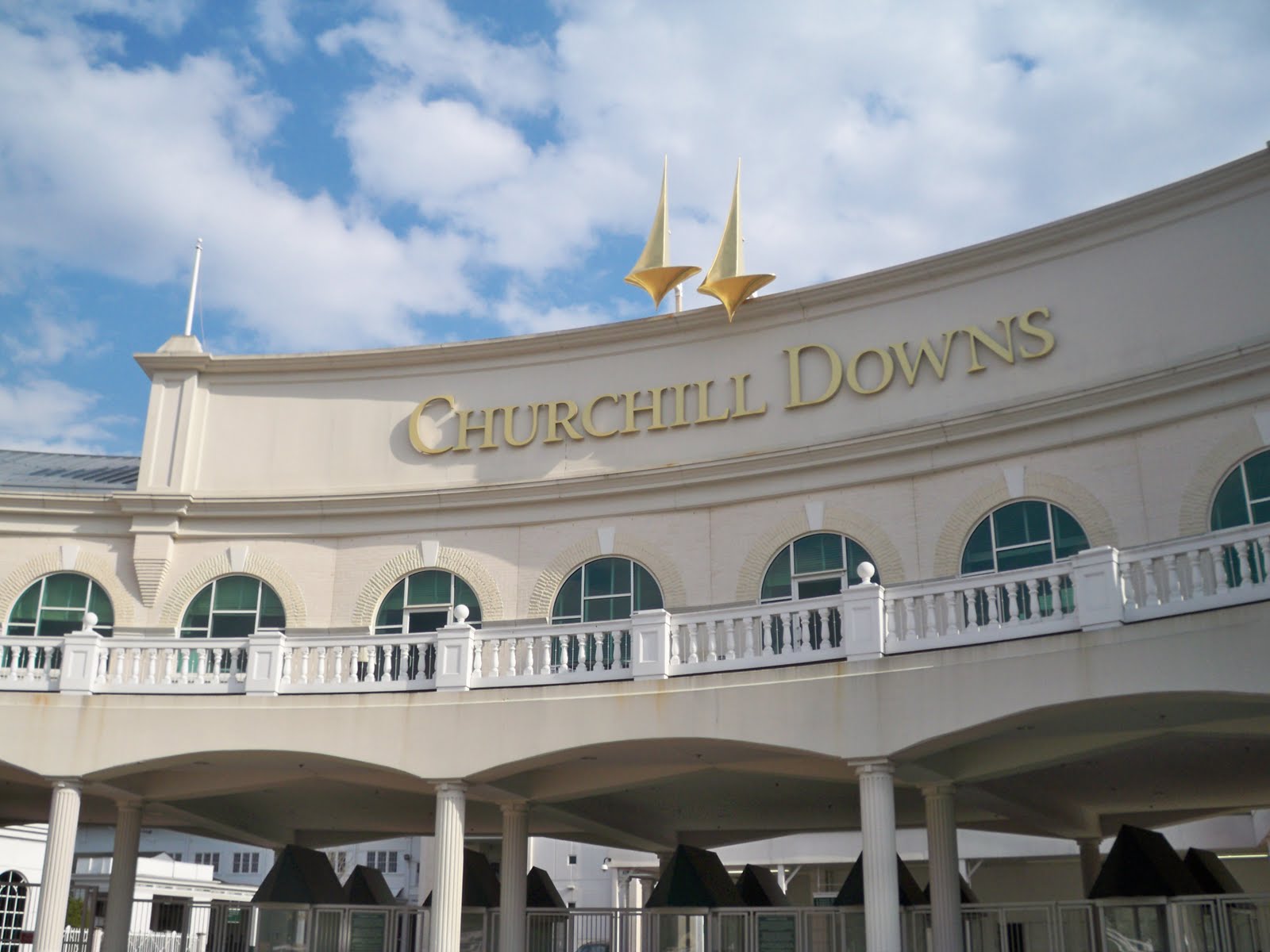
Delegating its CFO and vice president of investor relations, Churchill Downs packed them off to Boston to meet with J.P. Morgan stock analysts. The company is feeling high as a kite about Kentucky Derby prospects, to the point where it provided first-ever revenue guidance on the event: as much as $20 million in cash flow. Half of that reflects a deal with NBC to carry the race in prime time. “While there’s minimal downside risk to the low end, upside to the high end could come from wagering growth,” predicted analyst Daniel Politzer. Normal weather—unlike last year—would help, too.
In pursuit of additional revenue, Churchill Downs is adding more price points for seating and extending Derby Week. Music festivals could loom in the future, as well. Turning to the casino biz, CHDN execs said weather in the first quarter has been largely a wash and that they’re still waiting to see the full impact of tax refunds. Further blurring the line between Kentucky and casinos, the company is deploying 50 electronic table games in the Bluegrass State. So far it’s been all roulette, but blackjack and craps are on the way.
Execs breathed a sigh of relief that the Virginia Lege spiked iGaming this session but they know it will be back next year and are preparing. They’re also hoping for a critical mass of opposition for a casino in Fairfax County (near their The Rose casino), where it is polling poorly, with as many as 80% of residents opposed. Cavalier State lawmakers also ran up the white flag on black-market “skill” games, which they see as a new source of taxation. Gov. Abigail Spanberger (D) has until mid-month to ink the bill, “but even if passed, CHDN is optimistic the additional regulations, costs, and licensing process will limit supply.”
Churchill Downs is also hoping to upgrade its slots-only casinos in the state with the addition of ETGs. What drew some ire (but no action) in the Lege was Churchill Downs’ sneaky habit of—having been denied a casino in the capitol city—flooding the Richmond market with VLTs at its slot parlors. CHDN might need to have its covetous hand slapped.

Ironically, Boston-based potentates of DraftKings went to New York City to meet with Politzer & Co. The company is using the supine attitude of the feckless Commodity Futures Trading Commission to be more aggressive in rolling out DraftKings Predicts. They hope to have this amped-up version of online sports betting ready for the start of—when else?—NFL season. Also, the costs of going live with OSB in Arkansas are a drag on the bottom line, representing at least $15 million in negative ROI.
Politzer found DKNG to be “pleased with customer retention, engagement, and bet mix, highlighting its improved NBA share/product. It’s comfortable with revenue expectations.” January and February saw handle 4.5% above projections, while March is more of a mixed outlook, due to heightened promo activity. “March Madness has been fine re: hold; bettors often take underdogs on single-game bets, while parlays are often on favorites,” as was the case with favorite University of Florida. The latter’s surprise defeat apparently wrecked many a parlay.
Understandably pleased with its OSB offerings, DKNG allowed that its iGaming product needs work. To that end it’s added a new iGaming boss, among other moves. Interestingly, the company is taking a laid-back attitude toward the NCAA tourney, preferring to focus its efforts on baseball season and the NBA playoffs. As for those problematic prediction markets, DraftKings things they’re going all the way to the Supreme Court, possibly in 2027. Maybe sooner, if the circuit courts find themselves at odds with each other. At least the noxious prediction-market phenomenon is apparently giving pause to state legislatures that might otherwise raise OSB taxes. By the way, DraftKings is saying it “will not chase irrational behavior.” But without irrational behavior there’s no gambling industry.
Promotional behavior is getting more rational in Missouri, to judge by the third month of OSB in the state. Sports books took in $31 million and gave $11 million back, leaving something for the tax collector. (January promos constituted 61% of revenue, by comparison.) February hold was 11%, nice and tight for the books, on handle of $277 million.
Speaking of DraftKings, it edged FanDuel, $13 million to $12 million, although FanDuel held tighter at 13%. That left $1.5 million for BetMGM while Caesars Sportsbook couldn’t even scare up a million. (We continue to find the Roman Empire’s online offerings overrated vis-a-vis their earning power.) Also falling short of our Mendoza Line was theScore Bet. However, Bet365 pulled in $2 million and Fanatics grossed $1.5 million. No word on Circa Sports‘ performance. Given Derek Stevens‘ obnoxious gloating in the New York Times, we kinda hope he’s losing his shirt in the Show-Me State.