Posted on Leave a comment

Jake Paul’s Next Fight: Likely Opponents to Face the YouTube Boxer Next

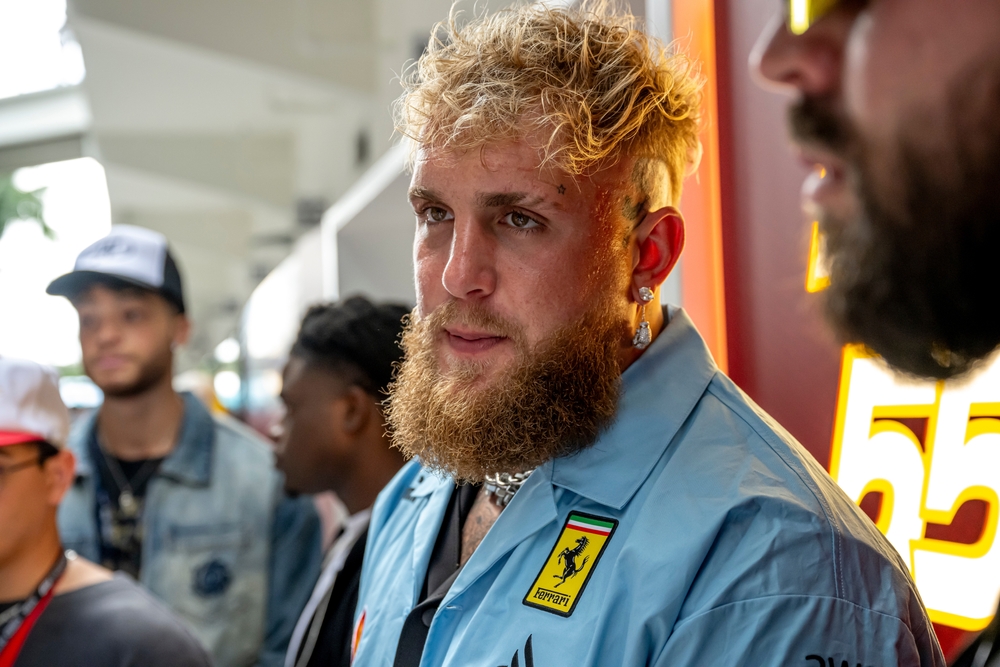
Back in September 2013, few would have predicted that a 16-year-old prankster would, just eleven years later, rake in the biggest boxing gate outside of Las Vegas and beat 58-year-old Mike Tyson. Love him or hate him, Jake Paul is a phenomenon.

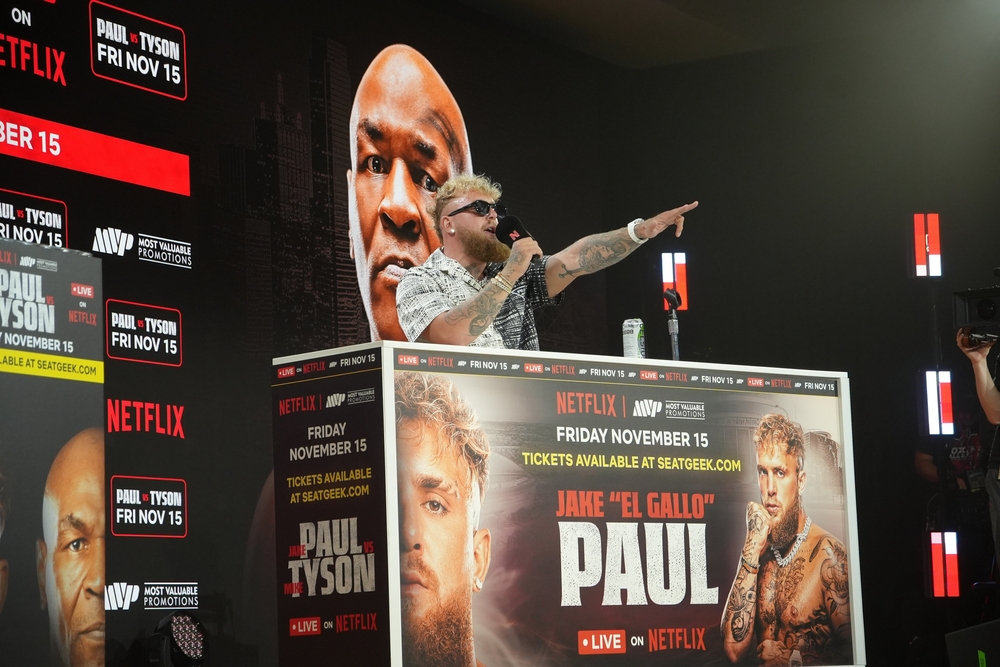
His latest bout against former undisputed world heavyweight champion Tyson might have been the subject of memes and jokes. It still pulled 65 million viewers worldwide and pocketed Paul nearly $40 million from the purse.

Starting on the now-defunct social media site Vine, Paul and his brother Logan amassed 5.3 million followers and nearly 2 billion views before transitioning to the burgeoning YouTube scene.

Paul now has over 20 million subscribers on the site.

The YouTube Sensation-Turned-Boxer

In 2018, Jake Paul began his boxing career with a white-collar match against fellow YouTuber Deji Olatunji, brother of rapper KSI, in Manchester Arena, winning in the fifth round. Two years later, he made his professional debut in another battle of the YouTubers against AnEsonGib in Miami.

A first-round knockout saw Paul retain his unbeaten record. Later that year, he fought former New York Knicks guard Nate Robinson, defeating the former NBA first-rounder, this time in the second round.

From this solid base of wins, Jake Paul’s next fight was against former ONE and Bellator MMA fighter Ben Askren in Atlanta. With 1.4 million watching, Paul defeated the former welterweight champion via technical knockout in the first round.

Four months later, a split-decision victory against former UFC champion Tyron Woodley gave way to a rematch between the pair. Paul was due to fight Tommy Fury, the half-brother of undisputed heavyweight champion Tyson Fury, but defeated Woodley by knockout in the sixth round.

Another bout against Tommy Fury was scheduled in August but was canceled again due to travel issues, so Paul fought former UFC champion Anderson Silva in October 2022, winning via unanimous decision. Finally, in January 2023, Paul fought Fury after significant media hype, losing via split decision in Riyadh, Saudi Arabia. He returned to the ring in August 2023 to face Nate Diaz in Dallas, winning via unanimous decision.

Image Credit: YES Market Media/Shutterstock

He subsequently beat Andre August in Orlando and Ryan Bourland in December before turning his attention to fighting former undisputed heavyweight champion Mike Tyson, originally scheduling a fight for July 2024. When Tyson was unavailable, he scheduled a fight with former UFC and bare-knuckle boxer, the so-called “King of Violence” Mike Perry, winning via technical knockout in the sixth round.

All roads led to his prize match with Tyson, originally announced in March 2024. The fight was initially scheduled for July, but it was delayed in May after Tyson had an ulcer flare-up while flying.

Once the fight was rescheduled to November, almost 90,000 fans watched in AT&T Stadium, home of the Dallas Cowboys, as Paul defeated Tyson via unanimous decision. His fight was divisive, controversial, and captivating – much like Jake Paul himself. O

nly one thing is sure: with an 11-1 record, Paul is not finished yet. So one question remains – who will fight Jake Paul next? In this article, we’ll analyze the options for Jake Paul’s next fight.

Strategy and Training

Upon embarking on his boxing career, Jake Paul hired Shane Mosley, a world champion in three weight classes, to be his coach. Training in The Summit Gym in Big Bear, CA, Mosley guided Paul through his first fight against AnEsonGib, who was defeated in one round.

Despite this, he parted ways with Mosley after that fight and brought in former cruiserweight title challenger BJ Flores as his head coach. Flores led Paul to wins against 38-year-old Askren, 40-year-old Woodley, and 47-year-old Anderson Silva.

Image Credit: Andre Luiz Moreira/Shutterstock

Questions remained about Paul’s ability to defeat conventional and younger fighters, which were brought to the fore after his defeat to Fury. At the time, Fury was 24 years old and regarded as a conventional boxer, unlike the MMA fighters and YouTubers he had fought before.

After Paul’s loss to Tommy Fury, he overhauled his coaching team to prioritize conventional boxing skills in his training regime. The 27-year-old brought in coaches and professionals associated with the Kronk Gym in Detroit, such as Theotrice Chambers, his head coach, and J’Leon Love, a long-time associate and coach of Paul. He also recruited Larry Wade, a former world track star ranked No.3 at his peak, as his strength and conditioning coach.

The new coaching team was in place for his 2024 fight against Mike Perry, resulting in visible improvement in his conventional boxing. Love and Chambers’ work developed Paul’s boxing technique, and Wade significantly increased his conditioning, allowing him to outlast Mike Tyson in his most recent fight.

Image Credit: YES Market Media/Shutterstock

Despite fighting a man over 30 years his senior, Paul was noticeably fitter and stronger in his most recent fight and looked more and more like the professional fighter he sorely wants to be seen as. Whoever fights Jake Paul next, the 27-year-old is undoubtedly a different fighter than at the start of his career, thanks to working on the basics with his new coaching team.

Jake Paul Next Fight: What’s on the Line?

Jake Paul’s career to date has delivered a lot, including massive financial gain and pay-per-view orders, plenty of talking points, and a significant amount of controversy, even mockery. One thing that has eluded Paul during his boxing career is genuine legitimacy in the eyes of the boxing establishment.

Paul has attempted to address this with fights against conventional boxers, primarily in non-pay-per-view fights, to build up a resume to be taken seriously as a professional boxer. His fights against Andre August and Ryan Bourland, a former Golden Gloves champion and Junior Olympic boxer, were designed to fill the gap in his experience caused by a lack of a prior amateur career.

His victories in both fights were minimized and ridiculed by many in the boxing establishment, but they point to a desire to establish credibility. In March 2024, Nakisa Bidarian, co-founder of Paul’s promotions company, Most Valuable Promotions, told ESPN that Paul wanted to build his resume against more seasoned boxers and pivot away from gimmicky, non-boxer fights.

Image Credit: YES Market Media/Shutterstock

“Paul said to me that when he stepped into the ring with Fury, that he didn’t perform at the level that he wanted to. A big part of that was that he hadn’t been taking a traditional path and that path requires him to build from the ground up,” Bidarian commented.

It is indisputable that Jake Paul’s profile and popularity with younger viewers mean he will form a pivotal part of boxing in the future as he attracts attention and pay-per-view orders.

The former YouTuber revealed his desire to become the greatest boxer in the world. Bidarian claims he said, “I understand I’m going to make a lot less money in these fights, but it is worth it for me in terms of the ultimate goal — which is to become the greatest story in boxing history… and eventually a world champion.”

Significant promoters like Eddie Hearn, Frank Warren, and Bob Arum are paying attention to his profile. The fight preceding Paul’s clash with Tyson saw one of Eddie Hearn’s prize assets, Katie Taylor, once again face off against Amanda Serrano.

Paul is already big business. Despite this, attracting controversy at every turn, the 27-year-old knows that one misstep will see the boxing establishment dismiss him. Simply put, he can’t put a foot wrong, or he could lose everything.

Jake Paul Next Fight: Who’s Stepping into the Ring with Jake Paul?

With all this in mind, Jake Paul’s next opponent is crucial to his progression as a serious boxer. With an 11-1 record, albeit a record whose quality is disputed, facing a serious contender is pivotal for the YouTuber’s quest to dominate boxing.

Equally, after a mix of high-profile, low-prestige contests like his fight against Tyson and low-profile, resume-building contests like his fights against August and Bourland, the search is on for a genuinely seismic, box office bout for Jake Paul’s next fight. Below, we’ll examine some of the options that have been touted for Paul’s next challenge.

Julio Cesar Chavez Jr.

Image Credit: Wikimedia Commons

El Hijo de la Leyenda, or “Son of the Legend,” has emerged as a pathway for Paul to finally and definitively become a legitimate boxer in the eyes of the boxing elite. The 38-year-old held the WBC middleweight title from 2011 to 2012.

His 54-6-1 boxing record speaks of his unparalleled quality in the ring, and WBA President Gilberto Mendoza has indicated his willingness to sanction the fight as a world championship bout – incredibly, given neither fighter is ranked in the WBA Top 15.

Prediction

Chavez Jr’s record is excellent, and he is undoubtedly a fighter of incredible skill and quality. If Jake Paul’s next fight is against Chavez Jr, it’s sure to be an evenly matched and high-quality affair. At full strength, Chavez Jr is undoubtedly pound-for-pound a better boxer, but Paul has a habit of surprising people in the ring.

Tommy Fury

Image Credit: Michael Potts F1/Shutterstock

This one is pretty much certain to happen at some point. Jake Paul will want to set the record straight after the controversial circumstances leading up to, during, and after his first highly publicized fight against Tommy Fury. His loss to Fury via a split decision will surely have hurt Paul, and it’s expected that a rematch will be in the diary sooner rather than later. In November 2024, Fury told ESPN that a second fight between the two is ‘inevitable.’

Prediction

While Fury got the better of Paul in the first installment of this saga, it was a really tight call. Paul knocked Fury down (although Fury’s team claimed this was a slip). Paul threw double the number of punches and had a higher percentage in the eight rounds. With significant changes to his coaching team, Paul might have the edge on the unbeaten fighter from Manchester, England.

Canelo Alvarez

Image Credit: MACH Photos/Shutterstock

Among the media hype following Jake Paul’s win over Mike Tyson, many asked what Jake Paul’s next fight would be. A week after the fight, Paul had his own thoughts on the matter, leading to speculation that world champion in four weight classes, Canelo Alvarez, would be his next opponent.

Seeking legitimacy by beating a former world champion, the 27-year-old said, “Canelo is the person… People want to see me lose, so wouldn’t the best opportunity to see me lose be up against Canelo? People won’t be happy until I’m flatlined.” Paul knows beating Canelo, who has a 66-2-2 record, would be big news.

Prediction

While it would be big news, it would also be incredible for Paul to defeat the 34-year-old Mexican. Canelo is, without a doubt, even at this point in his career, an unbelievable fighter. If Jake Paul fights Canelo next, it would be the biggest challenge of his career by far.

Jorge Masvidal

Image Credit: Wikimedia Commons

This rumor stems from another public spat between Paul and a member of the fighting establishment. Paul touted the 40-year-old, who holds the record for the fastest knockout in MMA history, as an opponent to start his MMA career.

On the MMA Hour with Ariel Helwani in April 2024, Masvidal responded to Paul, saying, “You can’t even box, and suddenly you’re doing MMA? Don’t even bring up MMA.” While Masvidal seems to have rebuffed any suggestion of a fight, the two might face off in the octagon or the ring for Jake Paul’s next fight.

Prediction

Masvidal is a serious fighter but relaunched his professional boxing career in July 2024 with a loss to Nate Diaz, who Paul defeated handily. Public conflict aside, this fight feels unlikely to happen, and even if it did, most commentators would give Paul the edge over the Miami native.

Artur Beterbiev

Image Credit: Wikimedia Commons

If you’re a boxing purist looking for a career-defining matchup for Jake Paul’s next fight, Artur Beterbiev would be high up on your list of priorities. The 39-year-old undisputed light-heavyweight champion would be an immense challenge for Paul, and defeating him, despite the 12-year age gap, would be a significant achievement.

On X, Beterbiev challenged Paul to a fight, saying, “After four years it’s time to have serious challenges. Didn’t notice your acceptance or rejection. So what are we gonna do?” Beterbiev won 20 of his first 21 fights by knockout and is known for having incredible punching power. If Paul loses, he won’t lose much credibility, but if he wins, it will make him an undisputed world champion, something he desperately wants.

Prediction

A Jake Paul vs Artur Beterbiev fight would be the 27-year-old’s single greatest challenge. No boxer he has faced would come close to the power, form, and pedigree of Beterbiev, a world champion. The likelihood is that Paul may hold his own in the fight but would be second-best. This probably explains his cold shoulder to the Russo-Canadian boxer, as he knows this would be too much at this stage of his career.

Jake Paul Next Fight

Jake Paul has undeniably transformed the boxing landscape, drawing new audiences with his crossover appeal while polarizing traditional fans. Love or hate him, his rise has brought fresh attention to the sport. As Paul seeks to cement his legitimacy, his next fight will be pivotal.

A fight with a proven champion like Chavez Jr. or a rematch with Tommy Fury could elevate his credibility. At the same time, challenges against Beterbiev or Canelo Alvarez would test his ultimate limits. Both are legitimate options for Paul. Whatever happens, the next chapter in Jak
Posted on Leave a comment

Blackjack Hands and Optimal Gameplay

Blackjack Hands: What You Need to Know

  • Hand Value: Understand the value of different blackjack hands and how to calculate their total score based on card values.

  • Basic Strategy: Learn the fundamental principles of optimal blackjack gameplay, including when to hit, stand, double down, or split pairs.

  • Soft Hands vs. Hard Hands: Differentiate between soft blackjack hands (with an Ace valued at 11) and blackjack hard hands, adjusting your strategy accordingly.

  • Card Counting: Explore basic card counting strategies to gain an edge over the casino and improve your decision-making at the table.

  • Insurance and Side Bets: Understand the implications of taking insurance bets and side bets in blackjack, considering their impact on overall gameplay and profitability.

You’ve played the game, you understand the value of the cards in the deck, and you know the basic rules. And, if you’re like most of us, you prefer winning to losing when you play Blackjack.

But whether you’re playing online Blackjack in the solitude of your home, or sitting at a felt-covered table in a noisy casino, winning Blackjack means preparation.

In this article, we’ll get you on your way to preparing for your next Blackjack game. We’ll look at the basic philosophy of playing the game and review the most important rules. And along the way we’ll look at most of the key Blackjack hands trip up even veteran gamblers.

After all, it’s easy to know what to do when you’re dealt King-Nine, but how about Ace-Six? What are you going to do with a pair of Deuces against a Dealer Six?

Image credit: FabrikaSimf/Shutterstock

Learning From the Blackjack Pros

Blackjack pro Kevin Blackwood and I wrote about how mastery of the game means intimate knowledge of high-leverage hands in our book Casino Gambling for Dummies. That combined wisdom is convinced in the paragraphs below to minimize those moments where you look down at your cards and wonder what you should do next.

So get ready to explore optimal blackjack gameplay for the most important hands in Blackjack; the good, the bad, the ugly, and everything in between.

Aside: Think you’ve got nothing left to learn about the game? Maybe so, but it never hurts to compare notes. Check your strategy against what’s written below. You might gain some unexpected insight into the game. And if you still think I’ve got it wrong? Let me know!

Factors in Winning Blackjack

Blackjack strategy cheat sheets and pocket-sized strategy cards are available online and in casino giftshops, and they act as a guide for every possible hand or combination of cards. While they’re certainly helpful at any point in your learning journey (and welcome at tables, by the way) they can also be a crutch.

Gaining a deep understanding of why you want to hit, stand, double, or sets you up to take your game to the next level and prepares you for more advanced concepts. 

Best to start with getting an intuitive feel for the most important Blackjack hands, the larger patterns of the game, and how the choice you make revolve around the special card values in a Blackjack deck, as well as the special rules of gameplay for Player and Dealer.

The Blackjack Deck

Blackjack is played with standard playing cards. Casinos – online or in-person – commonly offer single-deck games up to games with as many as six or eight decks combined into a single stack (known as the shoe which is the name of the device where the yet-to-be-dealt cards are housed).

Dealers (whether human or software-based) won’t play out the entire shoe of cards; they’re instructed to re-shuffle once they’ve reached a certain depth into the shoe (usually ½ to ¾).

Aside: The number of decks in a Blackjack game doesn’t affect most players unless they are counting cards, in which case, fewer decks is better. Counting cards is an advanced technique you might investigate once you’ve mastered all the elements of basic Blackjack strategy.

As a preview: certain cards are more advantageous to the Player or the Dealer. If the Player tracks which cards have been played and can estimate the composition of the cards remaining in the shoe, they can adjust their gameplay and bet-sizing gain a small edge over the house.

Double Secret Aside

Casinos have a strange relationship with card counting; if you’re suspected of profiting by way of counting cards at a Blackjack table, you haven’t broken any laws, but the casino is within their rights to stop accepting your action. They can also ban you entirely from the property (or online app).  But here’s where it gets weird.

Casinos know that card counting lures players to Blackjack tables. They also know there are many more gamblers who think they can count cards effectively than there are gamblers who are actually good at it! So while good counters might get banned, evidence is that casinos love bad card counters; why else would they constantly promote single-deck and double-deck Blackjack games?

Blackjack Hand Card Values

In a Blackjack deck, every card has a specific value (or values in the case of the Ace).

  • Numbered cards Deuce through Ten are worth their face value. A Deuce is worth 2 points, a Three is worth 3 points and so on. That’s easy enough to remember.

  • Face cards (Jack, Queen, King) are each worth 10 points.

  • The four Aces are worth either 1 or 11, whichever value is more advantageous to the Player’s hand. After the initial deal (or whenever the composition of your hand changes after taking a hit, doubling, or splitting) you can decide whether it’s better for you to make your Ace worth 1 or 11. Don’t worry, it’s almost always obvious.

Aside: Do the math, and you’ll notice there are lots of 10-valued cards in any Blackjack deck. Out of 52 cards, 16 of them (Tens, Jacks, Queens, and Kings) count as 10. If you’re rusty on fractions that’s about 30% of the deck. And it doesn’t matter how many decks you’re playing with, that fraction stays the same.

Much of Blackjack basic strategy (but not all of it!) is built around the preponderance of 10-cards in the deck, and the high likelihood that unseen cards are in this category.

Image credit: KinoMasterskaya/Shutterstock

Blackjack Terms and What They Mean

Commonly used terms in Blackjack include:

  • Hard: A description of any hand that does not include an Ace valued at 11. For example a King-Four is known as a Hard 15.

  • House Rules:  Subtle variations in Blackjack game rules which have an impact on the casino’s mathematical advantage over Players also known as house edge. Common house rules include payout amount on a Natural (a 21 on two cards), the number of decks in the game, which hands a Player may double-down on, and whether a Dealer must hit or stand on Soft 17.

  • Hit: Adding an additional card to a hand.

  • Hole Card: The Dealer’s hand consists of one card face-up (the up card) and one face down (the hole card) that only gets revealed in the last phase of the game.

  • Made Hand: A hand where the Player or Dealer would normally stand – usually valued at 17 to 21.

  • Natural: a 21 on the first two dealt cards. This hand is paid out at odds defined by house rules; traditionally 3 to 2, but in some big casinos it’s only 6 to 5.

  • Push: A tie where Dealer and Player have the same hand value. In a push, the Player’s bet is returned.

  • Showdown: The last phase of the Blackjack game where the Dealer reveals their hole card and plays out their hand until it’s made or busts. Players who make it to the showdown must have a superior hand to the Dealer in order to win their bet.

  • Soft: a way of describing any hand that includes an Ace valued at 11. For example a Queen-Deuce is known as a Soft 13.

  • Stand: End your turn and take your current hand to the showdown.

Game Sequence:

Whether you’re online or in a casino, Blackjack always play out in the following familiar sequence:

  • Players place their wager.

  • The Dealer deals two cards to each to Players and themselves, turning up one of their cards for the Players to see.

  • Before play begins, the Dealer pays off Natural 21’s and checks for their own Natural.

  • Each Player acts in turn to play out their hand until it busts (goes over 21) or until that Player stands. If the hand busts, the Dealer rakes the bet immediately.

  • The Dealer reveals the hole card and plays out their own hand according to house rules.

Blackjack Gameplay Advantages and Disadvantages

Blackjack is appealing because of its low house edge, and because Players have certain advantages. First Players can decide how much to wager of course, in some cases they can double their wager, and they can always walk away from the game at any time they wish.

Players also have partial knowledge of the Dealer’s hand because the up card is visible to all. Armed with that knowledge they have some flexibility in how they play out their hand whereas Dealers have no flexibility in gameplay; they must play out their own hand according to house rules.

That means even if all the Players have 15’s, the Dealer can’t just stand once their hand hits 16.

But the Dealer has advantages too. The big one is that the Dealer plays last. And while hands of equal value at the showdown result in a push, that’s not the case where both Player and Dealer bust. When the Player busts, the wager gets raked immediately, and what happens to the Dealer’s hand after that is of no help.

Playing optimal strategy on each hand in a game with typical house rules results in a house advantage of between 1 to 2%.  

Image credit: Leszek Glasner/Shutterstock

Blackjack Strategy by Hand Categories

When the deal is complete and the Dealer has completed their check for naturals, the Player hand can be broken into three basic categories:

  • Action Hand: if your hand is valued 2 through 11, you will always add a card, by way of hitting, doubling, or splitting. Adding a card with such a low hand value comes with no risk of busting.

  • Bust Hand: Hands valued 12 through 16 are the worst, because they’re guaranteed to lose in a showdown, and you also can’t attempt to improve them without risk of busting.  Gameplay all depends on the Dealer’s up card.  all depends on the Dealer’s up card. If the Dealer shows a made hand, you must hit. However, if the Dealer shows a bust card (Deuce through Six) you should stand pat and hope the Dealer busts.

  • Made Hand: these are hands valued 17 or higher. Sure you could improve your hand, but with so little headroom, it’s better just to stand, regardless of what the Dealer shows.

How Soft Hands Change Basic Blackjack Strategy

If you have a hand with an Ace, there are some minor mathematical adjustments to consider:

  • Ace plus Deuce, Three, Four, or Five: Treat your Ace like it’s worth 1 and call it an action hand; add one or more cards and try and improve it.

  • Ace plus Six: Soft 17 is an action hand even thought it doesn’t look like it. The math is counterintuitive to beginners because you’re taught to stand on Hard 17. The dark secret of 17 is that it’s actually a weak hand; you only stand on Hard 17 because it’s too risky to do otherwise. It’s always better to try and improve a Soft 17.

  • Ace plus Seven, Eight, Nine: even though you could take a hit risk-free, why bother? You’re in good shape to face the Dealer in a showdown if necessary.

Special Considerations: Doubling Down in Blackjack

Under certain circumstances you can double your bet after the deal and take a single hit. This is one situation where you always assume 10-cards are lurking; assume you’ll get dealt a 10-card and assume the Dealer’s hole card is worth 10 as well.

Here’s what to do for the following hand values:

  • 11: double down unless the Dealer shows an Ace

  • 10: double down unless the Dealer shows a 10-card or Ace.

  • 9: double down if the Dealer shows a bust card (3,4,5,or 6)

The purpose of doubling down sometimes confuses beginners. In some cases you’re set up to get a great hand, but in many circumstances you’re simply trying to get more money on the table because the Dealer is likely to bust. If it’s allowed, you should also double down on these hands:

  • Soft 13 or 14: double down if the dealer shows a 5 or 6.

  • Soft 15 or 16: double down if the dealer shows 4,5, or 6.

  • Soft 17: double down if the dealer shows 3,4,5, or 6.

Image credit: Leszek Glasner/Shutterstock

Special Considerations: Splitting in Blackjack

Blackjack rules give you the right to make a special move called a split anytime you are dealt an initial pair of cards, that is: two cards of the same rank.  Splitting means doubling your initial wager.

Each of your paired cards now acts as the jumping off point for a new Blackjack hand, which you’ll play out to its conclusion by hitting, standing, doubling, or in some cases, even splitting again.

Here are the specific hands where you’ll want to keep splitting in mind:

  • Pair of Eights: We know that 16 is one of the worst hands, so break those Eights up! The only move here is to split and hope to create two hands of 18. Always split Eights, no matter what the dealer has.

  • Pair of Aces: They may look pretty side by side, but Ace-Ace isn’t much of a hand. But splitting Aces gives you a good chance of hitting a 21 due to the preponderance of 10-cards in the deck. In fact, there’s a 64% chance that one of your two Aces will draw a 10-card.

Aside: Blackjack house rules usually restrict Ace splitting; you’re limited to a single hit on each Ace, and you won’t be allowed to re-split Aces.   

  • Deuces, Threes, and Sevens: split if the Dealer shows Deuce through Seven.

  • Sixes: split if the Dealer shows Deuce through Six

  • Fours: split if the Dealer shows the worst bust cards (Five or Six). This is an example of adding to your wager not because you expect to land a great hand, but simply because the Dealer’s bust prospects are very good.

Blackjack Hands Resources

Here are some resources to help you improve your Blackjack gameplay:

  • Strategy Calculators: Online calculators are great for checking out specific situations, and they’ll also give you insight into whether the house rules at your casino of choice work to your advantage or disadvantage.

  • Practice Software: Practicing with a zero-stakes free Blackjack game is a great way to improve your skills.

  • Optimal Play Cards: Use handy pocket cards to show a grid of optimal play for each hand a scenario in Blackjack.

Blackjack Hands FAQ

Here are some common questions about Blackjack strategy:

Q: What’s the simplest approach to splitting?

A: Always split Eights! Split Aces unless the Dealer has an Ace!

Q: What is the surrender rule?

A: The blackjack surrender rule allows you to forfeit half your bet when the Dealer shows an Ace. It’s never a good idea.

Q: What is the best betting system for Blackjack?

A: When the house has a mathematical advantage, it’s impossible to beat it in the long term with a bet sizing system. Divide your bankroll into units that let you play comfortably and have fun.

By following the blackjack tips and strategies outlined in this article, you can improve your Blackjack gameplay and increase your chances of winning. Remember to always bet responsibly, and don’t be afraid to try new techniques and approaches.

Happy gaming!

Title Image credit: KinoMasterskaya/Shutterstock

Posted on Leave a comment

Understanding the Math behind Advantage Play in Blackjack

Advantage Play in Blackjack: What You Need to Know

  • Precise Decision-Making: Advantage Play in blackjack entails making calculated choices on when to hit, stand, split, double down, and draw cards based on the probabilities of winning.

  • Strategic Discipline: Discipline is key to executing Advantage Play effectively, maintaining focus, sticking to the established rules, and avoiding impulsive decisions.

  • In-Depth Knowledge: A thorough understanding of blackjack rules, odds calculations, and card counting techniques is essential to successfully implementing Advantage Play strategies.

  • Maximizing Edge: By utilizing Advantage Play methods, players aim to maximize their edge over the house and increase their chances of winning in the long run.

  • Continuous Learning: Ongoing learning and refinement of skills are crucial for players practicing Advantage Play, as staying updated on strategies and adapting to changing game dynamics can lead to sustained success.

What is Advantage Play in Blackjack?

Advantage play is a set of rules for hitting and sanding and splitting and doubling-down and drawing cards in the game of casino Blackjack, along with the required discipline and knowledge which applies to this.

When performed correctly, and under at least the majority of favorable game rules as offered in casinos, and online Blackjack games, advantage play can yield a Player-Positive Expected Value (PPEV) which can change the game from a Negative Expected Value (NEV) game to a PPEV game.

Image credit: StockStudio Aerials/Shutterstock

What Does This Mean?

Correctly applying PPEV advantage play in casino Blackjack will allow the player to change the house advantage into a player’s advantage.

For example: standard casino Blackjack has a theoretical house edge – based on play with perfect basic strategy – of about 0.54%.

So, this means that Blackjack is, theoretically, a Minus 0.54% NEV – Negative Expected Value game: -0.54%.

BUT – players who can correctly apply PPEV advantage play can turn this NEV Blackjack game into as much as a Plus 1.7% game for the Player. Meaning a PPEV of +1.7%. And sometimes even better than that.

It all depends on a number of factors, and so these sample percentages do vary considerably, based on the player’s skills, as well as the kind of game being played, and it’s various house and casino rules, and so on.

All of which tend to be quite different in different casinos, and even games within the same casino, and as well as online.

Understanding Blackjack Math

Blackjack, also known as 21, has been a staple of casinos worldwide for decades. Its popularity stems from seemingly simple rules, fast-paced gameplay, and the tantalizing possibility of beating the house.

Unlike many casino games where the odds are firmly stacked against the player, blackjack offers a unique opportunity for skilled players to gain an advantage through strategic play and mathematical understanding.

Basic Rules of Blackjack

Before delving into the math, it’s important to understand the basic blackjack rules. In blackjack, players compete against the dealer, not each other. Each player is dealt two cards face up, while the dealer has one card face up and one card face down.

Players can then choose to “hit” (take another card) or “stand” (keep their current hand). The goal is to have a hand value closer to 21 without going over, or “busting,” while at the same time still beating the dealer’s final hand total.

Winning the Hand in Blackjack

While making exactly 21 is ideal, it’s not always necessary to win. The key is to have a higher hand value than the dealer without busting. This is where the math begins to play a crucial role in decision-making.

Blackjack Probability Fundamentals: Calculating the Odds of Winning

The probability of winning in blackjack is not fixed like in many other casino games. It varies based on the cards dealt and the decisions made by both the player and the dealer.

In a standard game with a single deck, the house edge is typically around 0.54% when players use perfect basic strategy. However, this can change dramatically based on the number of decks used and specific rule variations.

Image credit: Kraevski Vitaly/Shutterstock

Key Probabilities: Busting, Standing, and Drawing

Understanding the probabilities of busting, improving your hand, or the dealer busting is crucial for making informed decisions. For example:

  • The probability of busting when your hand totals 12 is about 31%
  • The probability of improving your hand when hitting on 16 is about 69%
  • The probability of the dealer busting when showing a 6 is about 42%

These probabilities form the foundation of basic blackjack strategy and more advanced play.

True Odds of Blackjack Explained

The true odds in blackjack are dynamic, changing with every card dealt. This is why card counting can be effective, because it allows players to adjust their bets and playing strategy based on the changing composition of the deck.

For instance, a deck rich in ten-value cards and aces is favorable to the player, while a deck depleted of these cards favors the house.

Mathematical Strategies in Blackjack: The Concept of Card Counting

Card counting is perhaps the most famous advantage play technique in blackjack. At its core, it’s a simple concept: keep track of the high and low cards that have been played to estimate the composition of the remaining deck.

The most basic system, the Hi-Lo count, assigns a value of +1 to low cards (2-6), 0 to neutral cards (7-9), and -1 to high cards (10, Jack, Queen, King, and Ace).

By maintaining a running count and converting it to a true count (running count divided by the number of decks remaining), a player can adjust their bets and playing decisions to maximize their advantage.

Understanding the 17 Rule in Blackjack

The dealer’s 17 rule is a crucial aspect of blackjack math. In most casinos, dealers must hit on 16 and stand on 17.

Some casinos require dealers to hit on Soft 17 (an Ace and a 6), which slightly increases the house edge. Understanding these rules and their impact on probabilities is essential for optimal play.

Strategy Charts and Their Use

Basic strategy charts are the result of computer simulations running millions of hands to determine the mathematically optimal play for every possible player hand against every possible dealer upcard.

These charts take into account the probabilities of improving your hand, the dealer busting, and the likelihood of winning with different final totals.

Memorizing and using basic strategy can reduce the house edge to less than 1% in most game variations. Advanced players may deviate from basic strategy based on their count and the specific situation.

Are Blackjack Dealers Skilled in Math?

While dealers don’t need to be math experts, they do need to be proficient in basic arithmetic to quickly calculate hand totals and payouts.

However, the real mathematical skill in blackjack lies with the players who use probability and statistics to make informed decisions.

Image credit: Kitreel/Shutterstock

How the Dealers’ Hand Influences Game Dynamics

The dealer’s upcard is a crucial piece of information for players. It allows players to estimate the probability of the dealer busting or achieving different final totals.

For example, a dealer showing a 6 is more likely to bust than a dealer showing a 10, which influences player decisions on whether to hit, stand, double down, or split.

Dealing with Multiple Decks

Most modern casinos use multiple decks to make card counting more difficult. This changes the probabilities slightly and requires adjustments to basic strategy and counting techniques.

For instance, the probability of getting a blackjack decreases slightly as more decks are used, from about 4.8% with a single deck to 4.7% with six decks.

Outsmarting the Casino: Key Methods

Beyond basic card counting, advanced players may use techniques like shuffle tracking, ace sequencing, or hole carding to gain an edge. These methods require keen observation and quick mental calculations to exploit small advantages.

Shuffle tracking involves keeping track of clumps of favorable or unfavorable cards through the shuffle to predict when they will appear in the next shoe.

This is why most blackjack games today use shuffling machines instead of a human dealer-shuffle. Ace sequencing focuses specifically on tracking aces, while hole carding involves glimpsing the dealer’s hole card during sloppy dealing.

Image credit: Fresnel/Shutterstock

Theory of Streaks in Blackjack Strategy

While many players believe in hot and cold streaks, mathematically, each hand in blackjack is an independent event. However, the composition of the deck does change as cards are dealt, which can lead to periods which are either more – or less – favorable to the player.

This is why bet variation based on the count is a key component of advantage play, and why blackjack games dealt from the hand or a shoe with a pre-shuffled slug, are considered as “dependent” games.

Software Tools and Resources for Practice

Numerous software tools and online resources are available for players looking to improve their blackjack skills. These range from basic strategy trainers to advanced card counting simulators.

Many of these tools allow players to customize game rules and practice under various conditions to hone their skills without risking real money.

Common Queries and Misconceptions and Mathematical Formulae for Blackjack

While there’s no single “formula” for winning at blackjack, the game is governed by well-understood probability theory.

The basic strategy charts mentioned earlier are essentially the distillation of complex mathematical models into actionable decisions for players.

Debunking Myths Around Card Counting

Despite its portrayal in popular media, card counting is NOT illegal (though casinos may ban players they suspect of counting). It also doesn’t require superhuman memory or mathematical ability. With practice, many people can learn to count cards effectively.

However, it does require discipline, bankroll management, and the ability to vary bets without attracting unwanted attention.

Image credit: Kitreel/Shutterstock

FAQs About Blackjack Math

Q: Is card counting guaranteed to make me money?

A: While card counting can give players an edge over the long run, it doesn’t guarantee short-term profits. Variance still plays a significant role, and proper bankroll management is crucial.

Q: How much can I expect to win using perfect basic strategy?

A: Using perfect basic strategy can reduce the house edge to less than 1% in most games, but the house still has a slight advantage. Over the long run, a player using only basic strategy should expect to lose slightly less than 1% of their total action.

Q: Does the number of players at the table affect my odds?

A: The number of other players at the table doesn’t significantly affect your odds of winning any individual hand. However, it does affect the number of hands you’ll see per hour, which can impact your overall exposure to the house edge.

Making Blackjack Math Work for You

Understanding the math behind blackjack is crucial for anyone looking to play the game seriously. While the basics of the game are simple, the underlying mathematics is complex and fascinating.

By mastering basic strategy, understanding probabilities, and potentially employing advanced techniques like card counting, players can minimize the house edge and potentially gain an advantage in one of the most popular casino games in the world.

But remember that while these mathematical principles can improve your play, gambling should always be done responsibly and within one’s means.

The house always has an edge in the long run, and no strategy can guarantee consistent winnings. Blackjack, like all casino games, should be viewed primarily as entertainment rather than a reliable source of income for the majority of players of the game.

Only a very few can actually play blackjack profitably enough to make a living at it – and, as the saying goes: “Gambling is a tough way to make an easy living.”

And now you know!

So until next time – Best of Luck to all!

Posted on Leave a comment

Mastering 3 Card Poker Strategy for Success at the Tables

3 Card Poker Strategy: What You Need to Know

  • Understanding the Game: The first step in sharpening your 3 Card Poker strategy is to learn the rules, hand rankings, and gameplay of 3 Card Poker to make informed decisions during each round.

  • Ante-Play Strategy: Develop optimal strategies for deciding when to place an Ante bet, raise, or fold based on your hand strength and potential odds.

  • Pair Plus Bet: Explore the optional Pair Plus side bet, understanding its payouts and balancing risk with potential rewards.

  • Bankroll Management: Implement effective bankroll strategies to sustain your gameplay and make strategic betting decisions throughout the session.

  • Reading Opponents: Master the art of reading opponents’ betting patterns and behavior to gain insights and make calculated moves in 3 Card Poker.

Since the poker boom of the 2000s, live casinos and online gaming platforms have looked to offer more card games for those who are fans of Texas Hold’em and other popular poker games.

Three Card Poker is one of those frequently seen on the gaming floor, as well as online poker sites, and has become popular with many fans of table game poker.

Like other similar poker-derived games, such as Mississippi Stud, Ultimate Texas Hold’em, and Let It Ride, these games are a bit different than traditional poker but can still be a fun experience.

Keep reading to learn all the ins and outs of playing 3 Card Poker as well as some key strategy advice.

Image Credit: Renata Photography/Shutterstock

3 Card Poker Rules and Gameplay 

Like other casino floor poker variants, 3 Card Poker has players battling at the dealer instead of against each other as in traditional poker. This is a key difference and means players face a house edge rather than simply relying on their skills at beating other players.

Because of the game’s rules regarding play, there is also no bluffing. So how exactly is this game played? Here’s a quick look at the game plays out when taking a seat at the table.

How to Play: 3 Card Poker Rules 

First, there are a few things to remember about the game. 3 Card Poker is played with a standard 52-card deck (no jokers) and makes use of automatic shuffling machines used between hands to keep the action moving along.

The objective is pretty simple, to make the best hand possible. That’s pretty easy to figure out as you are only dealt three cards, as the name implies, and this is a form of “stud” poker, like 7 Card Stud since you won’t receive any other cards.

Players don’t draw or discard at all as in some other games, they simply play those three cards they’re dealt.

Because there are only three cards in a hand, there is one alteration to the ranking of hands. Straights now outrank flushes in this form of the game because there are more ways to make a flush than a straight.

Because of that, here’s how the ranking of hands look in 3 Card Poker:

  1. Straight flush – Sequential cards all in one suit, such as 9d10dJd.
  2. Three of a kind – Three of the same card, such as KdKhKc.
  3. Straight – Three cards in a sequence without regard to suit, such as 2s3d4h.
  4. Flush – Three cards of the same suit, such as 2c9cAc.
  5. Pair – Two cards of the same suit, such as AdAs.
  6. High card – A hand without even having a pair, such as KdJc4h.

3 Card Poker Strategy: Gameplay Setup

Now with those basics out of the way, here’s a look at how the game is dealt and what players can expect when the cards are dealt. Obviously, a player will take a seat at the table or click on a table when playing online. After that, here’s how the gameplay works.

  • Each player makes an initial “Ante” bet, which is a forced bet against the dealer. An optional “Pair Plus” bet is also available, in which players are betting that they will be dealt a pair or better. The Pair Plus is paid regardless of what the dealer’s hand is.

  •  Players are then dealt three cards face down. Remember that other players’ cards are irrelevant to your own hand. The dealer is also dealt three cards and you are hoping just to beat the dealer.

  • After being dealt those cards, you then have the chance to decide if you want to continue or fold your hand. Those who fold lose their Ante bets.

  • If you choose to keep playing, place a second wager matching the ante bet on the “Play” area. This means you’re in the hand for “showdown,” when your cards will be revealed.

  • When players decide to play a hand, the casino usually has them slide their cards face down under the Play wager chips. When playing online, the player simply clicks on the Play bet option.

  • When all players have acted, the dealer will reveal the player hands followed by his own hand. When it comes whether you win against the dealer, there is one key caveat to remember:
  • For a player to win, the dealer must have a hand of queen-high or better. No matter how good your hand is, it won’t win if the dealer doesn’t qualify. This can be frustrating, of course, but there’s really nothing you can do about it.
  • However, even if the dealer doesn’t qualify the player still wins the Ante, just not the Play wager, which is declared a push.

  • If the dealer has a qualifying hand (queen-high or better) and the player has a superior hand, the player wins on both the Ante and the Play wagers.

  • The dealer will also pay out any Pair Plus winners. Remember, these are paid no matter the result of the main wager and it doesn’t matter if the dealer doesn’t have a qualifying hand.

Image Credit: New Africa/Shutterstock

3 Card Poker vs. 3 Card Brag

Some players may confuse 3 Card Poker with the popular British game 3 Card Brag. The latter dates to the 18th Century and has players receiving three cards and running through rounds of betting until only two players are left.

These two then have a showdown to determine who has the better hand. Usually there is plenty of bluffing along the way.

3 Card Brag is played against other players like in a traditional poker game. However, there is also a casino version in which players face off only against the dealer.

This changes the game play as there is no longer the bluff element mixed in. This version is much more similar to 3 Card Poker.

What Is the Most Basic 3 Card Poker Strategy?

Because players only receive three cards in this brand of poker, the likelihood of being dealt premium hands is rare. Finding good poker hands like a pair, straight, flush, three of a kind, and straight flushes isn’t easy, thus the higher payouts on the Pair Plus side bet (more on that below).

Because of this, players will want to play with what may seem like less than optimal hands. Gaming experts generally recommend two options.

  • Play any hands that of Q-6-4 or higher. This means playing all pairs and certainly any hand with an ace in it.

  • All other hands lower than this should be folded.

For example, a player dealt combinations like J-10-5, Q-5-4, and 10-9-7 would want to fold and not put any money on the Play wager.

It’s important to remember that no matter how solid your hand is, the Play wager won’t win unless the dealer has a qualifying hand of at least a queen-high. That Q-6-4 is the optimal point where you’ll have the best chance to win over time.

Another aspect that adds to the house edge is Pair Plus wager. While this pays out some better totals when finding premium hands, the bet generally comes with a house edge of around 7% or more.

This depends on the exact pay table of the casino, but this is generally a wager to avoid or bet only occasionally, perhaps when on a nice winning streak.

3 Card Poker Strategy: Odds and Payouts 

When it comes to the payouts for 3 Card Poker, the Ante and Play wagers pay out at even money.

However, the Pair Plus wager comes with added payouts based on how strong a hand a player is dealt. Here’s a look at the typical payouts for premium hands.

Straight flush40 to 1
Three of a kind30 to 1 (or sometimes 25 to 1)
Straight6 to 1 (or sometimes 5 to 1)
Flush3 to 1 (or sometimes 4 to 1)
PairEven money

So a player betting $5 on the Pair Plus and then hitting a straight flush would be rewarded with a win of $200. Additionally, some casinos or online gambling platforms also offer an Ante Bonus when a player makes a premium hand.

These are smaller than the Pair Plus payouts, but don’t require any additional betting. These can be a nice bonus added by the house. Here’s a look at those payouts as well.

Straight flush5 to 1
Three of a kind4 to 1
StraightEven money

Understanding the Odds of Winning

Some of these casino floor poker games come with a high house edge. 3 Card Poker falls somewhere in the middle of these, below games like video poker, Let It Ride, Caribbean Stud, Mississippi Stud, and Ultimate Texas Hold’em, but above other casino poker variants like Pai Gow Poker and Four Card Poker.

3 Card Poker has only a 3.37% house edge that can be reduced to about 2% by following the correct strategy as outlined above.

But this is still lower than games like blackjack, which can have a house edge lower than 1% when a player uses basic strategy and is in a game with favorable players rules.

Knowing when to fold your hand and avoiding unnecessary losses on those Play wagers is a good strategy that can limit losses until you make a solid hand.

Image Credit: VITALII BORKOVSKYI/Shutterstock

The Probability of Getting a Pair

When considering making the Pair Plus wager, consider the probabilities of hitting a pair with only three cards. A player will be dealt a pair about 17% of the time. This shows how difficult it is to get those premium hands in only three cards.

Other hands like three of a kind, straight flushes, and others face even longer odds. Finding a pair still only pays even money so players will have to decide if this wager is worth making. Players may want to limit these side bets to preserve a bankroll.

3 Card Poker Strategy Tips to Enhance Your Game

Ready to hit the 3 Card Poker tables? Here are a few other ideas to keep in mind.

Managing Your Bankroll Effectively

As with most casino gambling, it’s critical to practice responsible gaming and also work to preserve your bankroll. Following the Q-6-4 strategy offers the best way to do this as you won’t be wagering on the Play bet with inferior hands. You may also want to avoid the Pair Plus wager at times as well to minimize losses.

Some players may also be tempted to play more than one hand if the casino allows this. Going this route may also have the potential to sap your bankroll as well.

Tipping Strategy at the Table

Dealers work hard and deal with smoke, angry card players, and other hassles, so rewarding friendly and helpful dealers occasionally might be a good idea.

But this is a personal preference and isn’t a must. But throwing a couple chips the dealer’s way may be good karma for you.

Playing 3 Card Poker Online

Those in jurisdictions with legalized online gaming may want to consider bringing those card-playing skills to the virtual tables.

The game will function much like a player would find in a live dealer poker room, but a random number generator is used to randomize cards rather than a dealer shuffling the cards, unless playing live dealer games.

You also won’t have to worry about being intimidated when playing with other players. The action will move faster, however, and that means watching your bankroll and not getting in a hurry are good ideas.

The house edges will remain the same, but online casinos may allow players to wager lower amounts than they might find in a live casino.

Numerous online platforms offer the chance to play online poker, but choosing a trusted casino site can ensure fair play and that a player’s funds are safe.

Title Image Credit: New Africa/Shutterstock

Posted on Leave a comment

The Greatest UFC Fighter of All Time: Who are the Kings and Queens of the Octagon?

The Ultimate Fighting Championship (UFC) has gripped martial arts fans for decades with bitter rivalries, brutal faceoffs, athletic brilliance, and some of the best technical fighting on the planet. With decades of history of many MMA fighters competing for the best-ever title, fans love to debate who ranks as the greatest UFC fighter of all time.

But what exactly makes the greatest UFC fighter of all time? The most straightforward way to rank these fighters is by the athletes who have won the most fights and the highest percentage of their bouts

That’s why many people rank fighters like Jon Jones, Khabib Nurmagomedov, and Georges St-Pierre so highly. But similar to everything else in the UFC arena, things aren’t as simple and there are many different alliances and opinions.

Winning titles, like the recent UFC 308 featherweight championship bout, is another way to earn the respect of UFC fans, as Anderson Silva and Amanda Nunes have done with championship wins.

Finally, hitting records for the most consecutive wins, longest unbeaten streaks, or being the first person to achieve something is another consideration for the greatest fighters of all time.

We’ll let you be the judge and form your own opinion on who’s the greatest UFC fighter of all time. But to help you reach a verdict, we’ve compiled a list of the fighters often regarded as the greatest UFC fighters of all time and outlined some of the reasons they have a claim.

Top Contenders for the Title

Jon Jones

Image Credit: A.RICARDO/Shutterstock

With the most title fight wins in UFC history, the second-highest takedown defense percentage, the third-lowest bottom position percentage, and the joint fourth-longest win streak in UFC history (13), there are plenty of records that give Jon Jones a claim to be the greatest UFC fighter of all time.

That 13 consecutive win streak would run even longer, but his win at UFC 214 was overturned after Jones tested positive on a drug test. Including that overturned victory, Jones’ consecutive winning record would stand well over the current UFC record of 16 and is the longest unbeaten streak in UFC history.

Jones is 6’4 and fought for most of his career as a UFC Lightweight, winning the Championship twice. He has the most successful title defenses of any UFC Lightweight (11), tied for the most in UFC history. Jones recently moved up to the UFC Heavyweight division, winning the Heavyweight Championship in his first bout.

He is considered one of the most technically adept fighters in UFC history, employing a range of kicks, strong clinch skills, and positional skills on the ground.

Khabib Nurmagomedov

Image Credit: Camerasandcoffee/Shutterstock

After winning 17 fights without losing in his MMA career, Khabib Nurmagomedov made his first UFC appearance in January 2012, winning by submission over Kamal Shalorus in UFC on FX. He finished his UFC career eight years later with a technical submission over Justin Gaethje in UFC 254, still never losing a fight.

During that unbeaten career, the orthodox fighter nicknamed The Eagle won the UFC Lightweight Championship and had the longest Lightweight reign in UFC history. The mauling fighter used to force opposition fighters against the cage and use a range of strikes and submissions from this position to win. That’s how he has the most submission wins in UFC Lightweight title fights and tied for third-most submission wins in title fights in UFC history.

Several of Nurmagomedov’s fights rank among the best in UFC history, including his matchup against Conor McGregor at UFC 229, the highest selling pay per view event in UFC history, which ended with McGregor being the first man to take a round of Khabib before the Russian fighter claimed a submission win and jump the cage into McGregor’s corner, causing a brawl and subsequent suspensions.

Georges St-Pierre

Image Credit: s_bukley/Shutterstock

Holding the UFC Middleweight Championship and Welterweight Championship throughout his career, Georges St-Pierre was the fourth multi-divisional champion in UFC history. St-Pierre is celebrated as one of the most well-rounded UFC fighters of all time, combining an elite mentality with fantastic wrestling skills, black belt skills in Brazilian Jiu-Jitsu, and great striking. Fans also celebrate St-Pierre for his methodical game plans in every fight.

While St-Pierre did not finish his UFC career unbeaten, going 20-2, he avenged both of his losses to Matt Hughes and Matt Serra with later wins, both times claiming the UFC Welterweight Championship.

“Rush,” as he is sometimes known, has been applauded for overcoming fighters on significant winning streaks like Jon Fitch (16), Jake Shields (15), Thiago Alves (7), and Dan Hardy (7).

Anderson Silva

Image Credit: A.RICARDO/Shutterstock

While the last nine fights of Anderson Silva’s UFC career have seen him lose six, win one, and win another but later have it overturned after a positive drug test, it’s impossible to forget how good “Spider” Silva was during his peak. Silva won his first 16 fights in the UFC, earning the UFC Middleweight Championship during that time and the record for the longest UFC winning streak.

He held the Middleweight Championship for ten consecutive defenses, the longest consecutive streak and most defenses in Middleweight history. Silva also scored the most knockouts (7), finishes (9), and knockdowns (10) in UFC title fights.

The Brazilian has also established himself as one of the most exciting fighters to watch thanks to his striking accuracy and flair for knockouts, scoring the most Knockout of the Night awards in UFC history.

Amanda Nunes

Image Credit: A.RICARDO/Shutterstock

Otherwise known as The Lioness, Brazilian Amanda Nunes made her UFC debut in August 2013, competing against Sheila Gaff at UFC 163, winning by TKO. That set a precedent for the rest of her career, where the Brazilian Jiu-Jitsu black belt and Judo brown belt only lost two fights across her whole UFC career.

That career brought her several records, including the longest combined UFC title reign of all time, at 4126 days. Between 2013 and 2023, she won the UFC Women’s Bantamweight Championship twice, defending it six times, and the UFC Women’s Featherweight Championship with two title defenses.

Holding her titles saw her win the most title defenses by a woman in UFC history. She was the third fighter to hold two titles simultaneously and the first woman to win and hold two titles simultaneously.

Image Credit: A.RICARDO/Shutterstock

So, how did Nunes pick up the most UFC Women’s Bantamweight division wins (13) and consecutive wins? Eight of her 18 wins in UFC came from KO or TKO, primarily through blows from punches and elbows, indicating Nunes’ striking power and speed. She’s a pressure fighter, preferring to fight on the leader and use counters to control the fight.

That style has helped her beat some of the best women UFC fighters ever, with Nunes coming out victorious in matches against former champions like Ronda Rousey, Valentina Shevchenko, and Holly Holm.

Perhaps her best performance ever saw her hit the only KO of her UFC career against Cris Cyborg in UFC 232 after just 51 seconds. In that fight, she was considered undersized going for the Featherweight Championship and competing against a fighter undefeated in 21 bouts, but she still won thanks to her elite hand speed.

Analyzing Fighter Achievements and Records

All of the fighters on our list have won UFC Championships, hold records, and have pushed the boundaries of the UFC. Below, we’ve listed the significant achievements and records that help establish our picks as the best fighters in UFC history.

Jon Jones:

  • UFC Heavyweight Championship
  • UFC Light Heavyweight Championship
  • Longest unbeaten streak in UFC history (19)
  • Most UFC title fights (16)
  • Most UFC title wins (15)
  • Tied most successful title defenses in UFC history (11)

Khabib Nurmagomedov:

  • UFC Hall of Fame
  • UFC Lightweight Championship
  • Longest Lightweight title reign (1077 days)
  • Most takedowns in a single UFC fight (21 – UFC 160)

Georges St-Pierre:

  • UFC Hall of Fame
  • UFC Middleweight Championship
  • 2x UFC Welterweight Championship
  • Most UFC Welterweight title fight wins (12)

Anderson Silva:

  • UFC Hall of Fame
  • UFC Middleweight Championship
  • Longest title reign in UFC history (2457 days)
  • Most finishes, knockouts, and knockdowns in UFC title fights (9, 7, 10)
  • Most Knockout of the Night awards
  • Longest win streak in UFC history (16)

Amanda Nunes:

  • 2x UFC Women’s Bantamweight Championship
  • Most wins in UFC women’s title defenses (11)
  • Longest combined UFC title reign of all time (4126 days)
  • Most finishes in UFC women’s history

Memorable Fights in UFC History

The criteria for a great UFC fight varies depending on what you want. The most entertaining UFC fights tend to feature an even contest with lots of technical skill on display or a dazzling moment.

Meanwhile, the most memorable fights for contenders for the title of greatest UFC fighter of all time tend to be one-sided affairs that show off that fighter’s skill or high-stakes fights that win a title or a record. Therefore, many of the top fights for the greatest UFC fighter of all time may not even feature on a list of the greatest UFC fights of all time.

If those fights feature a dazzling moment or impressive achievement, they are also more likely to be remembered more fondly. Jon Jones ticked that box when he landed 138 strikes on Glover Teixeira to defend the UFC Light Heavyweight Championship, the most he has ever hit in his career, compared to just 53 strikes from his opponent.

Another flashy moment that helped define a top fighter’s legacy came when Anderson Silva defended his UFC Middleweight Championship with a Knockout of the Night at UFC 126. Silva landed a front-facing kick to Vitor Belfort’s face, a strike similar to the crane kick that helped Daniel LaRusso beat Johnny Lawrence at the end of the Karate Kid movie. 

Image Credit: A.RICARDO/Shutterstock

One of Amanda Nunes’ greatest moments came as she quickly overcame former Bantamweight Champion Ronda Rousey in her comeback fight when all the media focus in the build-up was on “Rowdy Ronda.” The TKO ended the fight in just 48 seconds.

St-Pierre returned from suffering the first loss in UFC at the hands of Matt Hughes to win the rematch at UFC 65 and claim the UFC Welterweight Championship. He also scored the Knockout of the Night, although he dominated the whole fight with a range of strikes and a head kick in Round 2. Overcoming a previous failure helped cement St-Pierre’s legacy as one of the greatest UFC fighters of all time.

Meanwhile, Khabib overcame personal tragedy to land one of his most memorable wins, beating Justin Gaethje at UFC 254 after his father’s death. The fight has taken on greater significance as the triangle choke submission was the last UFC action we ever saw from The Eagle. Following the bout, Khabib announced his retirement and sealed up his unbeaten MMA career.

Factors Influencing Popular Opinion

While most UFC fans would want to make the most objective decision possible when deciding the greatest UFC fighter of all time, personal biases influence these picks. Those personal biases are created through how media and social media portray these fighters and the promotions and marketing around fighting.

For example, Islam Makhachev has a 15-1 record in UFC and holds the UFC Lightweight Championship, but he is rarely mentioned in the greatest UFC fighter conversations. Meanwhile, Conor “Notorious” McGregor often finds a way onto these lists despite holding a 10-4 record in UFC, although he did win two championships.

Image Credit: Michael Potts F1/Shutterstock

Notorious is possibly one of the UFC’s most famous fighters thanks to his trash talk and exciting fighting style. He delivered the Greatest Knockout in the UFC’s First 25 Years when he downed Jose Aldo with a quick left jab.

Fights against famous fighters like Aldo and Eddie Alvarez helped him gain popularity, showing how vital fight marketing is in building popular opinion around their legacy.

The power of marketing means that fighters’ cultural impact on the world plays a role in judging their success. For example, Amanda Nunes helped women’s fighting reach new heights as the only UFC fighter to defend two titles in two different weight classes simultaneously.

Engaging in the Debate: Who is the Greatest?

Of course, while we’ve thrown some suggestions out there for the greatest UFC fighter of all time, you might not agree. We’ve chosen the fighters that have managed to break records in high-profile divisions and claimed some of the most significant wins in UFC history.

From Khabib’s unbeaten run to Nunes breaking the mold as the first multi-title UFC women’s fighter, our selections have pushed UFC to new heights.

Still, there are other fighters out there worth consideration. Does Demetrious Johnson deserve a spot for winning the most consecutive UFC title fights in history with 11 successes? Or big man Stipe Miocic for the most consecutive title defenses in the UFC Heavyweight division?

You can let us know in the comments below. If you want to learn more about some of UFC’s best fights and fighters, keep reading our comprehensive guides.

Title Image Credit: Cassiano Correia/Shutterstock

Posted on Leave a comment

The Roulette Table Explained

Roulette games are conducted on single-zero or double-zero roulette wheels. But the real action takes place on the roulette table layout.

Players bet casino chips on different sections of the numbered grid on the roulette table.

Introduction to the Roulette Table layout

In this article we’re going to look at how many numbers are on a roulette table layout. And the interesting arrangement of those numbers on a roulette wheel. I’ll also be referring to the roulette table rules and betting options and odds for European and American wheels as well as French roulette games.

The casino roulette table layout displays an easy-to-understand organization of roulette wheel numbers. On a roulette wheel, the placement of numbers can cause confusion.

You see, when you look at numbers on a roulette wheel, they appear to be arranged randomly.

Sequence and Placement of Numbers on a Roulette Wheel

Roulette Table Explained

How many numbers are on a roulette table? There’re as many numbers on a roulette table as there’re on a roulette wheel. On a single-zero roulette wheel there’re 37 numbered pockets. So, there’re 37 numbers on a roulette table layout.

If we begin with 0 and follow the numbers below clockwise this is the order of numbers on a roulette wheel.

0-32-15-19-4-21-2-25-17-34-6-27-13-36-11-30-8-23-10-5-24-16-33-1-20-14-31-9-22-18-29-7-28-12-35-3-26.

  • The single-zero roulette wheel has the colors spaced evenly around it.

  • There’re two low numbered pockets side by side. These are #5 and #10. While high numbers #26 and #32 are separated by #0.

  • Not including 0, 28 of the 36 numbers are positioned on the wheel as seven even pairs and seven odd pairs.

The roulette wheel can be fascinating. I could bombard you with analysis about, column and dozen placements, as well as where numbers relating to betting options on the roulette table are arranged on the wheel and theorize how this might affect bets. But I’ll continue to focus on roulette table bets and odds.

How Many Numbers are on a Roulette Table?

Image Credit: Olinchuk/Shutterstock

When you play roulette, you should always ask yourself, ‘how many numbers are on a roulette table?’ It’s important to know that some roulette wheels have more numbers.

To understand this better, you should be aware that each number on a roulette wheel, is a pocket that a roulette ball can land in. The more pockets there’re, the higher the casino’s house edge is.

So, the more roulette table numbers you see indicates a higher house advantage. This means it’s harder to play lots of roulette games without your bankroll of casino playing chips being exposed to a reduction.

The Casino’s House Edges for the Above Roulette Table Variants

  • The house edge on the single-zero European roulette table is 2.7%

  • The house edge on the French roulette table is 1.35% on outside bets

  • The double-zero, American roulette table has a 5.26% house edge

Borrowing from French roulette’s half back rule, one variant of double-zero roulette pays back half of what is staked on losing outside bets when the ball lands in either of the green zero pockets. The house edge for this variant is cut by half to 2.63%.

Bear in mind that roulette games are fixed odds betting. This means whether a single bet or combination of bets, all bet types are subject to the house edge percentage of the roulette table.

Layout of the Roulette Table Explained

Roulette Table Explained

In a casino the roulette table is covered with baize cloth with green being the most popular color.

The main single-zero roulette table layout consists of 36 boxes, each marked from 1 to 36 organized in three horizontal columns of 12 numbers. At the end of the grid—closest to the wheel— there’s a separate vertical section marked with 0.

The American wheel will consist of a roulette table layout with two shapes for 0 and 00 i.e. double-zero roulette.

Roulette Table Boxes

Of the 36 boxes, the first box beside 0 is marked number 1. (For the purposes of outside betting: Number 1 has a red background because it’s a Red number. It’s also an Odd & Low number).

From here the 36 boxes are numbered consecutively and vertically in sets of threes. i.e. 1-2-3 / 4-5-6 and so on—alternating Red/Black and Odd/Even.

Roulette Table Columns

Each of the three Columns (1-34 / 2-35 / 3-36) are 2-to-1 betting options in betting boxes outside of the columns.

The grid is further divided by vertical lines every twelve numbers, creating three sets of twelve numbers standing for three Dozens (1-12 / 13-24 / 25-36) which are also 2-to-1 betting options with separate betting spaces; 1st 12, 2nd 12, 3rd 12.

Below the 2-to-1 betting spaces for the Dozens, are six betting boxes that are 1-18 (low), Even, Red, Black, Odd, 19-36 (high).

The Three Main Roulette Wheel Variants

Roulette Table Explained

European: Single Zero

The “single-zero” roulette wheel has 37 pockets. This design forms what is known as the European roulette table. Each pocket is a number from green 0 to #36

American: Double Zero

The “double-zero” roulette wheel is found on the American roulette table. Double-zero means that this version of the roulette wheel has two green zeros, i.e. one pocket has a single-zero (0), and the other pocket displays double zeros (00)

French: Half Back on Green Zero

Like the European roulette wheel, the French roulette table also has 37 numbers on the wheel. But on French roulette, the house edge is lowered for outside bets. When any of the (even-money) outside bets lose due to a green zero outcome, players only lose half of their wager.

The Different Types of Bets on a Roulette Table Layout

In this section, I explain what the roulette table betting options are. And I highlight some interesting information about roulette numbers and betting odds.

Outside of America, the most common roulette table layout is the European-style single zero wheel. But did you know that if you play on a double-zero roulette table, all payout odds are the same as single-zero games.

Image Credit: Davizro Photography/Shutterstock

Roulette Main Bet Types

There’re nine main types of roulette bets. The first two bets are:

  • Any of the six Outside bets pay 1:1. The even-money chance bets each have a 50/50 share of Red or Black, Low or High, Even or Odd numbers

  • And six Column and Dozen bets pay 2:1. There’re three columns and three dozens

As you can see, the 1st Column numbers also have an equal share of Red or Black, Low or High, Even or Odd numbers: 1-4-7-10-13-16-19-22-25-28-31-34

However, with the 2nd and 3rd columns, the distribution of colors is different.

  • The 2nd column has four red numbers and eight black numbers

  • The 3rd column has four black numbers and eight red numbers

But this is only important if you’re playing certain kinds of roulette strategies that require you to apply specific bet selections.

When green zero is the result, the la partage (on French roulette table rules)—that pays half of your losses back on outside bets—doesn’t apply to 2-to-1 column or dozen bets.

When making large wagers on the 2-to-1 options, as an insurance, you could also bet on zero by an amount that should zero occur you can recover your stake.

  • Single (straight-up) bets pay 35-to-1. Place chips directly above any number so that it doesn’t touch any lines

  • Split bets pay 17-to-1. Place chips on an inner grid line that separates any two numbers. On a single-zero roulette table layout there’re 45 possible split bets

Image Credit: Stock Studio 4477/Shutterstock

  • Street bets pay 11-to-1. Bet on any of the 12 grid lines so that chips are opposite any three vertical numbers. E.g. 28-29-30

  • Trio bets pay 11-to-1. Bet on the T grid lines so that chips are shared between 0-1-2 or 0-2-3

  • Corner (square) bets pay 8-to-1. Place chips in the centre of two inner grid lines that form a plus sign, thus chips are shared between 4 numbers. E.g. 32-33-35-36. There’re 22 possible corner bets

  • Basket bet pays 8-to-1. It covers 0-1-2-3 and chips are placed on the outer T grid lines where 0 and 1 are

  • Six Line bets pay 5-to-1. This bet covers six numbers: two sets of side-by-side three vertical numbers. E.g. 16-17-18: 19-20-21. Place chips on the outer T grid lines beside the two of the six numbers closest to that line. i.e. using the above example those numbers are 16 & 19. There’re 11 possible six-line bets.

Focus on the outcomes of roulette games and try to predict where the ball might fall next. Don’t get too fixated with the many bet types on a roulette table or trying to will certain numbers to win. The random nature of roulette games doesn’t always deliver wins on a roulette table when you need them to.

Additional Bets in French and European Roulette

“Voisins du Zero,” “Tiers du Cylindre,” and “Orphelins” are specific sections of the roulette wheel where players can place bets in the game of roulette:

  • Voisins du Zero: This bet covers a total of 17 numbers on the roulette wheel, located next to the zero (0) on the wheel. It includes numbers 22 to 25 on the wheel, starting from 22 and moving clockwise to include all numbers up to 25. The bet consists of a combination of split and corner bets.

  • Tiers du Cylindre: Translated as “third of the wheel,” this bet covers one-third of the wheel opposite the zero. It includes a series of 12 numbers located on the opposite side of the wheel compared to the Voisins du Zero bet. The numbers covered in this bet range from 27 to 33 on the wheel.

  • Orphelins: This bet, known as “Orphans,” comprises the numbers not covered by the Voisins du Zero and Tiers du Cylindre bets. It covers the remaining eight numbers on the wheel not included in these two bet sections. The Orphelins bet consists of a combination of split and straight bets on the numbers 1, 6, 9, 14, 17, 20, 31, and 34 on the roulette wheel.

These bets are commonly found in French or European roulette and offer players additional betting options outside of standard inside and outside bets.

Image Credit: Nazarovsergey/Shutterstock

What Are The Most Common Roulette Betting Strategies?

The Martingale betting system is one of the most well-known. It is often used on even-money roulette games. Players continue to double down on their unit stakes following each loss, trying to recover all earlier losses and win one unit of profit.

Throwing more and more good money after bad doesn’t work because losing streaks on roulette or any even-odds—50:50 games of chance are common.

It doesn’t matter if you’re betting opposite one of the six outside chances (Red or Black, Low or High, Even or Odd) or trying to bet with a streak. Doubling down until you run out of money or exceed the table limit is a roulette betting system the house loves.

Most roulette players don’t bet on the outside options. Rather they stick to a set of numbers or roulette strategy they make straight up bets on. And of course, the rest of the betting that takes place on a roulette table sees all other betting options wagered on.

Land-based Live Roulette vs Online Table Layouts

The beauty about playing roulette online is you can play in your own time anytime you choose without having to travel to a land-based casino.

Another advantage about online roulette is you can select auto staking. Handy if you’re betting on the same lucky numbers, outside bets or the 2-to-1 options whilst cooking or making a cup of tea.

Learning the Layout

Even-money outside betting on a French style roulette table will preserve your bankroll over roulette tables with higher house advantages. Whilst it’s fun to pick straight-up numbers on the roulette table layout, you might like to try your luck and skills on 2-to-1 bets on the roulette table too.

If you’d like to get the hang of online roulette, you can start with our list of the best free roulette games, then move on real money games at one of our top rated casinos, like Steak, or WOW Vegas. Don’t forget to check out our reviews first, to make the most of their signup bonuses!

Title Image Credit: MN84/Shutterstock

Posted on Leave a comment

Vegas Grand Prix Report: A First-Hand Fan Account

In October 2024, Casino.org asked for F1 fans to apply to be our Vegas F1 reporter. We wanted to know the inside-outs of attending the Grand Prix in Vegas as a genuine F1 fan. How does Vegas handle the occasion? How’s the atmosphere? How was the big race in person? Our lucky winner, RJ Young, has explained everything below in his 3-day overview of the Vegas GP.

Day one at the Las Vegas Grand Prix

What a time to make my first trip to Las Vegas! I never had an occasion to go, though it feels like everyone and their grandmother has made the pilgrimage to the uniquely American wonder that is this city — an adult theme park. And on this blessed weekend in November, the most glitzy and glamorous stage for Formula 1 west of Monaco. Arriving on a Wednesday before practice and qualify commenced, I took a stroll from my hotel, The Paris, across The Strip — Las Vegas BLVD on your maps app — to watch the Bellagio fountain show before traipsing up and down the sidewalks flooded with people, drinks and live entertainment — whether you want it or not. Thursday afternoon, I decided to take my first gamble. 

Upon learning that limited edition Shoeys were popping up at a hotel in the city, I made the trek. With two hours until the giveaway for one of fifty shoes designed for the 2024 Las Vegas Grand Prix, an ode of Daniel Ricciardo’s celebratory drink from his racing shoe, I found myself striking up a conversation with not just F1 fans but Lewis Hamilton fans traveling from San Diego. Like me, this was their first GP, but I held little hope that Hamilton would win on Saturday, and then he topped the timing sheet in Free Practice 1 and Free Practice 2. 

A fleeting hope was what I felt from Club Paris as I watched his Mercedes career down the straight, marveling at the view from an outdoor patio at the corner of Paris and Las Vegas Boulevard.  Between FP1 and FP2, during practice for the Ferrari Challenge, I simply had to give the F1 simulator a go, and I was pleasantly pleased with a P4 finish and a clean race. A small group behind me clapped. “You didn’t crash! And you made cornering look easy.” I received an ovation and blushed. Of course, to watch this sport is to know finishing any race, even one that’s just five laps on a simulator, is not a given. This is one more way in which I knew I was around like-minded fans.

It’s a surreal feeling watching this sport for the first time, in person, alongside people who know and love F1 as I do. Over beer, nachos and pretzel, I shared stories with folks from Dublin, Hartford, Connecticut, Daytona, Florida and Toronto about how they first came to this sport and what it means to them.

“Max is my guy,” Kelly, a financial consultant, told me. “I’m drawn to the single-mindedness he brings to his job. He’s only about this — being the best racer in the world. And he’s uncompromising.”

“Carlos, he’s just so cool,” Joey, a sales rep from New York City, told me. “His father too. How can you not fall in love with the family Sainz?”

Joey told me he doesn’t hold a grudge against Ferrari or Hamilton, Sainz will move on to Williams Racing because Hamilton signed with Ferrari for the 2025 season. But that’s the future. At FP1 and FP2, the present is fast. The sheer speed of the cars is breathtaking. Under the lights, watching our long straight, I heard them before I saw them. And almost as soon as I recognized the papaya of McLaren, the blue of Red Bull or Aston Martin Racing Green, they were gone into the next corner. Perhaps that’s the thing I learned most in this Day 1 of three at the Vegas GP: There is no substitute for hearing F1 cars do 200 mph-plus down the straight on a street someone’s family road car trundled down mere hours before.

Day two at the Las Vegas Grand Prix

No, Phil Knight — I’m the Shoe Dog. I must be. For the second day in a row I stood in line for the better part of three hours for the chance to win a Las Vegas Grand Prix “Shoey.” This one, though, felt sacred, as it is the Vegas GP’s ode to the late great Artist Formerly Known as Prince. After the Vegas X account announced the location for the chance to win one of 50 — as there are 50 laps at the Vegas GP — of these sequentially number Shoeys was at the 99 Prince at the Disco Show at The Linq, just over a quarter of a mile walk from The Paris Hotel where I am staying, I took a chance. After bumbling up Las Vegas Boulevard, making a wrong turn onto Flamingo, and doubling back through The Linq’s heart, a kind security professional pointed me in the direction I must go. “The line is already long, though,” she said. And that filled me with dread.

As I entered the line, it began to grow in size, quickly doubling and then tripling within the hour. I did what many stuck in stasis with denizens of their ilk: I spoke. In front of me, Christian and Jasmin, a lovely couple from just outside of Mexico City, wore their driver allegiance on their heads and sleeves. Red Bull driver Sergio “Checo” Perez is theirs, and this is their second trip to the Vegas GP, which makes them as close to seasoned veterans for this race as the man they follow in their Formula 1 fandom. Over the next three hours, I learned this is what they do for themselves as their children — three daughters, all adults now — had left their nest. And Christian used his floor cleaning business and Jasmin her salary as a professor at the local state college to fund their three F1 GP annuals in Austin, Texas, Mexico City, and now Vegas. 

This being my first-ever GP and my first-ever trip to Vegas, they were keen to tell me where I should go, what I should do, and not to be so blue when Lewis Hamilton doesn’t win. Of course, after qualifying on Friday night, I felt a bit of heartburn as Hamilton’s teammate, George Russell, took pole. But I drew solace from knowing that I’d won. I’d learned enough about Christian and Jasmin that we exchanged information, promised to keep in touch, and toasted to each other’s winning one of these gorgeous driver’s shoes inspired by a musician the three of us love. Jasmin earned the 48th, Christian the 49th and me No. 50 — for which staff heartedly congratulated me but not before ushering me in before those behind could register what I know must be pain. But then I think about Hamilton “losing” the 2021 Abu Dhabi Grand Prix.

At Club Paris, for Free Practice 3, the Ferrari Challenge, and qualifying for Saturday’s GP, I met Kim, who was making her first trip to a Grand Prix like me. She suffers from multiple sclerosis and explained to me how difficult her day can be from day to day. Indeed, just summoning the energy and effort to attend an event like this is daunting. But she told me she felt she had to. Her father loved this sport. He raised her to love it, too. In her 40s, she’d committed to see this one, though. Tears welled in her eyes as she detailed what seeing those F1 cars go by between Turn 13 and Turn 14 meant to her. Hearing the sound of those robust V6 hybrids. Knowing how rare it is to see these cars, 20 of the world’s best drivers at the pinnacle of motorsport whip and wind cars that are on the cutting edge of what humanity’s engineering genius can muster.

I wept, too. This is my dream, to be here, now. That was my feeling as I ate steak, drank champagne, and conversed with F1 fans who knew as much and more as I do about this sport we love.

Day three at the Las Vegas Grand Prix

You see Club Paris, at the Paris Hotel, is really three restaurants. They’re made of the Alexxa, which features breakfast, brunch, lunch, and dinner on The Strip, a second-level restaurant, Beer Park, which features a patio and idyllic scenic view of The Strip amid games like foosball and an extended list of domestic and imported beers to choose from and finally a third level restaurant called Cheri, cloaked in red neon lighting and inside of a replica of the Eiffel Tower. I took in the festivities from all three levels at the second annual Las Vegas Grand Prix on Saturday. From an exciting Ferrari Challenge race featuring the best Ferrari 296 Challenge drivers in the world, while enjoying the fine dining experience, the Alexxa offered, to watching the Driver’s Parade a couple of hours later from the Beer Park to witnessing history made from the Cheri during the Grand Prix.

Dressed for the occasion in a buttoned-down Ferrari F1 team replica, black slacks, and custom Air Force 1s bespoke for my favorite driver, Lewis Hamilton’s, imminent move to Maranello to drive for the Scuderia, I watched the seven-time world champion scythe through the field with his trademark late-breaking, oversteer catching style as he hunted every competitor in front of him except his teammate, George Russell, who won the GP. Not only did I get to see Russell and Hamilton become the fourth pair of constructors to pull off a 1-2 finish this year but I got to watch Max Verstappen secure his fourth consecutive Driver’s World Championship, making him just the second person ever in the history of the sport to achieve that feat and earn one more title than the man many believe is the most talented driver ever to win three world titles, Ayrton Senna.

Having taken in four days of this Grand Prix weekend, walking as much of the city as I could, enjoying its shows, its embrace of F1 this week, and yet another unbelievably entertaining race, I can’t help but hope you get this opportunity, too. I’ve filled my phone with photos and journal memories and met some truly outstanding and inspiring F1 fans, all while soaking up this town built on hospitality, hope, and the chance to make yourself happy. If you have a choice and can experience the Vegas Grand Prix, I sincerely hope you’ll have an experience like mine. Stay at The Paris. Walk The Strip. Buy a ticket to the GP. And let yourself take the ride.

Posted on Leave a comment

Jack of All Trades: Barny Boatman Has Seen Everything as a Professional Poker Player

Looking for the poker record of a certain player or maybe want to check out your own statistics? Most players probably head to the Hendon Mob database, which details the winnings of poker players around the world.

PokerStars ambassador and British professional poker player Barny Boatman was an original member of the Mob, a group of players and friends who traveled the world playing poker.

The collection of players, which included his brother Ross Boatman, Joe Beevers, and Ram Vaswani, went on to start the site on a lark and are amazed at what the database has become.

Beyond that, Boatman has been involved with numerous other parts of the game – from making one of the first appearances on a televised poker program to the boom of the online poker game to winning on some of the game’s biggest stages. He now has a unique outlook on his longevity in poker.

“I kind of feel like I’ve stretched a short career over a long period of time,” he says. “In the last few years, particularly, I was mostly only playing at the World Series of Poker. I wasn’t playing much the rest of the year. So people say, ‘What’s the secret of your longevity?’ I say it’s partly that is actually not playing all the time and doing other stuff.”

That other stuff in Boatman’s case is pretty interesting too. Boatman spoke with Caisno.org about his life in the game at the recent PokerStars North American Poker Tour series in Las Vegas. This card-playing renaissance man has seen just about everything on and off the felt.

Getting in the Game

Image Credit: PokerStars

Born in London, Boatman seems to have always had a sense of wanderlust and has enjoyed numerous jobs throughout his life. After leaving school, his travels took him around the world – Barcelona, Australia, Hong Kong, and numerous other stops.

At various times he worked as a bartender, English teacher, journalist, computer programmer, and other professions. Work as a legal consultant in a poor area of England was one of his favorites.

“I was going in and helping to advocate for people who, for one reason or another, it wasn’t that easy to advocate for themselves … representing people at tribunals when maybe they’d been evicted from their house or sacked from their job or when the authorities had withdrawn the financial support that they were supposed to be entitled to,” he says. “I was pretty good at that, but it was immensely stressful because everything you did mattered so much, and other people’s lives were affected by what you did. So although I was very proud of it, I found it pretty tough.”

Through it all, poker remained a constant and Boatman regularly played in home games with friends, including his brother Ross. He discovered tournament poker in the mid-1990s and became even more immersed in the game, playing regularly at the Vic in London, where the biggest event may have had a buy-in of £500 or £1,000.

“The scale of it was so different,” he says. “If you won a tournament and won £5,000 pounds, it was like, ‘Wow, this is life-changing money.’”

And while many poker fans may look back to the WSOP and World Poker Tour introducing the world to poker on TV, where viewers could see players’ hole cards, the English show Late Night Poker was actually the first to introduce this new form of showing the game.

The series ran from 1999-2002 and Boatman reached the finals in the third and fourth seasons. Considering his more than his years in the game, how does Boatman feel about seeing how far poker has come?

“It’s amazing,” he says. “Obviously the two big factors are the Internet and TV. Although I think I was one of the people who foresaw some of it, certainly in terms of it having its cultural moment and it being something where the interest would spread and televising it in a way where you brought out the characters and managed to bring the game into people’s homes. That was going to be a thing, but obviously I never foresaw the scale of it and what the Internet would do.”

Hendon Mob & Beyond

Image Credit: PokerStars

The Hendon Mob was originally just a group of friends who traveled to play poker. But the group wanted to raise the bar for the game and a way to track their results at tournaments all over the UK. They played in a regular home game in Hendon, a suburb of London, hence the name Hendon Mob.

In the late ‘90s, Boatman and his brother Ross always believed there was a chance for televised poker and even sponsorships down the line.

They envisioned that a database that detailed player results could help in that regard, along with appearing on shows like Late Night Poker.

“I used to be a programmer before I went full time in poker, and we had this idea that to create this website, which was just like a little fanzine really,” he says. “It was something to promote the game and to promote ourselves and position ourselves, maybe when sponsorship came along, that we might be attractive to sponsors.”

That view proved to be very forward thinking and the site eventually became much more than a fanzine. The site soon attracted some advertising and casinos and tournament operators began sending in results.

The Mob even received a backing from a European betting exchange and the group was charged with creating odds and bios on players for betting. Players began asking why their own tournament scores weren’t listed and the business began to snowball.

“We realized there was a real thirst for this stuff,” he says. “It was part of the idea we had about promoting poker as kind of like a sport and something people could have a bit of national pride about and to compare themselves with other people.”

Image Credit: Travel-Fr/Shutterstock

That led to site-sponsored team events to garner more publicity for the site and for poker in general. The database continued to grow as poker exploded in the early 2000s. In 2013, the group sold the site as it continued to grow.

“It was, ‘well, we can either be business people and keep this thing going, and look for said advertising,  look for new relationships with other (online poker) sites or else we could do what we really set out to do in the first place, which is to be poker players,” Boatman says. “So for one reason or another, when the offer came along, it was a perfect time for us.”

By 2000, trips to the WSOP became a regular part of the poker pro’s routine and Boatman now has $5.6 million in live tournament winnings including two WSOP bracelets. At the annual summer series in Vegas, Boatman targets events that best suit his game, not necessarily all the higher buy-in events that attract top pros.

“I found in recent years, particularly, that you get to know over time how to play particular places and particularly festivals,” he says. “I got better and better at being at the World Series, and knowing what suited me. I would play a lot of the $1Ks, the $1,500s (buy-ins), with the really big fields. And when you get deep, you can win half a million or a million. I found in recent years I have come out in front on those trips and it was keeping me going.”

PokerStars & EPT Success

At a time when younger players are constantly studying GTO and other theories and poker strategies, many in the game were happy to see one of the game’s “old school” players rise to the top earlier this year. In February, Boatman took down the EPT Paris main event title for $1.4 million, the largest score of his career.

“It’s fantastic because I’ve reached a point in my life where, some of my responsibilities and all the rest of it allowed me to go back and start playing more,” he says. “I started playing more around Europe in the last couple of years and made the World Series of Poker Europe main event final a couple of years ago. Because of that, I started playing some of the World Series Europe events, and made a few more finals there and came second in one. I decided, ‘Okay, now I’m going to start playing a couple of EPTs.’

Image Credit: T. Schneider/Shutterstock

“I used to play with EPTs a lot back in the early days, and I felt like, maybe my moment had passed when I might win an EPT, because the fields got bigger, they got tougher, people from the States are starting to come over and play. I always felt my game could take me quite a long way in these tournaments.

“I never really genuinely imagined winning one. So many things have to go right over such a period of time. You have to get away with the things you need to get away with. You have to read situations right. So it felt like a vindication that I’m right to still think it’s worth putting myself into these events.”

One particular call from Boatman against three-time WPT champion Eric Afriat from that particular event went viral among poker fans and helped propel him on to the title. Check out the massive hand below.

In Las Vegas, Boatman was pleased to see PokerStars bringing live events back to the U.S., where the company operates online gambling platforms in Michigan, New Jersey, and Pennsylvania – as well as in the Canadian province of Ontario. Online qualifiers from around the world converged on Sin City.

“I think it’s great, and I think it’s necessary and really nice because it feels like being here there’s a bit of the best of both worlds in terms of the USA has always been the home of poker,” he sa. “You’ve got a typical American event, but they’ve kind of brought all that kind of EPT (European Poker Tour) structure and know-how.”

One thing is certain, Boatman is loving getting in the action – win or lose – after some time away from the game to care for his ill mother. After a few decades in the game, he still gets a thrill out of hitting tables.

“I’m loving the fact that I’m playing a lot more at the moment,” he says. “It feels like it’s really rejuvenated me a bit, at least in poker terms.”

Title Image Credit: PokerStars

Posted on Leave a comment

Is WWE Staged? Uncovering the Truth

World Wrestling Entertainment (WWE) is the most popular wrestling organization globally and has become a fixture of the US sports scene. It’s also celebrating its 2025 return to Vegas after 32 years away. However, even with origins dating back to the 1950s and an official history starting in the 1980s, there are still plenty of misconceptions about the WWE. Many people are still asking, “Is WWE staged?”

If you want the short answer – yes. The superstars do not decide every outcome of any WWE match in the ring. Instead, it’s the company’s creative team. However, while the outcomes, significant events, and stunts are predetermined, how the wrestlers reach that point is up to the talent in the ring.

To truly understand the essence and nuance of a WWE performance, you need to know more than whether the final outcome is staged.

Our guide is here to help. Read this page to find out definitively whether the WWE is staged, along with details on how predetermined outcomes work and some other WWE misconceptions.

The Scripted Nature of WWE

The simple answer to the question of whether the WWE is scripted is yes, it is.

The outcome of every match, from regular matchups on Monday Night Raw to the winner of WrestleMania, is determined before the bell rings. Every time someone lifts a championship belt, it is by the design of the creative team at WWE.

While wrestlers know who will win each match, how the wrestlers reach that point is completely undecided. That’s where the talent of WWE superstars comes into play. While the creative team may have ideas about how the match should flow or certain exciting moments or stunts to involve, the rest is up to the wrestlers.

Is WWE Staged: Misconceptions about WWE

Partially by design, many parts of the WWE confuse fans or have misconceptions. Whether WWE matches were scripted or not wouldn’t be worth a whole page if there was an obvious answer. Due to the secretive nature of its storylines and the way the WWE maintained the illusion of real matches and rivalries, there are plenty of misconceptions surrounding the sport.

One of the myths around the WWE is that because it is scripted, there is no risk or pain for the athletes involved. When Edge (not to be confused with House Edge) Speared Mick Foley through a flaming table at WrestleMania 22, there was a real risk of injury.

The same goes for the iconic moment the Undertaker threw Mankind off the top of the steel cage in a King of the Ring match in 1998. So, while the outcomes are decided, getting there takes plenty of athleticism and sometimes some real pain.

There’s talent involved in creating “sports entertainment,” as Vince McMahon coined it when announcing that the WWE was predetermined.

Another misconception is that every punch and kick is choreographed because the WWE is scripted. While the creative team determines the final result, it’s up to the superstars in the ring to create an entertaining product. If you follow the WWE, you’ll probably have clips of moments where the Undertaker has directed his fellow superstars to create exciting moments, often at his own expense.

Many former wrestlers will attest to his talent, and that’s because he knew how to put on a good show, and that show was in his hands because there was no choreography.

One final misconception about the WWE is its tone. Many still think of the WWE as the same organization it was from 1997 to 2002, during the Attitude Era. During this era, the WWE focused more on adult-oriented content, including increased violence, profanity, and adult themes.

Who can forget Stone Cold Steve Austin chugging beer cans in the ring? Or the various sexually-themed matches involving the WWE Divas, such as bra and panties matches where the Divas had to rip each others’ clothes off?

Image credit: Arthur Cauty/Shutterstock

The Attitude Era also started with a wrestling feud that went beyond the ring between Shawn Michaels and Bret “The Hitman” Hart. Against his will and without prior knowledge, Hart lost a WWF Championship match in his home country of Canada in a match now known as the Montreal Screwjob, as Vince McMahon didn’t want him to transfer to WCW while holding the WWF Championship.

Some of WWE’s most iconic stars rose to fame in the Attitude Era, including Stone Cold, The Rock, and Triple H, which is why so many people associate WWE with this era. However, the WWE has moved past the Attitude Era.

While the stunts and fights are just as exciting, the performances are more family-friendly, appealing to a broader range of wrestling fans.

The Evolution of WWE: From Real to Scripted

While WWE maintained that the outcome of wrestling matches was real until 1989, wrestling matches under the company have always been staged.

The company can trace its roots back to 1953 with a show produced under Capitol Wrestling Corporation (CWC). CWC quickly joined with the National Wrestling Alliance, putting the organization under the control of Vincent J. McMahon and Toots Mondt.

McMahon and Mondt were the promoters of wrestlers as well as organizers of matches, helping pioneer the approach of building wrestlers with unique and exciting personalities. Even during this period, the results of wrestling matches were set before events started.

In 1982, Vicent K. McMahon bought Capitol from his father and relaunched it under the trademarked World Wrestling Federation (WWF). McMahon changed the wrestling industry by breaking the previously used regional system and getting the WWF syndicated across the US.

Is WWE staged?

Image credit: Tom Rose/Shutterstock

During all this time, every WWF match had a predetermined ending. However, McMahon announced the predetermined nature events in 1989 to avoid taxes from athletic commissions.

Many fans still believed matches were real because the WWE was committed to delivering a realistic product, not allowing talent with rivalries to be seen together in public and asking WWE superstars to commit to their fake personalities in public.

However, Ricky Steamboat, Andre the Giant, Macho Man Randy Savage, and Hulk Hogan all benefitted from predetermined wrestling matches.

Of course, because there is scripting, there is a need for characters to fill those roles. That’s why the WWE roster is filled with a broad range of characters, from certified face superstars to cowardly heels. For every face like John Cena, there must be a heel like Randy Orton or the Rated-R Superstar Edge.

Authenticity vs. Entertainment in WWE

For the first few years of the WWF (now WWE), Vince McMahon and everyone involved with the company maintained that the outcome of wrestling matches was not predetermined.

However, this changed in 1989 when McMahon coined the term “sports entertainment” to describe wrestling, revealing in a testimony to the New Jersey State Senate that every match has a scripted outcome.

Since then, wrestling has operated under a shared suspension of disbelief between fans and the WWE to believe that storylines are real to enjoy the show. This is known as kayfabe.

Kayfabe was kept in place for decades, with WWE superstars maintaining the appearance of ongoing rivalries in public by never appearing with rivals, even outside of WWE productions. Additionally, wrestlers were asked to stay in character during public appearances.

Is WWE staged?

Image credit: Christian Bertrand/Shutterstock

However, with the dawn of the internet wrestling community, the organization can’t keep up the illusion of running real matches where the outcome is undecided.

As people have easy access to reruns of wrestling broadcasts and can replay and rewind any and every moment, it’s pretty straightforward to spot fake moments of wrestling. Therefore, kayfabe isn’t maintained by the WWE nowadays.

The admission that the matches are predetermined might also go some way to explaining why the company is no longer lobbying to have its events included on legal sports betting boards.

Instead, modern WWE marketing focuses on how the athleticism of WWE superstars is real in creating the entertainment product people enjoy. So, while the wrestlers know who will win when they step in the ring, you can be sure any of the stunts are bound to cause real pain and require real athleticism.

Is WWE Staged: Exploring the WWE Universe

The WWE Universe is split into three distinct programs, although there is plenty of crossover between them.

These are SmackDown, Raw, and NXT.

Before 2002, SmackDown and Raw were just the names given to WWE’s (previously WWF) programs, Monday Night Raw and Friday Night Smackdown. NXT didn’t exist at this point.

In 2002, WWE acquired World Championship Wrestling (WCW) and Extreme Championship Wrestling (ECW), including all the creative staff and wrestlers on the roster.

With the roster growing so much, WWE decided to split its two flagship TV shows into two brands, SmackDown and Raw. Each show has its own roster and creative team. The WWE Draft determines the roster for SmackDown and Raw.

Is WWE staged?

Image credit: Christian Bertrand/Shutterstock

The first split of the brand ran from 2002 to 2011, during which time ECW also became a third brand of the WWE Universe. After a brief hiatus, the company returned to this format in 2016, introducing NXT as its developmental brand.

If you want to follow the WWE Universe, the best way is to catch the weekly Monday Night Raw and Friday Night SmackDown shows. Additionally, the company runs special events like SummerSlam and WrestleMania and seasonal events like Halloween Havoc and the WWE Live Holiday Tour.

WWE regularly holds events outside the US under the WWE Live name, including in Saudi Arabia and the UK.

Regular WWE broadcasts will provide plenty of information about upcoming special events, as many storylines will reach their conclusions at these flagship shows.

Title Image Credit: yuriyt/Shutterstock

Posted on Leave a comment

Jake Paul’s Boxing Record: Fighter or Fraud

If there is any way to describe Jake Paul, it is an enigma. Paul is one of the most dominant figures in popular culture this century. He has successfully transitioned from social media to sports and entertainment via a brief sojourn to the Disney Channel.

Paul began his career on the now-defunct Vine, which consisted of short, 6-second videos on a loop. His exploits with his brother Logan grew into a worldwide following today, with over 20 million subscribers.

Paul has always been the subject of controversy, which has followed him and his brother wherever they go. It’s no surprise that when he attempted to enter the world of professional boxing, he attracted the same level of controversy. Many have ridiculed his record, the fighters he faces off with, and his ambition to become a world champion boxer.

Throughout his career, Paul has always taken the unconventional route to stardom. He was one of the social media pioneers before briefly appearing on television. He started his boxing career through crossover matches and by fighting aging fighters, like his most recent bout against 58-year-old Mike Tyson.

Stunts like his Tyson fight, one of the most streamed boxing events in history, have always been part of the reason Jake Paul’s fans have adored him for so many years. Whether it has been pulling stunts on his neighbors or calling out MMA fights on social media, Paul is captivating, but questions have always remained: Is it all a show? Is the Jake Paul boxing record worthless? Ultimately, is Jake Paul a fraud?

In this article, we’ll examine Jake Paul’s rise to fame, career, business ventures, and public persona to determine whether he is a fraud.

Image Credit: DFree/Shutterstock

From Vine to YouTube: Early Fame and its Fallout

Jake Paul is a product of the social media age. Paul rose to fame on the now-defunct social video site Vine and was one of the platform’s biggest stars. The platform allowed you to post short, six-second videos. Having gained nearly six million followers on Vine, his following was sure to move with him wherever he went after he left Vine after demanding payment from the app for his popularity.

Paul decided to move the majority of his content creation to YouTube, and from there, he became one of the first true Internet-era celebrities. Paul joined the video-sharing site a few months after the launch of his Vine account in May 2014 and began posting longer-form content on the site, quickly becoming one of the faces of the new era of content creators.

During this time, Disney attempted to cash in on Paul’s popularity by casting him to appear on the 2015 show Bizaardvark. However, he would last just under two years on the show as details emerged of his behavior at his Los Angeles property.

Neighbors had publicly complained about his stunts, like setting his backyard on fire, building a waterslide into his pool, and leaking his address online, leading to many fans arriving at the property. His landlord, learning of the behavior, sued him for $2.5 million, and his neighbors considered filing a class-action public lawsuit against him. He left in mid-2017 and was fired by Disney.

Image Credit: YES Market Media/Shutterstock

Just under three years after his full-time migration to YouTube, Paul launched an entertainment brand and content agency called Team 10. This influencer and marketing agency slash management firm slash content farm featured several content creators with smaller followings and was launched on January 17, 2017, Paul’s 20th birthday.

In an attempt to capitalize on the growing perceived value of online video, several venture capital firms provided him with $1 million of funding. Many of the content creators lived with Jake Paul in his California home, and Paul used many of the creators associated with the Team 10 brand in some of his music videos, such as “It’s Everyday Bro,” which drew over 70 million views but also became the third most disliked video on YouTube of all time.

Team 10 quickly fell apart, however. Just ten months into the venture, twin brothers and content creators Ivan and Emilio Martinez left the agency and moved out of the content house. The two accused Paul, along with other agency members, of racism.

The two claimed that, among other things, members of the organization joked that they couldn’t be paid due to being immigrants. Paul claimed in a video with Shane Dawson, “Inside the Mind of Jake Paul,” that “nothing was off limits” during the time at the Team 10 house and that they “thought it was funny… at the time.” Finally, Paul claimed that the two were aware they were jokes, saying, “My vlogs are… lightly scripted.”

Controversy continued to follow him as he was filmed participating in protests at an Arizona mall in Summer 2020. During the protests, shops were looted, although, in June 2020, he denied taking part in any looting or criminal damage. He was charged with criminal trespass and unlawful assembly for his role in the protests.

Image Credit: YES Market Media/Shutterstock

Later, in August 2020, the FBI raided his home, reporting a “small militia’s worth of weapons” stored on site. High-powered rifles were among the firearms seized. The controversy of his YouTube channel, along with that of his brother, has continued to surround him and probably will throughout his career. Paul has never been one to shy away from being the center of attention and probably never will.

Jake Paul’s Boxing Record: Real Athlete or Smoke and Mirrors?

Jake Paul’s journey from social media prankster to professional boxer, drawing 65 million pay-per-view, has been remarkable. He made this latest pivot in the entertainment industry in 2018 when he began his boxing career with a white-collar fight against a fellow YouTube, Deji Olatunji.

Motivated to prove himself beyond his YouTube fame, he made his professional debut in 2020 against AnEsonGib to a chorus of criticism from the boxing establishment. Beating a well-known FIFA player and the self-declared “Pack King” didn’t do much for his reputation as a boxer. Still, the fight was backed by legitimate promoter Eddie Hearn and followed on the coattails of the eagerly anticipated fight between his brother Logan and KSI, the famous British rapper.

Since then, he has gone on to fight 12 times with an 11-1 record. Jake Paul’s boxing record features a mixed bag of crossover clashes, aging MMA fighters, and conventional boxers. In some quarters of boxing’s elite, ridicule punctuated his fights with retired NBA player Nate Robinson, former MMA champion Ben Askren, and, more recently, his much-hyped fight with 58-year-old Mike Tyson.

Despite all this, Paul trained as a wrestler during his childhood and considers himself on a dual path to making significant financial gains and, in his own words, becoming the “greatest story in boxing history.”

The turning point for Jake Paul’s boxing record came with a split-decision loss to Tommy Fury, half-brother of Tyson Fury, in January 2023. A trained boxer, if an unconventional one given his fame for his appearance in the British series Love Island, Fury’s victory raised serious questions about the YouTuber’s true boxing capabilities.

Image Credit: YES Market Media/Shutterstock

In response, Paul completely retooled his coaching team to emphasize boxing fundamentals. He then worked to establish credibility with a series of wins against lesser-known but experienced conventional boxers Andre August and Ryan Bourland. Bourland, a former Golden Gloves champion, and August gave him much-needed experience against technical boxers.

His most recent bout has been, by far, his most controversial. The 27-year-old faced off against Mike Tyson, over 30 years his elder. Critics lambasted the fight as a cash grab on both sides and ridiculed it as uncompetitive. Still, Paul won, beating a former world champion and pulling in nearly 90,000 spectators to AT&T Stadium and almost 65 million streams on Netflix, proving his star power.

Supporters laud Paul for engaging younger audiences with boxing, a group that might have otherwise ignored the sport, and credit his mix of showmanship, business acumen, and athletic ability. Others argue that Paul’s opponents prove that he is no boxer and that he is purely an entertainment product, no different from professional wrestling.

Jake Paul’s boxing record will never convince some purists, but his ability to attract attention simply cannot be ignored. He has challenged the notion of success in the sport and has pocketed large amounts of money through his promotions brand, Most Valuable Promotions.

Whatever your thoughts on his ability or motivations, Paul is a significant player in the sport. Whether he becomes the “greatest story in boxing history” or a footnote in its long narrative remains to be seen.

Entrepreneurship and Side Hustles: Visionary or Opportunist?

Alongside his digital empire, Jake Paul has diversified his business assets beyond content. Forbes estimates that he has a net worth of $80 million in 2024, spanning merchandise sales, content creation, boxing promotions, and stakes in companies like Betr, a sportsbook and Daily Fantasy Sports (DFS) product valued at an estimated $300 million.

Image Credit: YES Market Media/Shutterstock

Paul’s various collaborations have also earned him large amounts and cemented his reputation as a savvy marketer. He works with brands like clothing manufacturer boohooMAN, sportsbook DraftKings, and fashion travel company Sprayground. The 27-year-old also runs a clothing line, RNBO, and co-founded the aforementioned Most Valuable Promotions, his boxing promotion company.

However, not all of his business dealings have been lauded. Early endeavors such as Edfluence and its successor, the Financial Freedom Movement, promised many of his younger, impressionable fans a roadmap to success and even a chance to join his content creation business but were criticized for high costs, vague outcomes, and labeled as exploitative brands.

Beginning in 2019, his involvement with cryptocurrency ventures, including his extensive involvement in the 2022 Safemoon fraud allegations, has also caused significant controversy. YouTuber Coffeezilla accused Paul of participating in a scam by promoting the Safemoon token on social media accounts with misleading information.

He was later named as a defendant alongside personalities like Soulja Boy and Lil Yachty in a class-action lawsuit claiming the token was a so-called “pump and dump” scam. Coffeezilla later accused Paul of using cryptocurrency and non-fungible tokens (NFTs) to scam his fans out of nearly $2.2 million.

Critics of Paul’s business dealings level the accusation that he is exploiting his young audience for profit. While his innovation and business acumen are to be sometimes admired, his business dealings as a whole have prompted a broader debate about the regulation of global internet celebrities and their influence on children. Much like Jake Paul’s boxing record, his business record is difficult to summarize.

Public Persona and Relationships: Genuine or Manufactured?

Jake Paul’s public persona is a carefully blended mix of controversy, showmanship, and sporadic acts of generosity. His public feuds with various figures, be it FaZe Banks, KSI, Daniel Dubois, or other sports figures, are part of his appeal rather than a distraction from it.

Everything surrounding Jake Paul can feel like scripted drama designed to dominate headlines and social media feeds. His relationships are no exception, with examples like his staged Las Vegas marriage to Tana Mongeau and his relationship with Erika Costell, which Costell later confirmed was nearly entirely staged.

Image Credit: YES Market Media/Shutterstock

This is a common feature of Paul’s relationships: his first prominent relationship as a star, with fellow Vine creator Alissa Violet, was faked for content, and Violet claimed in Shane Dawson’s docuseries that Paul emotionally and mentally abused her during their time together.

Despite all the controversy, Paul’s fanbase remains fiercely loyal. His donations to organizations, charity boxing events, and public good deeds have softened his image and increased the love between him and his fans. Despite his misdeeds, he still has 20 million YouTube subscribers.

Skeptics argue that he is a calculated, talented person capable of balancing his public persona. Ultimately, he blurs the lines between reality and spectacle, keeping the spotlight firmly on himself.

Defining Fraud: Where Does Jake Paul Fit In?

Jake Paul operates in a grey area, blurring the line between authentic athletic ambition and calculated showmanship. While his staged relationships, self-promotional stunts, and the fights against handpicked opponents that litter Jake Paul’s boxing record might exploit audience expectations, these tactics align with the spectacle-driven nature of modern media.

Critics argue he misleads fans for profit, particularly in controversial ventures like cryptocurrency, his energy drink, Prime, which is facing its own range of criticisms and his questionable educational products, which may be construed as fraud. However, Paul’s transparency about his ambitions and ability to captivate audiences suggest he manipulates perceptions rather than commits outright fraud.

Image Credit: Adam McCullough/Shutterstock

Fraud or the Real Deal?

The evidence surrounding Jake Paul being a fraud is mixed. Critics point to controversies, such as his questionable business ventures and handpicked opponents inflating Jake Paul’s boxing record.

On the other hand, his entrepreneurial success, athletic commitment, and unmatched ability to draw audiences showcase his authenticity as a modern entertainer. Labeling him a fraud diminishes the cultural phenomenon he represents—a master of influencer-age spectacle, blending entertainment and ambition.

Ultimately, Jake Paul isn’t just a product of the influencer era; he’s a pioneer, redefining the boundaries of fame, success, and the ever-blurring line between authenticity and performance.

Title Image Credit: Michael Potts F1/Shutterstock