Casino revenues aren’t quite what they used to, at least not recently. It was inevitable. The casino business has been so supercharged for so long after Covid-19 that some customer pullback was bound to happen eventually. After all, the first law of economics is that what goes up must come down, sometime.
After a week of mostly shaky earnings reports, ‘business as usual’ from Wynn Resorts came as a benison to Wall Street. The company’s cash-flow results surpassed analyst expectations, by $17 million in Macao and by $7 million at Wynncore. “Overall, we found the commentary around both Macau, and, to a lesser extent, Las Vegas, to be constructive and favorable, despite tougher comparisons on the horizon in Las Vegas,” wrote a relieved Carlo Santarelli from Deutsche Bank. Wynn’s Macanese casinos delivered cash flow of $340 million, as they grew to 14% of market share. Hotel occupancy ran at 99% and Golden Week saw business improving still further.
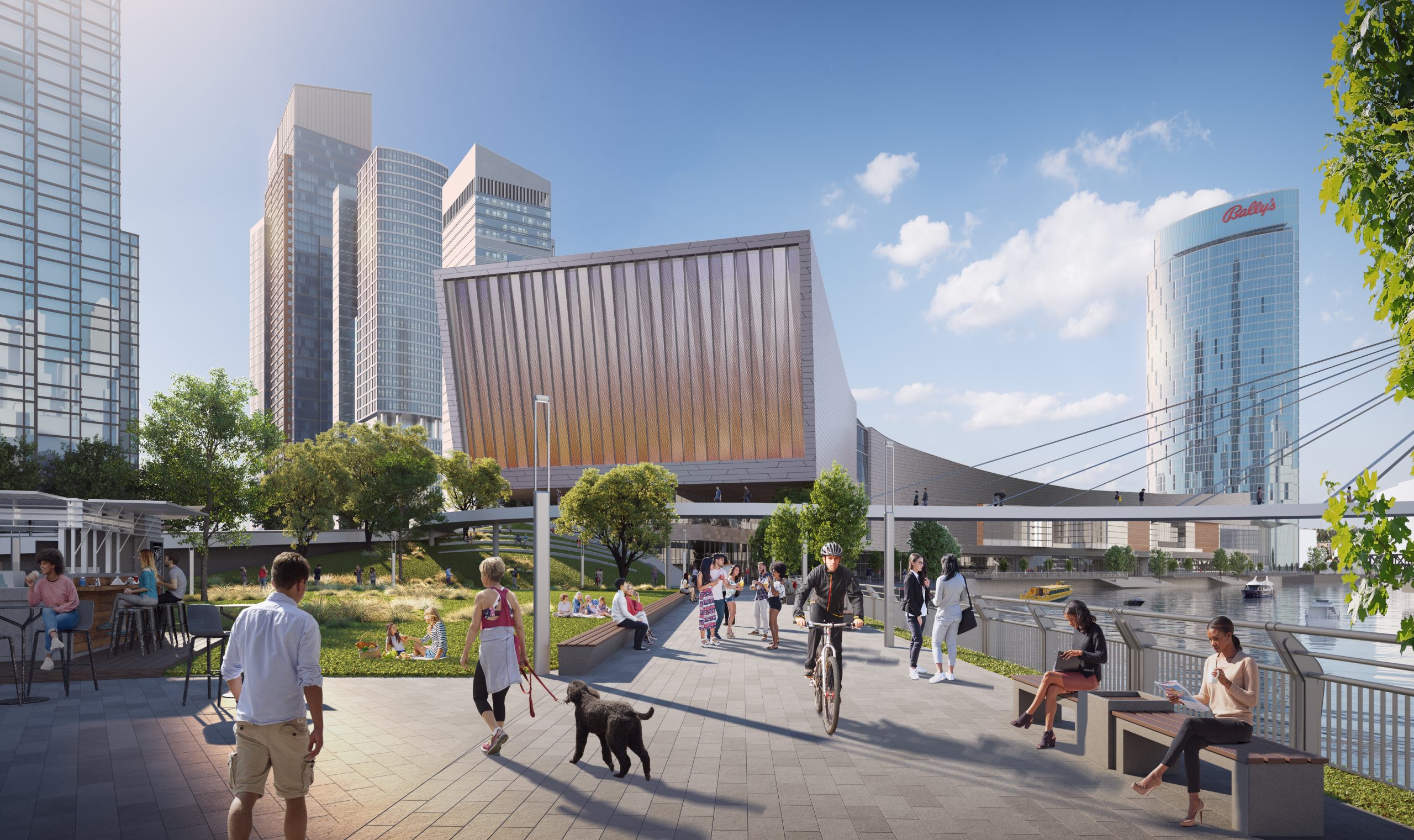
With help from the Super Bowl and despite the absence of the CONAG conclave, Wynncore improved its cash flow 6%. Reported Santarelli, “It was a strange 1Q24 in Las Vegas, with non-gaming growth coming in at +16% Y/Y, while table game drop was up just 60 bps and slot handle fell 4.9% Y/Y … While the stagnation in gaming trends is worth monitoring, management noted that drop, handle, and RevPAR in Las Vegas were all up in April.” New renderings of Wynn Al-Marjan were also bandied about, with the $4 billion project still on budget. Elsewhere there was “excitement” about the tantalizingly delayed prospects in New York City (below) and “interest” in Thailand, though many moving parts there remain to come into focus.
Management went cheap on Encore Boston Harbor, scuttling a $400 million improvement due to a tax spat with the city fathers of Everett. The money instead will be spent on Wynncore, particularly on a rehab of the Encore tower. There’s also a food hall in Macao to be built and just getting underway. Santarelli was impressed … but not enough to move his price target above $132/share, although his rating remained “Buy.”
David Katz of Jefferies saw things slightly differently, writing that momentum in Macao was offsetting top-line weakness on the Las Vegas Strip. He stuck with a “Hold” rating and price target of $122/share. Joseph Greff of J.P.Morgan thought the numbers out of Wynncore “highlight its high-end positioning in LV, which in turn is allowing it to perform above its LV peers, particularly in non-gaming.” He continued, “Overall, we think investors should be pleased with these results … Management acknowledged that comparisons are getting more challenging but that market-wide attractions continue to boost demand.” His price target was also $122/share and his rating “Overweight.”
“Mixed results, poised for long term growth,” Katz wrote of Station Casinos. The company delivered $489 million in revenue where Wall Street had expected $492 million. Cash flow was off a hair, $209 million instead of The Street’s $210 million. Construction disruptions at Sunset Station dampened results slightly, as (more than slightly) did worse-than-expected gambling hold during the Super Bowl and March Madness. Katz reported that “Durango [Resort] operational performance continues to improve, attracting new consumers to the brand and increasing play from existing, and [leadership] remains confident the margin target and return goal will be achieved sooner than expected.” We don’t doubt them.
Durango Resort expansion and Inspirada are both “go” projects, as is the North Fork Rancheria tribal casino in California. At least $313 million will be spent on share buybacks and total leverage is coming down from 4.4X cash flow to something closer to 3X. Katz recommended a “Buy” on the stock, with a price target of $71/share.
Santarelli called the Station results “as expected.” Of the miss, he was relatively dismissive: “we struggle to imagine buyside forecasts were meaningfully north of Consensus, though the after-market stock action, albeit on limited volume, would say otherwise.” “Broadly uneventful” were his words for the earnings report, with a 20% ROI on Durango offsetting a 9% declivity elsewhere in the Station portfolio. As the analyst put it, “While [Station] properties do skew higher end, management did not note a distinction across the various assets, but we believe Durango is likely helping the aggregate, as it pertains to what management is seeing across the database.” Ominous noises, however, were made about “efficiency measures,” always a euphemism for job cuts. Like Katz, Santarelli rated Station a “Buy” albeit with a price target of $65/share.
Greff was the most clement of the three, saying the results were “in line” with expectations. Hey, what’s a couple of million among friends, really? (Station missed pretty marginally, unlike Boyd Gaming, which shook Wall Street’s confidence in the latter.) He noted that titular Red Rock Resort was suffering most from the Durango effect, something which that long-suffering property could do without. Station execs were quoted as saying “as we look ahead, we are seeing stability in the locals market and across our entire database … [the] low-end of the business, it’s actually up for the last two quarters in a row.” That’s cause for confidence, even if Greff was the most conservative in both is rating (Overweight) and price target ($62).
If Station knows where it is going, the same apparently can’t said for Golden Entertainment. Katz opined that the company was “Turning a page, but still searching for the next chapter.” Santarelli concurred: “Strategic direction thebig question now.” The latter was the more confident, rating GDEN a “Buy” against Katz’s “Hold,” with a $36/share price target. “In our view, as it pertains to locals gaming and or lower end Strip trends, the bloom has been off the rose in Las Vegas for a bit now,” Santarelli wrote apropos Golden missing his cash-flow projection by $2 million. Company execs echoed Boyd ones, saying that promotional warfare was up and low-end business is down. Although “well positioned for nearly any strategic action scenario” with an enviable 2X debt-to-cash flow ratio, Golden isn’t inclined to take on new acquisitions, especially after the divestitures of 2023. It appears that the company will concentrate upon stock repurchases instead.
Katz noted, in Golden’s defense, that revenues came in a bit ahead of where The Street expected, despite the cash-flow miss. “More importantly, the sale of the last non-core asset was completed, allowing the company to reduce leverage and focus on capital returns and future M&A opportunities,” he added. The low-end softness was felt most at Arizona Charlie’s, which saw sharp declines of both revenue and cash flow. Mind you, Golden no longer has slot routes to offset the variability of the brick-and-mortar casino biz. At least the tavern business, Golden’s bread and butter, came in slightly ahead of where Katz thought it would be. In other good new, occupancy at The Strat rose notably, hitting 78%, while the opening of Atomic Golf was expected to add as much as $5 million in annual cash flow. As for taverns, Golden just bought two more, bringing its flotilla to 71, with a family of 160 hoped for by 2027. Fore!
We’ve been writing all week and are getting rather blurry (and we’re not done yet), so we’ll see you on the weekend with a special edition.
“King of the beat and raise,” proclaimed Truist Securities analyst Barry Jonas when DraftKings came out with its 1Q24 numbers. Jason Robins’ company “provided a bright spot in an otherwise dim Q1 earnings season so far.” How so? It delivered positive ROI of $22.5 million, which was 3X to 4X of what Wall Street boffins were anticipating. Not even lackluster March Madness hold kept DraftKings down. The company is projecting 3% higher revenue and 9% greater cash flow for the remainder of 2024, with a potential ROI of as much as $540 million.
As CEO Tom Reeg said, just about everything that could go wrong for Caesars Entertainment in the first quarter did manage to go wrong. Deutsche Bank analyst Carlo Santarelli headlined his report “Low expectations missed.” While he remained “Buy” rated, Santarelli did so on the basis of Caesars’ long-term potential rather than on what was in the 1Q24 print.
MGM Resorts International‘s post-20th anniversary, post-Travis Lunn dumbing down of Borgata continues apace. Our man on the Boardwalk visited recently and found all the Borgata-branded pens to have been retired in favor of generic pencils. “MGM previously replaced the soap bars and small shampoo containers with liquid soaps, fastened to the sink and to the shower wall,” he reports, although that’s part of a company-wide sustainability initiative.
Gambling revenues hit a bit of a speed bump on the Las Vegas Strip, inching downwards after a March that saw flat visitation, with tourists making up for a worrisome, 37% plunge in convention attendance. Strip casinos won $716 million, a 1% declivity from last year. The Strip’s saving grace was baccarat, with the house playing lucky: Win was up 74% despite 4% less wagering. (A bad month at baccarat can break a quarter.) Slot winnings of $401.5 million were 4% higher despite flat coin-in, while table games winnings plummeted 15% to $203 million, on 7.5% less money wagered. It definitely hurt to not have the CON/AGG expo this year, nor the NCAA college basketball tournament. Strip hotel rates felt the pinch, down 17% on 85% occupancy (92% on weekends), even though rates were still 31% higher than in pre-Covid times. Some cold consolation could also be had in auto traffic from California that was 1% higher than last year and air traffic that was not only 2% higher but 14% above 2019.
Although it’s been on a roll lately, the Culinary Union got some very bad news this week. The Station Casinos house organ, otherwise known as the Las Vegas Review-Journal, reported that a large number of Sunset Station employees were petitioning the decertify the Culinary as their bargaining agent. First, given the amount of progress (i.e., none) made in long-running Sunset labor talks, frustration would be understandable. Second, you have to wonder how much better employees would fare negotiating with Station all by their lonesome.
It was only a matter of time. Sooner or later, some guilt-ridden white liberal would pen a think piece declaring the real victim of the Jontay Porter scandal to be … Jontay Porter. Never mind the defrauded sports bettors, the Toronto Raptors fans and general NBA fans who all had a reasonable expectation of seeing basketball games played on the square. No, it’s this game-tanking weasel who merits our pity, according to Chris Dell, of the Pittsburgh Post-Gazette. Dell wrings his hands over Porter being a “casualty” of the marriage between major-league sports and sports betting itself.
Reviewing some disappointing first-quarter financials for Las Vegas Sands, the colorful analyst for Deutsche Bank, Carlo Santarelli described it as “a Tale of Two Markets, But Investor Focal Points Fall Short.” His opposite number at J.P.Morgan, Joseph Greff was blunter: “Stellar in Singapore. Less So in Macau.” Inciting incidents included construction at Sands’ behemoth Londoner megaresort and loss of market share to the competition. Greff dropped his price target to $55/share from $59, while Santarelli was sunnier, despite dropping his price target to $62/share from $66, and he recommending buying the stock. The company splurged on $450 million in share buybacks, which should mollify investors.
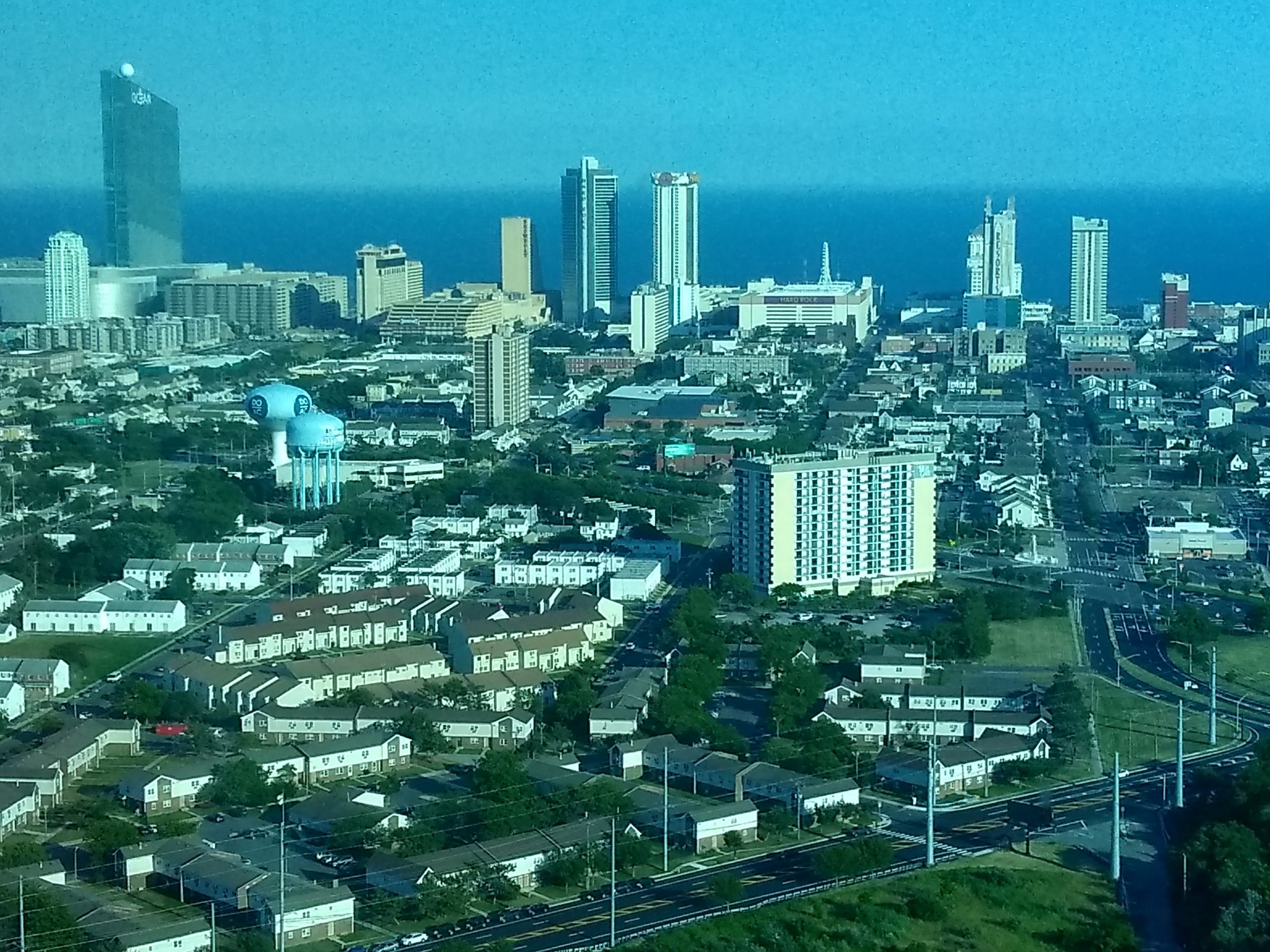
Although the casinos in Atlantic City were able to cue a chorus of woeful MSM headlines over last month’s gambling grosses, the Boardwalk actually did quite well. Revenues were up 5% year/year and 7% higher than in March 2019. What were down were sports betting revenues, slipping 4% despite a 30% surge in handle. Luck was not with the bookies. Before we get to that, the supposedly woebegone terrestrial casinos raked in $240 million, led by Borgata and its $56.5 million. The MGM Resorts International pleasure palace fell 8%, the only revenue-negative casino in town.