Posted on Leave a comment

Mixed Signals in Vegas

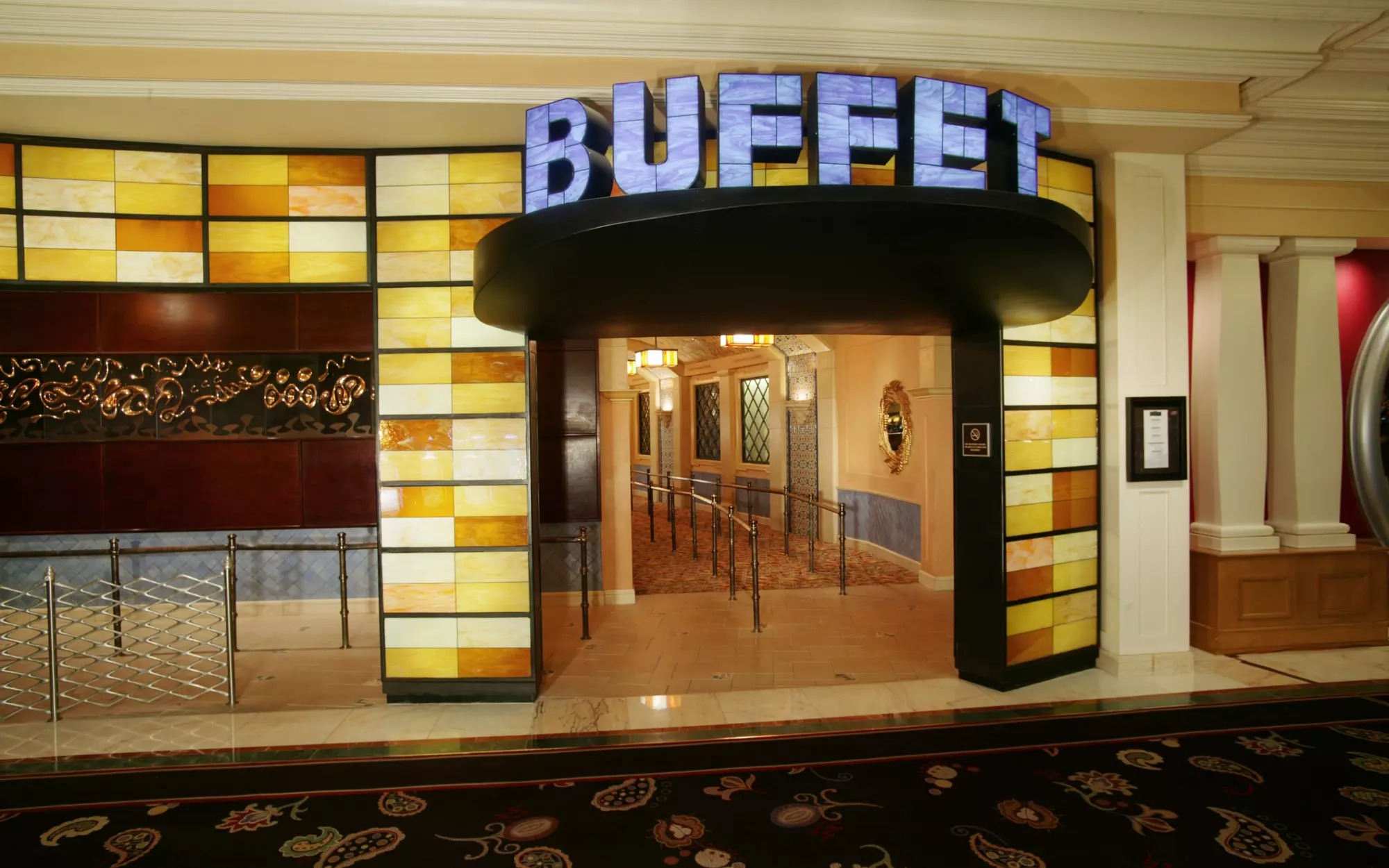
Luxor Buffet—Good Spread, Too Bad Otherwise 5

There’s a fundamental flaw to Las Vegas‘ “Soak the Rich, Screw the Poor” business model. Somebody has to fill that preponderant number of hotel rooms (over 154,660) and gambling positions (too many to count). And the “Epstein class” isn’t going to stay at Circus Circus. But there’s hope. Maybe it’s recognition of our K-shaped economy, so called for the widening gap between rich and poor it manifests. Or, more likely, it’s the one-two punch of customer discontent and adverse media coverage of things like $13 candy bars at MGM Grand. Either way, there are signs that Big Gaming is finally waking up to the repulsive, anti-value message that Sin City has latterly presented to the public.

Continue reading Mixed Signals in Vegas
Posted on 2 Comments

Selective Outrage in NYC; Inaction in Jersey

Why on earth is the New York Post carrying water for Steve Cohen and his Metropolitan Park megaresort? It’s a done deal and hardly needs any special pleading. Some of the Post‘s coverage of the New York City casino derby has been excellent. However, that hardly applies to a recent editorial, masquerading as “news” coverage. It was a bizarre—and more that a little bit racist—take on what is otherwise old news.

Continue reading Selective Outrage in NYC; Inaction in Jersey
Posted on 1 Comment

Bobby Vegas — Life Lessons from Video Poker

Bobby Vegas: Friends Don’t Let Friends Play Triple-Zero Roulette

Two Words: Risk Management.

Don’t worry, I’m not quoting Kenny Rogers again. Rather, I’m tipping my hat to the other “dancer” and the video poker guru also named Bob.

Yes, I’ve read all his books. You should too. And while the other Bob plays on a rarified level WAY above where I play, there are definitely lessons to be gleaned. Let me explain.

I’ve been a 100% commissioned sales rep (in wholesale, most recently LED lighting) my whole life. That’s a tough road. But I have a simple market plan. I answer all calls and emails. I tell the truth. I fix the problem. I create opportunity. And I’m never a d*ck.

Many of my clients are lifelong friends spanning decades.

When there’s no floor, no paycheck and your entire income is based on your results? Well, whom you work with is key and losing just ain’t fun.

I applied these experiences when I started plying the video poker trade. I was committed to learn how to win with the lowest risk possible and the highest return.

Everyone has their own comfort level. Big D may be playing $25 a hand, even $125 a hand, while I’m playing 25 cents. Fine by me. What I learned from the other Bob is how he managed the swings in cash flow.

For Big D, a five-figure swing up or down in a single day was normal. Since he had total confidence in his ability to play virtually perfect VP, he knew that OVER TIME, he’d win. That was the lesson I applied to my commissioned-sales-rep business. OVER TIME I’d win.

After many years monitoring my quotation activity, sales-closing ratios, sales volume on a daily, weekly, monthly, and quarterly basis, I pretty much knew I’d make between X and Y sales within a clear parameter, hence Z cash flow.

Example: Quoting $10,000 a day for 30 days at a 5% commission with a closing ratio between 10% and 20% ($10k x 30 @ 5% x .1 -.2), whether I actually made that money, I knew I’d created $1,500-$3,000 in commissionable EPV, or what I call Expected Commission Value.

Some days I made zero and spent money and time. Other days/weeks it just rolled in in barrels. But over time, it worked like a charm.

Like the daily swings in VP, I knew, based on past results, that if I just kept plugging, like hitting a royal, I’d eventually cash in. I just needed the bankroll to survive the swings and not be a victim of risk of ruin. Remember the 6 Ps from my last post?

There was a period where I risked investing time and money in large projects, mostly military bases. This involved a much longer lead time, up to two years. But the payoffs were in the five and six figures. Those were my royals.

Risk management. Winner winner steaks for dinner. And I gleaned all that from learning about video poker. And not being a d*ck.

Posted on Leave a comment

Cadence Crossing Burger Special

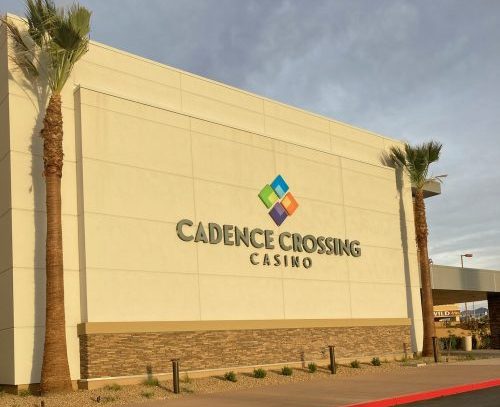
There’s not a whole lot to get excited about with the restaurant line-up of two at Las Vegas’ newest casino, Cadence Crossing. There’s the Tin Lizard Bar & Grill and Tacos Los Gauchos is the 24-hour restaurant. We were there for the special: a $5.99 cheeseburger & fries.

Tin Lizard

The burger is in Tin Lizard. It’s a sit-down room that’s connected to one of Cadence’s two bars, so you can eat inside or at the bar. We chose the bar, where the TVs are tuned to sports, and the beverage if free if you play a bit. The young female bartender was super friendly and quick to take the order (they’re all like that when a place has just opened). Tin Lizard serves breakfast, lunch, and dinner.

The Burger

The cheeseburger comes with tomato, lettuce, and onion and a stack of fries. It’s supposed to include a pickle, but ours didn’t. It’s advertised as a quarter-pounder, but that seemed like a stretch, and they don’t ask how you want it cooked, which means rare isn’t an option anyway. The toppings were fresh. The bartender brought condiments. No complaints for $5.99. You’re required to have a Boyd Rewards card.

The Verdict

So where did this $5.99 burger & fries idea come from? The Station Casinos deal, perhaps? Of course it did. So showing up second, you’d expect they’d either make it better or sell it for less. They did neither. The Stations burger is bigger and better for the same price. It’s also available in more places and 24/7, whereas Tin Lizard is open 7 to 9 p.m. weekdays and 10 p.m. weekends. That said, it’s definitely a good deal. If you’re checking out the newest place in town, grab one.

Posted on Leave a comment

Tier Match at MGM Properties

Once again, MGM is doing a tier-match promotion, this one through June 2026. These promos usually give you tier status for three months and you need to meet the actual tier requirements to continue at that tier level after the three-month period.

This one is different. At MGM, I had about 100,000 tier points when I applied for the tier match. 75,000 is Gold and 200,000 is Platinum. I used my Caesars Diamond Elite card and was given Platinum status. But on my card, it shows Platinum status for the entire year.

Here is a link to the status-match program.

Here are the challenge rules.

Here is a link to all the MGM Tier match offers by state.

You don’t get the really good benefits (airfare, cruises, etc.) until you actually get to the point level required for the given status.

So what does Platinum get me that Gold doesn’t? Lounge access (but only for one person). 30% slot point bonus (20% for Gold). $100 in cruise ship free play ($75 for Gold). There are also some gift shop bonuses, expedited valet and taxi service, etc., but these are minor benefits.

The rules say only one status match lifetime, but this is the third one I’ve done with MGM.

Is it worthwhile to do? You should consider the following factors.

  • How much do I use MGM properties?
  • What is free parking at MGM worth to me?
  • If I am a current MGM player, does moving up a level really benefit me?
  • Should I use it now or save it for next year?

Now, I don’t know what the lounges in Las Vegas are like. The lounge in Detroit is functional. The food is good, but the lounge is small and alcoholic drinks are about the same price as on the casino floor. I’ll be checking out the Las Vegas lounges at the beginning of June and will report back.

I’m using the match as a stopgap until I get full Platinum status. There is enough value in that for me and there is enough to play in Detroit. Your situation will vary greatly based on your state and situation.

Also see my Las Vegas Savings Tips page for more ideas.

Posted on Leave a comment

Buffet Update – April 2026

Bellagio The Buffet at Bellagio: We don’t see this change often. All buffet prices went down by $5-$15 with time changes as well. Weekday Brunch is Mon-Fri, is now 8 a.m.-2 p.m. at $44.99 instead of 8 a.m.-1 p.m. at $54.99. Weekend Brunch is Sat & Sun, is now 8 a.m.-2 p.m. at $49.99 instead of 8 a.m.-1 p.m. at $54.99. Seafood Dinner is now Sat only, 2 p.m.-8 p.m. at $69.99 instead of Sat & Sun, 1 p.m.-8 p.m. at $74.99. Now Sunday Dinner is 2 p.m.-8 p.m. at $59.99.

Circus CircusCircus Buffet: This week’s brunch buffet is Fri-Sun, 8 a.m.-12 p.m. is $29.95. Then their dinner buffet is Fri & Sat, 5 p.m.-10 p.m. is $34.95.

RampartMarket Place Buffet: Prime Rib Dinner Buffet is Wed-Thu & Sun instead of Fri & Sun. Still 3 p.m.-8 p.m. at the same price of $35.99. Added a new dinner Seafood Buffet Fri, 3 p.m.-8 p.m. is $55.99.

Posted on Leave a comment

$20 happy hours on The Strip that are good. I mean, really good.

Las Vegas Happy Hour Deals on the Strip - April 2026

Five Strip happy hours where $20 (or less) gets you world-class food, top-shelf drinks, and a venue experience that most people save for special occasions.🌟

APRIL 2026 – Buried deep within 125 happy hours on the Strip are a few stand-outs. These aren’t special deals – they’re discoveries! The kind of places and menus that make you feel like an insider the moment you walk in. Check out our top 5 below and see them all at Las Vegas Advisor Happy Hours page.

🍱 TAO ASIAN BISTRO HAPPY HOUR: The Venetian Casino
The math here is almost offensive. Everything on the happy hour menu is $10. Which means a Spicy Tuna Tartare on Crispy Rice + a Sake = $20.
TAO is legitimately one of the most iconic dining brands in Vegas and their happy hour runs like a secret the Strip forgot to hide. Reviewers call it one of the best deals at the Venetian, which is not a property known for deals. Go before someone in accounting notices.

🥩 STK STEAKHOUSE HAPPY HOUR: Comsopolitan Casino
Every food item on the STK happy hour menu is $7. Every single one. The Grilled Chimi Filet — a real steak at a real steakhouse is $7. Add a top shelf martini at $12 and you’re at $19 and eating better than most people at the table next to you who are about to drop $190 on dinner. Recent guests keep flagging this one as “the best kept secret at the Cosmo.” It’s not a secret anymore, but go anyway.

🌮 TOCA MADERA HAPPY HOUR: Shops at Crystals (Aria)
Inside one of the most expensive malls on the planet sits a $14 Sea Bass taco that will ruin every other fish taco you eat for the rest of your life. Add a $5 Modelo or Corona and you’re at $19 – A buck under budget and significantly over expectations. Toca Madera is a modern Mexican concept with serious culinary credentials and a happy hour menu that makes absolutely no sense at these prices. Don’t question it. Just order the sea bass.

🍣 KUSA NORI HAPPY HOUR: Resorts World Casino
Modern Japanese lounge, gorgeous space, and a happy hour menu that reads like someone genuinely thought about it. Here’s your $20 move: Ikari Salmon Hand Roll ($7) + Droppin Yuzu Sake Bomb ($8) + Artisanal Mochi Ice Cream ($3) = $18 and change. Three courses. Under $20. At Resorts World. Guests have been raving about the quality of the fish and the vibe “felt like Tokyo, priced like a Tuesday” is the energy here. 

🏀 BLONDIE’S HAPPY HOUR $20 AYCD: Planet Hollywood/Miracle Mile
And now for something completely different. Blondie’s is the only All You Can Drink happy hour on the Las Vegas Strip. $20. AYCD. Done. Is it the most sophisticated entry on this list? No. Is it family-owned, genuinely friendly, and the best possible answer to “I just want to get in the left lane early”? Absolutely yes. Sometimes the $20 move isn’t a hand roll — sometimes it’s a cold drink, a sports bar stool, and zero decisions for the rest of the afternoon. Respect the classics.

Want to be the first to know about new Happy Hours in Las Vegas?

Check out the new Las Vegas Advisor Happy Hours page for up to date and accurate Happy hours. Or, subscribe to the Happy Hour Vegas newsletter (Free) for curated, verified happy hour deals including new finds and quiet standouts straight to your inbox. Every week, thousands of members get first-in-line access to happy hour deals, events, and giveaways. Plus, local experts tracking 500+ happy hours with updated menus, prices, links and tips for the week.

👉 Sign up for the free Happy Hour Vegas newsletter

Posted on Leave a comment

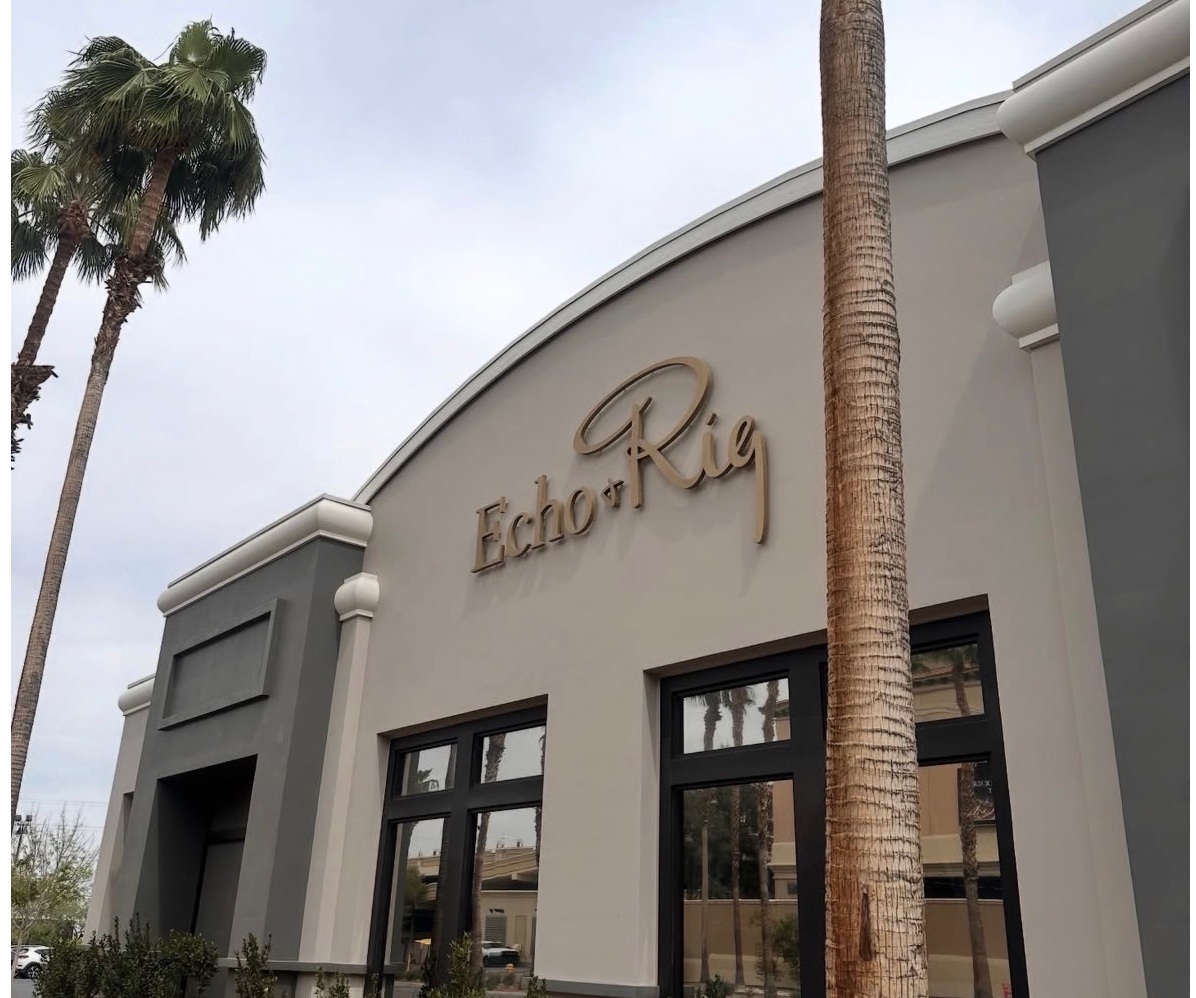
Echo & Rig’s New Chef’s Table Delivers a Full Steakhouse Dinner for $55

It’s early Monday evening, shortly before the start of a sold-out dinner service, and the kitchen at Echo & Rig’s Henderson location is already humming. The team is preparing for the opening night of a new Monday series. It’s called Chef’s Table – a more inclusive version of a coveted dining experience.

Instead of a traditional chef’s table, usually reserved for V.I.P.s and often tucked into a corner of the kitchen, this one takes over the entire restaurant.

“Every table is a chef’s table,” says chef/owner Sam Marvin. “Everyone eats the same thing.”

The concept is simple, but ambitious: a single, curated menu served to the full room, designed to deliver an exclusive, chef-driven experience. Here, it’s scaled up to roughly 200 seats — and priced to bring people out on a night when most restaurants struggle.

The debut dinner, a steak frites–style supper, is priced at $55 per person and leans heavily on value. It begins with an amuse-bouche — house-cured Wagyu pastrami on pumpernickel — followed by unlimited Caesar salad, a 12-ounce fullblood American Wagyu New York strip, unlimited Kennebec fries, and a berry cobbler with vanilla ice cream.

The steak is the centerpiece, sourced from a New York–based producer and new supplier for Echo & Rig.

“I’ve never seen American Wagyu that looks like this,” he says. “It’s off the charts.”

Sam Marvin shows off his fullblood American wagyu

That kind of product is typically associated with much higher price points — a fact Marvin leans into when describing the series. At many Las Vegas steakhouses, even off-Strip, a lesser steak served a la carte can approach or exceed the full cost of this meal.

Chef’s Table is not a one-night experiment. The series will continue on select Mondays throughout the year, each built around a new theme, with the entire restaurant sharing the same menu and experience.

The next dinner, scheduled for April 20, is expected to focus on seafood, with Marvin working closely with longtime vendors to source premium product and maintain the same value-driven approach.

“I’m able to leverage relationships I’ve had for 35 years,” he says. “We’re bringing in things people can’t imagine — at a fraction of the cost.”

Optional add-ons for the debut dinner — including shrimp cocktail, mac and cheese, and spinach — along with curated cocktails and wine pairings, allow guests to customize the experience. But the core idea remains unchanged: one menu, one night, one shared table.

If the concept catches on, Marvin says the goal is to build toward more frequent events, potentially turning Monday into a signature night for the restaurant.

In a city where steakhouses have become prohibitively expensive, Chef’s Table flips the script — offering a full steakhouse experience at a price point designed to fill the room.

You can hear Sam Marvin discussing the Chef’s Table series on the April 3 episode of the Food and Loathing podcast.

Posted on 3 Comments

Reducing the Variance

Bob Dancer

Last week I wrote that I played ten-coin $5 9/7 Double Bonus Good Times Pay for a promotion at Caesars Atlantic City. This is a relatively rare game with multipliers, and if you’re not familiar with how the multipliers work you might want to read (or re-read) last week’s article before you tackle this one.

Over the first four days of play, including the play-up bonuses I received for every $150,000 worth of coin-in and the weekly free play for the week that ended Saturday and also for the week that began Sunday, I was ahead about $25,000 for the trip. This figure includes the 0.08% I earned in Next Day Bounceback. It’s not a large percentage, but I had played almost $1 million in coin-in so far and it adds up. The figure doesn’t include the Reward Credits I had earned (which I will redeem at Caesars Sportsbook) or the value of the Tier Credits (including one day with a 5x multiplier).

I had hit four aces three times (with 1x, 2x, 3x multipliers for $4,000, $8,000, and $12,000 respectively), lots of quad 2s-4s, many with multipliers of 4x and higher, and six quad 5s-Ks with multipliers of 5x ($6,250), 6x ($7,500), or 7x ($8,750) — along with a slew of these lesser quads with lesser multipliers. I failed to hit a royal flush, with or without a multiplier. While not unexpected with the 20,000 hands I had played, a royal flush would have been welcome! Suffice it to say, I was enjoying this trip to Atlantic City — other than the fact that there was a blizzard going on outside and I had to stay an extra day and a half more than I originally planned. 

For my last day, I had $140,000 remaining to play to pick up Bonnie’s and my last two play-up bonuses — requiring perhaps four hours of play on the $50-per-hand game. On earlier trips I had sometimes lost a considerable amount on these same machines. I could play five coins per game, for $25 per hand, on the same machine, forgoing the multipliers and requiring eight hours of play. This had no effect on the 99.1% expected return on the game, but it greatly lowered the variance.

I decided to play the extra hours at the lower variance as a sort of money-management gambit. I had a very nice score going this trip and I wanted to “take it home.” I could have skipped playing the last day at all, guaranteeing I would take the money home, but I believed the extra play was an intelligent risk to take. Playing for the last bonuses on my card and Bonnie’s had an EV of more than $1,000 and I didn’t want to pass that up. So long as I was going to be at the casino anyway, it made sense to play.

At $25 per hand, you get “jackpots” of quads, straight flushes, or (I wish) royal flushes every 400 hands or so — meaning every $10,000 in coin-in. I put the word jackpot in quotation marks because quad 5s-Ks return “only” $1,250, which is lower than the W2-G threshold that has been in effect since January 1. In the $50-per-hand game, half the time these quads would be accompanied by a multiplier of 2x or larger, triggering a W2-G, but in the $25-per-hand game there are no multipliers. 

As a first approximation, the average of 14 “jackpots” would consist of no royal flush, one straight flush, and one quad in each of the 13 ranks. To be sure, it wouldn’t be impossible to connect on a royal flush, and straight flushes are about half as likely as any individual quad. Aces come about more frequently than other quads because from AA332, you just hold the aces, but from hands like KK447, it’s correct to hold KK44. Additionally, to it is proper to hold a single ace more often than any other specific high card. Quad jacks, queens, and kings come about more frequently than the remaining ranks because you’ll hold a single high card but not a single low card. Also, a pair of these high cards is more valuable than most 4-card flushes and all 4-card open-ended straights, but 22-TT are less valuable than any of these 4-card combinations. Finally, quad 22s-44s are each slightly more likely than quad 5s-Ts because when the same hand contains a suited QJ9 or JT9, you hold a pair of 2s-4s but not 5s-Ts.

That’s a lot of caveats, but as a first approximation, hitting no royal flush, one straight flush, and one each of the quads is about what figures to happen. 

Unfortunately, I ran very badly. While I did receive one straight flush and no royal flush just like my first approximation predicted, the quads were woefully short. I didn’t hit aces at all. I hit one quad (instead of three) in the 2-4 range, and four quads (instead of nine) in the 55-KK range. Even after collecting my bonuses and the NDB from the day before, I ended up losing about $17,500 on the day instead of winning the $1,000 my prediction said I “should” have won. No fun at all.

It’s tempting to conclude that my strategy of playing $25 per hand and forgoing the multipliers instead of $50 per hand was a failure. After all, sustaining a loss of the size I did can hardly be called a success.

I disagree with this conclusion — and the entire reason for this article is to explain why I believe my strategy worked well.

Had I played $50 per hand, there would only have been half as many hands played. Earning quads at the same rate as I actually did, I would have received three “jackpots” instead of six. While we will never know what the multipliers would have been on these three “jackpots,” an average of 2x would have resulted in a loss of at least $10,000 more than I actually had. 

That means my strategy was actually a success — even though a very expensive one. You have to make your decisions before you know the results — and live with those decisions. Just because the decision turned out badly this particular time doesn’t mean the decision itself was a mistake.

This is a concept many people just don’t get. Some people “learn” how to think by watching football and listening to the commentators. Football commentators, for example, often proclaim running the ball out of the end zone on a kickoff is a mistake if a kickoff is only returned to the 18-yard line rather than starting out at the 20- or 25-yard line that would have resulted from catching the ball in the end zone and staying there. That’s an easy comment to make — and wrong. The kick returner doesn’t know the result of his run before he runs. He needs to make his decision based on his read of what he sees is happening and what strategy his team is planning to use this particular time.

Running out of the end zone in a particular situation may or may not have been a mistake based on the information available to the decision maker before the run took place. Coaches can help kick returners make better decisions based on the hang time of the ball and other factors. But using where the receiver ended up being tackled as the sole criteria of whether it was a mistake or not is a foolish way to judge things. And it gives the kick returner no ability to make better decisions in the future.

However many of you criticize me for my decision to play $25 a hand rather than $50, I’m convinced it was the correct decision. To my detractors, I suggest you’re watching too much football on television and believing what the commentators say!