

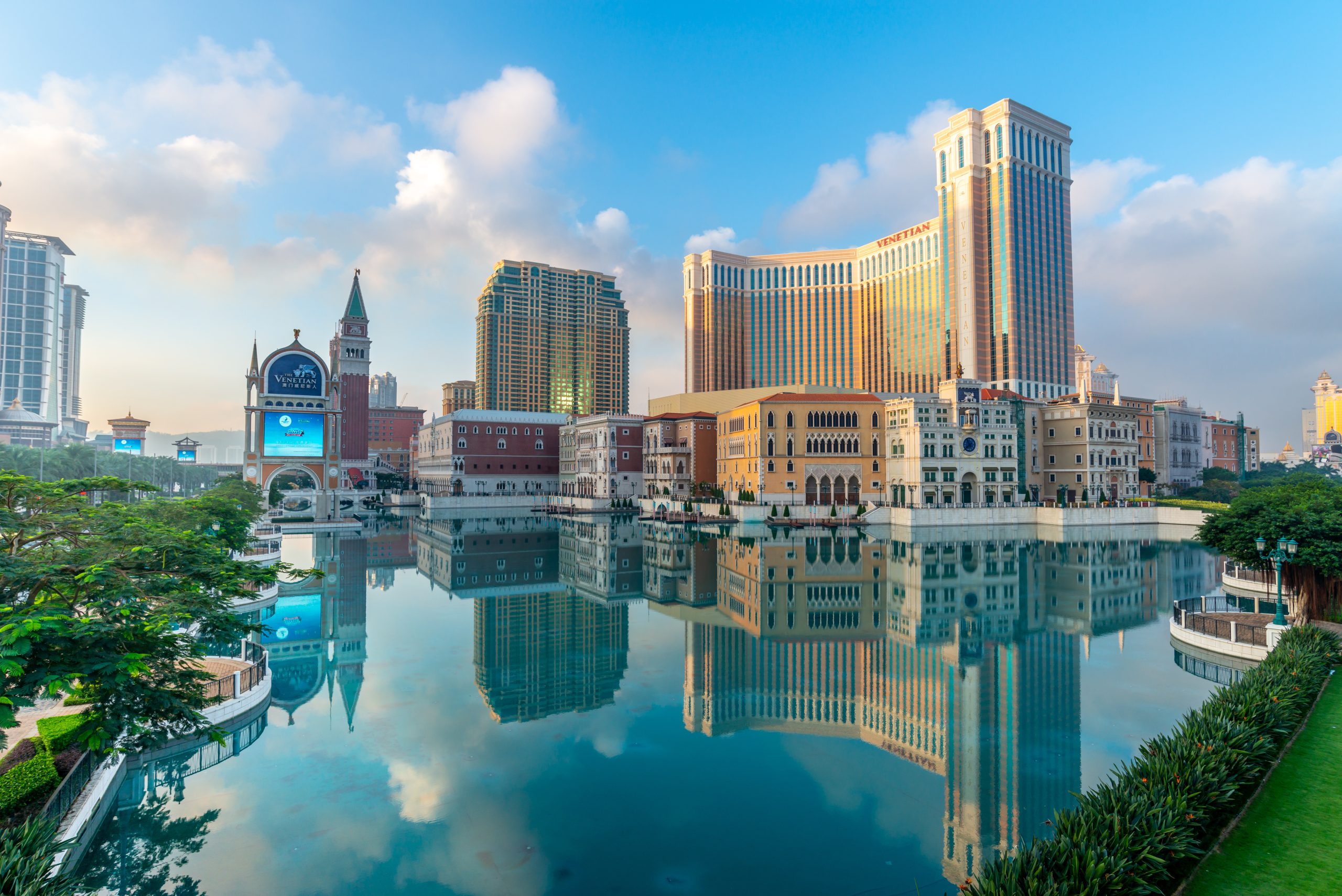
Las Vegas Sands rolled a gutter ball in its 2Q26 earnings. J.P. Morgan analyst Daniel Politzer got right to the point, saying that Macao was “falling short of very low expectations, and perhaps more importantly, Singapore [was] missing for the first time in years.” Yes, some of this could chalked up to hot-weather blahs, but high-roller play was hurting and people were staying away from casinos in order to watch World Cup action.
“Given the surprising miss in Singapore, we wouldn’t be surprised to see shares under pressure,” wrote Politzer, to which we would add that it will be an incentive for Dr. Miriam Adelson to repurchase more shares. (Indeed, Sands upped its buybacks to $787 million during the quarter.) Such a development would cause investors scant pain. Aside from during Covid-19, Sands had never experienced 20.5% table game hold (despite 15% higher mass-market volume) … until now. Macanese cash flow of $517 million was the lowest since the early days of the enclave’s post-Covid reopening. Sands leadership thinks it can get back to $700 million a quarter by Politzer was skeptical. In Singapore, hotel revenues were up 3% but cash flow plunged to $652 million, where Wall Street had expected roughly $725 million.
How bad was the World Cup impact? It only took one month (June) to wreck what probably would have been a normal trimester. Venetian Macao will be removing as many as 500 rooms for renovation, so that could be a negative factor in the next three-six months. Also, since World Cup play heated up well into July, Sands is not out of the woods yet. Politzer cut his price target on LVS from $64/share to $60 and Deutsche Bank‘s Steven Pizzella went even further, slashing from $73/share to $62. Needless to say, the stock was rated a “Buy” under the circumstances. David Katz, of Jefferies Equity Research, took a more cautious approach, putting a “Hold” rating on LVS—the closest anyone on Wall Street would ever dare come to a “Sell” rating. He noted escalating capex spending, starting with $1.5 billion this year up to $2.4 billion in 2028, not that anyone wants to see Sands’ casinos go to seed. Well … maybe the competition does.

News was much better over at Boyd Gaming, which has lately had to cope with discouraging dispatches about its destination business. It beat cash flow projections by three percent, thanks largely to regional customers and partly due to Las Vegas locals. Downtown is still soft, as is the fly-in trade, plus there are continued construction interruptions. But, all things being said, it was a good quarter from Wall Street’s perspective. Revenue was a cool billion and cash flow $356.5 million. Online business was good for Boyd, $3.5 million ahead of what stock-pickers expected, helping to make up for a 13% plunge in Downtown. Truist Securities analyst Barry Jonas attributed Boyd’s favorable 2Q26 to “continued growth in play from both core and retail customers. Management views tax refunds and customer trade down as offsets to volatile energy prices and continues to see solid growth from core/retail customers.” The positive trends were said to be continuing through July.
Locally, The Orleans and Suncoast felt a negative effect from renovations, but elsewhere in the Las Vegas Valley (except Downtown) revenues were 4% higher and cash flow was 3% better. At Cadence Crossing, business was reported to be solid through its first four months. Suncoast improvements should start paying off in 4Q26 but we’ll have to wait another year for work on The Orleans to be finished. Downtown “play from both Hawaiian and core customers has been consistent with recent quarters, though the segment continues to be impacted by softness in the destination business.” Reinvestment in regional properties has been a bright spot, particularly at Treasure Chest and Ameristar St. Charles, two of Boyd’s star performers.

Continuing a laudable trend, Amelia Belle in Louisiana will be converted from a riverboat casino to a land-based pavilion, always a good idea in Hurricane Alley. But that won’t start for another 15 months or so. Also in the Pelican State, Sam’s Town Shreveport (presently denuded of players) falls into the clutches of Bally’s Corp. at the end of this month. Boyd also repurchased $156 million in shares and paid a $0.20/share dividend last quarter. So there’s not much not to like. Even so, Politzer was ho-hum about Boyd, calling Cadence Crossing “immaterial” and expecting a cash-flow downturn later this year. However, he did report a potential 15% ROI from Boyd’s in-progress casino in Norfolk. That’s money that’s going to come out of Churchill Downs‘ hide. In Virginia, casinos easily trump slot parlors.
While Katz held to the overall tone of neutrality on Boyd, he did write, “Management continues to demonstrate disciplined cost control while selectively reinvesting in existing properties to support growth.” And there you have Boyd’s philosophy in a nutshell. Notably, Boyd did not get caught up in the wild M&A talk currently sweeping Big Gaming. If Golden Nugget or Caesars Entertainment or MGM Resorts International cast off casinos in buyouts (not that they have much real estate left to sell), don’t expect Boyd to chase blindly after them. It’s a choosy company and the results speak for that.