Three recommended happy hours this week including the only vegan happy hour on the Strip. Two dollar sushi from a chef who trained under Morimoto and whose restaurant other chefs eat at on their nights off. And the only outdoor patio in Southwest Las Vegas with pastrami salmon and $4 beers. Different concepts, different menus, one standard. All verified, all worth it.
New this week: The Board is our weekly roundup of limited-time promotions, dining events, and specials that are not on the permanent menu but absolutely worth your attention. If it is fun, foodie, and happening this week, it is on The Board. More on that below.
🌿 Crossroads Kitchen | Resorts World Las Vegas
Daily 5–6 PM (Bar and Lounge Only) · 3000 S Las Vegas Blvd
Here is the context: Crossroads Kitchen is the only fully plant-based fine dining restaurant on the Las Vegas Strip. Not plant-forward. Not vegan-friendly. Entirely plant-based, from a kitchen founded by acclaimed Chef Tal Ronnen — whose original Los Angeles location has been one of the most talked-about vegan restaurants in the country since 2013. The majority of Crossroads customers, by most accounts, are not vegan. They are just people who recognize good food.
The happy hour menu has four food items and everything is $10. The Impossible Cigars with spicy almond milk yogurt are the signature dish and the right place to start. The Calamari Fritti — made from mushroom, served with lemon and a spicy diablo sauce — is the kind of dish that stops the conversation. The cocktail program is equally considered: the Sweet Leaf, made with gin or vodka, Chareau (a plant-based aloe vera spirit), and cucumber syrup, is one of the more interesting happy hour drinks on the Strip right now.
The window is one hour. Resorts World has free parking for locals. Do not let either of those details be the reason you missed it.
Order this: Impossible Cigars + Calamari Fritti + Sweet Leaf cocktail. All $10 each. That is a complete happy hour at the only plant-based fine dining restaurant on the Strip for $30.
Where: Resorts World Las Vegas, 3000 S Las Vegas Blvd · (702) 676-7978
🔥 Crossroads Kitchen on Neonfeast
🌎 Crossroads Kitchen Website
🍸 Crossroads Kitchen Happy Hour
🍣 Other Mama | Southwest Las Vegas (Durango)
Daily 5–6 PM · Late Night Fri & Sat 10 PM–Midnight · 3655 S Durango Dr
Chef Dan Krohmer trained under Iron Chef Masaharu Morimoto, spent years immersed in Japanese culinary culture, and then opened a raw bar and sushi restaurant in a Southwest Las Vegas strip mall. That decision tells you everything about his priorities. Other Mama has been a neighborhood institution for nearly a decade, consistently named among the best off-Strip restaurants in Las Vegas by Eater, The Infatuation, and Las Vegas Weekly. It is where other chefs eat on their nights off. The happy hour is where everyone else catches up.
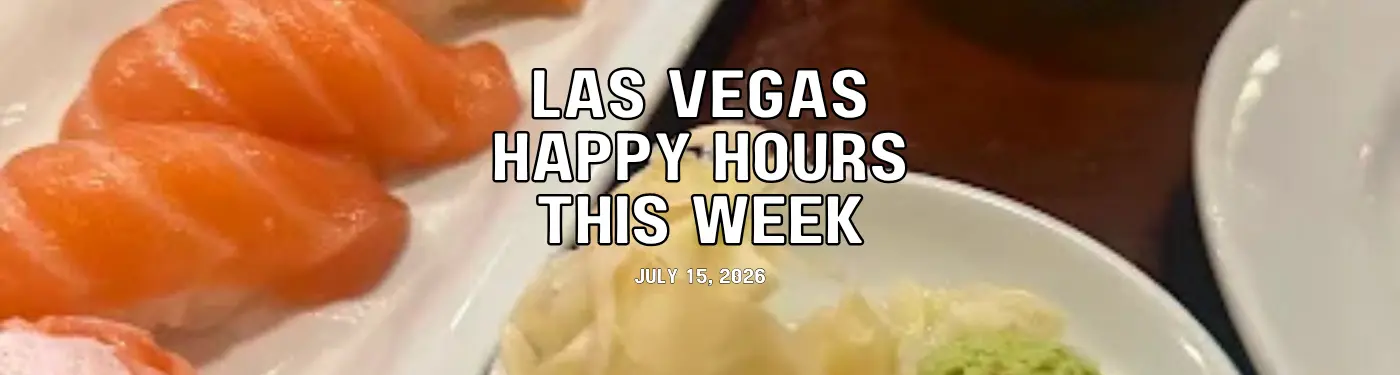
$2 nigiri. $5 hand rolls. $5 draft beer. Half-price sake. All dining areas included — not just the bar. The chalkboard lists the daily catch for fish and oysters and is the first thing worth reading when you sit down. The French toast caviar, which started as a chalkboard special and proved so popular it became a permanent fixture, is the dish most regulars mention first.
If you miss the 5–6 PM window, the Friday and Saturday late night happy hour from 10 PM to midnight gives you a second chance. There are very few happy hours in Las Vegas where missing the first window is not a real loss. This is one of them.
Order this: Start with the chalkboard. Order whatever fish is fresh that day. Add the French toast caviar. Order $2 nigiri until you run out of reasons to stop.
🔥 Other Mama on Neonfeast
🌎 Other Mama Website
🍸 Other Mama Happy Hour
🥩 Butcher & Thief | The Bend, Southwest Las Vegas
Daily 3–5:30 PM · The Bend, Southwest Las Vegas
Butcher & Thief is a relatively recent addition to The Bend — the Southwest Las Vegas dining and entertainment hub — but the kitchen runs like it has been doing this for years. The outdoor patio wraps around the restaurant and is the kind of space that makes happy hour feel like a proper occasion rather than an afterthought.
The pastrami salmon is the dish nobody else in the southwest is doing. That is not a figure of speech — Happy Hour Vegas has not found it on another happy hour menu in the valley. The $4 beers on the patio complete the picture. The happy hour starts at 3 PM, which means you can be done before dinner and still feel like you won the afternoon.
Order this: Pastrami salmon + $4 beer on the patio. That is the Butcher & Thief happy hour in two items and it is not a complicated decision.
Where: The Bend, Southwest Las Vegas
🔥 Butcher & Thief on Neonfeast
🌎 Butcher & Thief Website
🍸 Butcher & Thief Happy Hour
📋 The Board: Top 3 Dining Promotions This Week
Not happy hours but limited-time promotions, events, and specials happening right now that are worth knowing about. Game day menus, chef collaborations, one-night events, and deals with an expiration date. If it is fun, foodie, and happening this week, it is on The Board.
🏎️ F1 Arcade | Forum Shops at Caesars Palace
50% off food, drinks, and games for Nevada locals. Show your Nevada ID and get half off everything at one of the most entertaining venues on the Strip. This promotion runs through August — the clock is ticking.
👉 See the listing on Happy Hour Vegas
🍸 Hearthstone | Red Rock Resort | Tini Mondays
$7 martinis starting at 4 PM every Monday. Stack this on top of their regular Monday happy hour and you have one of the better reasons to leave the house in Summerlin on a Monday. Seven dollar martinis at a resort restaurant is the whole pitch and it is a good one.
👉 See the Tini Mondays promo
🦪 Basilica | Southwest Las Vegas | $1 Oysters every Wednesday
6–9 PM or until sold out. One dollar per oyster. Until they run out. Wednesday just became your new standing appointment.
👉 See the Basilica specials
🎷 SPONSOR: Jazz Outreach Initiative
Jazz Vegas Orchestra Live at Notoriety
Wednesday, August 5 · Notoriety at Neonopolis · Fremont Street, Downtown Las Vegas · Doors 7 PM · Tickets $25
Big band jazz. Downtown Las Vegas. First Wednesday of every month. The Jazz Vegas Orchestra performs live at Notoriety at Neonopolis and August 5 is the next one. Every dollar supports the Jazz Outreach Initiative, which puts instruments in the hands of Las Vegas kids learning to play music. Great venue, great band, and Fremont Street has no shortage of pre-show happy hours nearby. Come be a regular part of the hang.
🎟️ Get tickets at Notoriety
Three Happy Hours. All Verified. All Worth It.
Resorts World. Southwest Durango. The Bend. None of these require a reservation for happy hour. All three are open this week. Happy Hour Vegas tracks current menus and hours across 493 verified venues — what you see here is confirmed and current.
👉 Browse the full Las Vegas Advisor Happy Hours directory verified happy hours with updated menus, hours, and prices across the valley.
Explore Happy Hours by Neighborhood:
🎰 The Strip · 🌴 Summerlin · 💋 Downtown · ⛳ Henderson · 🎨 Arts District · ✳️ Southwest · 🌵 Off Strip · 🌄 Centennial
Explore Happy Hours by Category:
🇮🇹 Italian · 🍣 Sushi · 🦪 Oyster · 🇫🇷 French · 🥩 Steak · 💎 Hidden Gems · 🌹 Date Night · 🙈 Speakeasy · 🍷 Wine · 🇲🇽 Mexican · 💸 Deals · ☀️ Weekend · 🍆 Vegetarian · 🍖 BBQ · 🥦 Healthy