

Anthony and Andrew go live for BEER FRIDAY.

Anthony and Andrew go live for BEER FRIDAY.
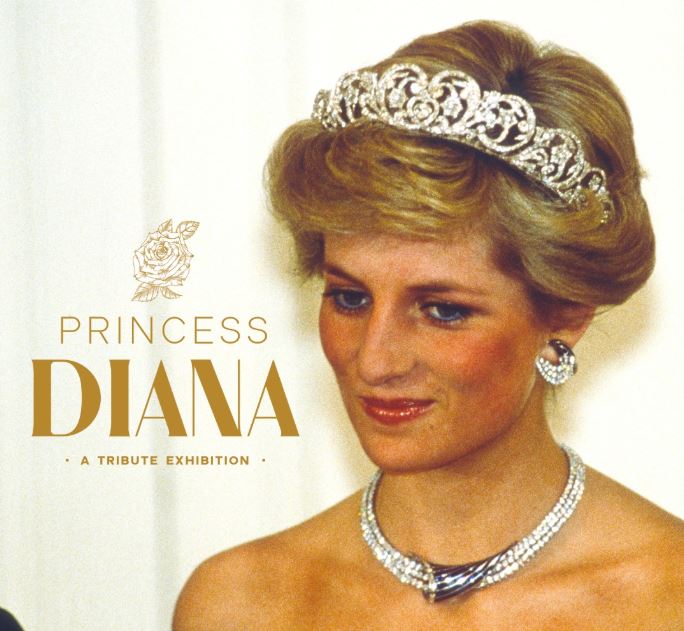
If you’re a fan of the British royals (or even just the Netflix series “The Crown”), you’ll probably want to check out the Princess Diana exhibit at The Shops at Crystals. Located on the third floor next to the Immersive Van Gogh exhibit, this is an worthwhile daytime activity (open 10 a.m. to 6 p.m.) if you’re looking to take a break from the crowds and noise of the casinos.
The exhibit occupies more than 10,000 square feet and boasts 700-plus artifacts related to Diana and the royal family. It’s organized into three main collections: “Wedding of the Century,” “Fashion Icon,” and “Royal Obsession.” It traces her life from her own family’s background of nobility through her school days, her whirlwind courtship with Charles, her life as princess, and her tragic death. The exhibit also follows her children, Prince William and Prince Harry, into adulthood; like most modern media accounts, the exhibit tends to subtly favor William.


Artifacts include her school papers, some memorabilia from her 1981 wedding (a piece of wedding cake, a seating chart from the wedding reception, an official pass to Clarence House where Diana prepared for her wedding day), historic royal textiles, and seven evening gowns, reportedly the largest collection on display anywhere. You can also get glimpses of her less serious side, such as store-bought birthday cards she sent to friends (including one to pop star George Michael).

My wife, a former archivist, had some technical criticisms. For example, many of the labels were either missing, difficult to read, or crooked and most of the gowns, tiaras, and Diana’s wedding dress on display are re-creations (which wasn’t clearly indicated).

We purchased the timed-entry tickets, which required a little advance planning, but it wasn’t at all crowded when we went (10 a.m. on a Friday morning), so I can’t imagine that walk-up tickets weren’t available. A VIP ticketing option is available, with all-day entry and an audio headset, but we found that wasn’t necessary. Some visitors might like the context of and untold stories behind the artifacts that the audio provides.
Tickets are $32.95 base and just a $2.50 booking fee, $35.45 total, with discounts for 55+, military, locals, and children (6-12). Photography and videography are allowed without flash and you can use the hashtag #vegaslovesdiana for a 10% discount in the gift shop.
All in all, we enjoyed the exhibit and were glad that we went. It’s definitely worth an hour of your time if you’re at all interested in Diana, British royalty, or a distinctly non-Vegas experience.

As you read this, Rhode Island‘s legislature is on track to pass a smoking “ban” in casinos with so many loopholes as to be totally meaningless. Politicians will undoubtedly congratulate themselves on having taken a stand for public health but that’s just so much bullshit.
Continue reading Blowing Smoke
It will be easy to criticize my presumptuousness in this blog because I’m going to compare myself, in a way, to Kris Kristofferson, an actor/singer/songwriter we lost last year. Kristofferson won numerous Country Music Association awards and Grammys, along with a Golden Globe award and an Academy Award nomination. He also received several other “minor” awards that far outshone anything I’ve received. While I’ve had a relatively successful career, Kristofferson’s has dwarfed mine. Plus, most women found him gorgeous, and I haven’t been cursed with that affliction.
With that said, I recently came across on YouTube a four-part series on Kristofferson, hosted by Steve Earle in 2008, and found many similarities between Kris’s life and mine. So, forgive my presumptuousness if you can and hear me out.
Kris wrote hundreds of songs, but four of his biggest hits were recorded in a few months in the early 70s — “Sunday Morning Coming Down,” recorded by Johnny Cash, “For the Good Times,” recorded by Ray Price, “Me and Bobby McGee,” first recorded by Roger Miller but Janis Joplin posthumously made it a huge success, and “Help Me Make it Through the Night,” originally released by Sammi Smith and later by more than 400 other artists. While Kris lived more than a half-century more, having success in a variety of ways, that brief early-70s period gave him enough continued royalties that he didn’t have to work any longer if he didn’t want to.
For me, my most successful moment was a six-month period in 2000-2001 when I was able to net more than $1 million. I chronicled this run in my “Million Dollar Video Poker” autobiography. While the money was enough for me to retire, if I wanted, it gave my career the boost of credibility. I was essentially the same player before and after the million-dollar experience, but many players took winning that much as a sign I was very knowledgeable. And they bought my products.
While Kris’s run was a lot more lucrative than mine, probably the biggest difference between the runs was the percentage of luck versus the percentage of skill. While both of us had a healthy dose of both skill and luck, luck is a much bigger factor in gambling success than it is in writing four critically acclaimed and commercially successful songs back-to-back-to-back-to-back.
During and after Kris’s success in the 70s, drinking, drugs, and womanizing cost him his marriage to Rita Coolidge. My closest parallel to that also happened in the 70s — which was well before I moved to Vegas and experienced gambling success. While I was never a heavy drinker, and dabbling with marijuana was never a major hobby, there was a period of almost ten years when I couldn’t be trusted to be a faithful boyfriend/husband. I probably would have been a worse philanderer had it been easier. I never had groupies. I was okay looking, but women didn’t fall over themselves vying for my attentions. I’ve heard it said that a man is only as faithful as his opportunities. While there is some truth to that, strength of character can overcome these opportunities. For about a decade, I didn’t have that strength.
Kris seemed to overcome many of his demons with a religious conversion and an eye-opening movie role. In the 1976 version of “A Star is Born,” Kristofferson played opposite Barbra Streisand as an alcoholic self-destructive rock and roll star and songwriter. Over the course of the movie, Kristofferson gets more and more destructive and eventually kills himself while driving a car recklessly. Kris must have seen the movie as semi-autobiographical and become aware that if he didn’t change his ways, he too would likely face an early demise. At about the same time, Kris converted to Christianity and wrote the song “Why me?” (Sometimes called “Why Me, Lord?” when sung by other artists.) This song was his only number one record as a solo artist.
For me, I never starred in a movie, nor did I have a religious experience to straighten me out. I took the Erhard Seminars Training (EST) in 1980 — with positive results. The training is loosely based on Zen principles. It has generated substantial criticism, but for me it was the single-most important event on my journey towards being a responsible human being. I have had no contact with the organization for more than 40 years, which has morphed a few times but still exists, but it remains an important part of who I am.
When Kristofferson’s musical career was floundering in the mid-1980s, he teamed up with Willie Nelson, Waylon Jennings, and Johnny Cash and formed “The Highwayman.” These four artists, called outlaws by some, were as big as you get in country music. At the time, being less aware of Kristofferson’s achievements than I am now, I was surprised when he was included in the group, rather than, perhaps, Merle Haggard. While the group sang hits from each of them, about 40% of those songs were written by Kris. That’s why he was in the group.
For me, my late-in-life partnership was the “Gambling with an Edge” podcast, especially when my co-host was Richard Munchkin. Prior to that show, I’d been a magnet for Internet criticism. People who did not know me regularly posted negative things, often untrue, about me. When the show became a hit because of the people we interviewed, much of that criticism stopped. For that, I am grateful.
Finally, both Kris and I eventually got marriage right. His third wife, Lisa, bore him five children and stuck by him 40 years until his death in 2024. By all accounts, they were happy. For me, I’ve had more than three wives. Bonnie came to me late in life. We recently celebrated our 11th anniversary — and both of us expect it to last for the duration.
So many of the good-and-bad events of my life parallel those of Kris — and I find that I personally respond to his lyrics. Maybe you can’t relate to “Well I woke up Sunday morning with no way to hold my head that didn’t hurt,” but I can. My favorite Kristofferson song, “Jody and the Kid,” was never a commercial success. But look it up on YouTube. You’ll be glad you did.
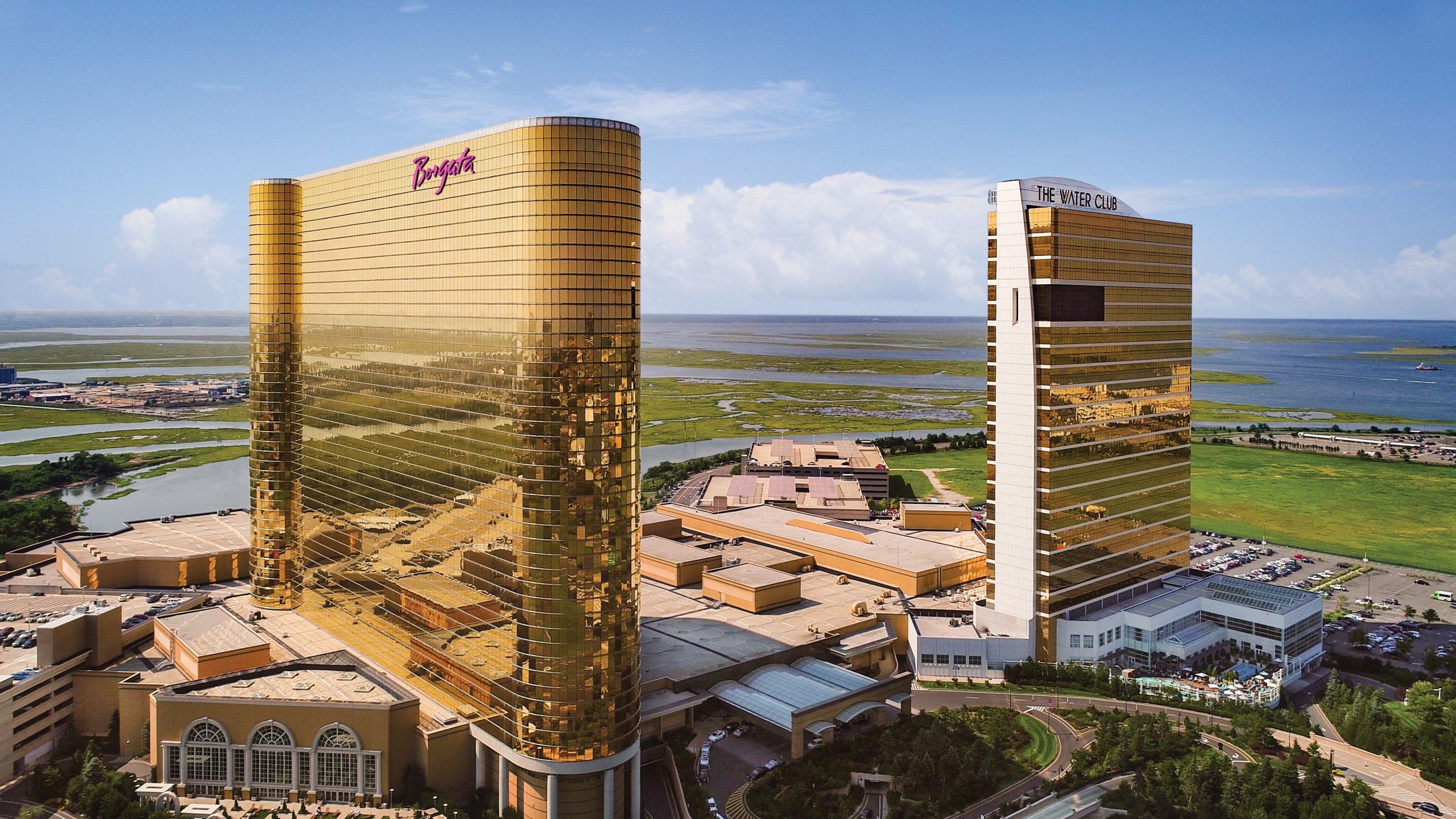
Sin City may be facing what’s been described as a “choppy summer” but the Boardwalk is suddenly firing on all cylinders. That’s even though more Garden State residents are gambling online than ever before. It’s too soon to draw conclusions beyond the one that drive-in gambling (or convenience gambling, depending on where you are) is suddenly in vogue.
Continue reading Atlantic City Update
This week Anthony and Andrew talk jackpots, jackpots, and more jackpots!

Although the name Jimmy Slonina probably won’t sound familiar, there’s a good chance you’ve seen him when you visited Las Vegas. He’s a veteran of long-running Le Reve at Wynncore and of Vegas Nocturne at The Cosmopolitan of Las Vegas. He’s also had credits in Absinthe, O and Zarkana. Currently, he’s a lead performer in Mystere at Treasure Island. Except for a few nights last week when he was an involuntary guest of Las Vegas’ finest.
Continue reading See Vegas, Get Busted
Snatching one victory from the jaws of 0-3 defeat, Las Vegas Sands-backed candidate David Pfaff won a seat on the Irving City Council. This gives Sands at least one key ally in its quest to rezone its Irving real estate for a casino. Having squeaked his way to a runoff, Pfaff clobbered rival Sergio Porres, who made Sands a lightning rod in his pitch to voters. Pfaff, meanwhile, strove to disown his Las Vegas sugar daddy.
Continue reading Playing Politics with Gambling
The details of today’s incident caused me to wonder whether I should say anything to casino management. If they chose to “fix” the inconsistency it could either go in a way that would slightly benefit or slightly hurt other players. I’ve kept quiet, but I am writing about it. Maybe one or more of you will speak up about it. I’m sure this happens in more places than I know about.
The One Club is the slot club system used by Circa, Golden Gate, and The D, in downtown Las Vegas — all of which are casinos owned by Derek Stevens. Among other benefits, Bonnie and I each receive $100 in food and beverage twice a month from the One Club. We redeem these comps at 8 East and Saginaw’s Delicatessen inside Circa and Joe Vicari’s Andiamo’s Steakhouse inside The D. There are other eligible food outlets and numerous bars, but these are the places we frequent.
The idiosyncrasy that prompted this blog post is that the two restaurants at Circa include sales tax of 8.5% or so against our comp balance when we eat there and the one at the D doesn’t. So, we get $100 retail worth of food at The D and only about $92 worth at Circa. And both casinos belong to the same organization.
In many casino restaurants, sales tax disappears when you use a comp or pay with points. Things can vary when the restaurants are not owned by the casino but just rent the space. Some of these don’t accept comps at all, but others, like Ruth’s Chris Steakhouses in various Harrah’s casinos, charge extra if you are using comps.
There are other Joe Vicari restaurants around the country, so I’m guessing Andiamo’s isn’t actually owned by The D. And that’s the place that waives sales tax for compees. I can find no other Saginaw’s Delicatessens or 8 East restaurants on Google, so I’m guessing these are owned by Circa.
I’ve not met Derek Stevens, the owner of the other casinos involved here, but he has the reputation of being approachable. I believe I could find a way to ask him about his sales tax on comps policy if I tried hard enough.
But what would happen if I did? One possibility is that he would remove this internal inconsistency by starting to charge sales tax on comped dinners at Andiamo’s — which is a solution that players certainly don’t want.
So, I’ll let things be and remain curious about why things are the way they are. There are a whole lot of situations where I don’t understand things, but I don’t have a mission in life to get to the bottom of everything.

Bob and Richard are back to talk with Michael Kaplan about his new book, “Advantage Players.”
