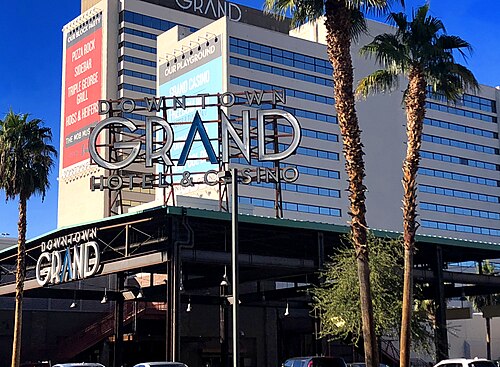
I’m a stone cold Vegas nut and I actually live on Dare Street in Raleigh, North Carolina. Raleigh has been in the top five places to live for the past 25 years. I’ve lived here 23 years and still love it.
We have incredible tree cover (The City of Oaks) and on New Years we drop a giant acorn designed by my artist buddy Dave from Third Place Coffee. My yard is full of birds and squirrels. We have long springs (it’s cool and wet today), long gorgeous falls, and in summer we’re a few hours to some of the best beaches anywhere — Outer Banks, Crystal Coast, and Wrightsville — and the mountains to the west. Our 400-acre Dix park is one of the largest city parks in the USA and right behind it, the State farmers market runs seven days a week.
This holiday I was at the NC State Fairgrounds’ weekly flea market, hunting vintage vinyl (and bought a silver money clip; now THAT’S old school, my friends). I picked up 25 albums for $1 each, such classics as Nat King Cole Live at the Sands, Jackie Wilson Live at the Copa, Diana Ross, Herbert Mann, Dionne Warwick, and many more. Score!
The nearest casino is in Danville, Virginia, 90 minutes away (Caesars … yawwwnn). Which is one of the many reasons I love Las Vegas. We have easy access to an international airport (RDU) with a Wright Bros.-inspired design. Southwest flies nonstops to Vegas, along with American and Delta.
Yes, things are getting pricey there and everywhere. So? Watcha gonna do about it? Complain? Raise backyard chickens? (In Raleigh, you can.)
Or … Myself, I subscribe to “triangle on the cheap.”
Eggs are cheapest at Trader Joes. Yes, we have Aldi, Lidl, and Costco. At Alamo Drafthouse Cinema, Tuesday’s are $6 movies. I’m going to see Mission Impossible today. It’s $13 at the Regal.
Besides our original real Southern diners, Watkins Grill and Pam’s Farmhouse restaurant, we have Snoopy’s, where on Tuesdays it’s 2-for-1 hot dogs. Cook Out (our In n Out”) has them every day, with 50 flavors of milkshakes. And how about Fresh Market’s Thursday $5 sushi, $5 shrimp cocktail, and $6 roast chickens?
To top it all off, there’s the amazing $2 half-pound Monday burger deal just 5 blocks from my house and next to our historic 5 Points Raleigh Rialto Theatre, home of Indy movies, comedy, great music, and one of the longest running Rocky Horror Picture Show’s in the U.S., having played at least once a month for decades. It’s been there so long, the children and grandchildren of folks who used to go now go see it. Yeah, we’re that hip … or crazy .. or both.
What local bargain-hunter resources do you enjoy? It would be interesting to have folks comment on their favorite local value play. Tell us about your favorite local deals
Because while you’re waiting on your next Vegas jaunt, ya gotta have a good time, right? And keep your scuffling chops sharp.